

Can You Fly With a Suspended License? TSA ID Rules After a DUI
A flight booked days after a DUI can turn into the most stressful part of the whole case, and whether you can fly with a suspended license usually isn’t the real reason. It depends on which document you hand the officer, not on your driving record. The Transportation Security Administration (TSA) checks identity at the checkpoint, and TSA’s own identification page lists REAL ID-compliant driver’s licenses and ID cards as acceptable, rules out a temporary driver’s license by name, and never addresses a suspended license at all.
That silence is the whole problem, and it’s fixable before you ever reach security. A suspended license isn’t on the accepted list, and it isn’t on the rejected list either, so the fix starts with reading TSA’s own list the way the checkpoint does.
What TSA Accepts at the Checkpoint
TSA publishes the full list of documents that clear security without a second look, and the suspended-license question disappears entirely for anyone holding one.
The accepted forms of identification include:
- A state-issued REAL ID-compliant driver’s license or identification card
- A state-issued Enhanced Driver’s License or Enhanced Identification Card
- A mobile driver’s license, where a state offers one
- A U.S. passport or passport card
- A Department of Homeland Security (DHS) trusted traveler card such as Global Entry
- A U.S. Department of Defense ID, including dependent cards
- A permanent resident card
- A federally recognized Tribal Nation photo ID
- Several other federal credentials, including a border crossing card and a U.S. Merchant Mariner Credential
TSA checks identity at the checkpoint, not driving eligibility, so every document on that list proves who someone is through a government-issued record rather than through a current license to drive. A suspended license proves identity the same way a valid one does. What’s missing isn’t proof of identity; it’s a published answer, and TSA hasn’t given one for a suspended card.
TSA currently accepts an expired version of any of those forms for up to two years past the expiration date. A license that expired while it was suspended may still clear the checkpoint on that basis alone, separate from whatever the suspension itself does to your driving record.
Check the card against the REAL ID requirements before a trip, suspension or not, since a non-compliant card can create its own holdup at the checkpoint, separate from anything a suspension does.
Why a License Suspension Is Different From a Temporary License
TSA’s identification page rules out exactly one document by name: a temporary driver’s license, the paper form some states hand out at the counter while the permanent card gets mailed. A suspended license is a different object entirely, and the page treats it that way by staying silent.
A suspension doesn’t take your physical card away in most cases. The state revokes your legal permission to drive, but the hard-plastic ID in your wallet often stays exactly as it was issued: same photo, same name, same date of birth, same state seal. Nothing printed on the card announces a suspension to a person looking at it. Practices on whether a license gets physically taken after a DUI arrest differ. Some states collect the card at the roadside. Others mail a suspension notice and let you keep it.
A temporary driver’s license is a different kind of document entirely. It’s a printed slip, sometimes just a folded piece of paper, meant to cover the days between an application and the permanent card arriving in the mail. A suspended license is the opposite: a complete, state-issued card with every security feature intact, just one whose driving authorization has been pulled. TSA names one of these by name and never addresses the other.
A suspension restricts legal permission to drive. Nothing else about a person changes because of it. A suspended license still works for buying a car with a suspended license, since that’s a purchase, not driving, and TSA’s identification page never addresses flying either. Legal driving status and checkpoint ID are separate questions, and how long a license stays suspended after a DUI has no bearing on whether the same card clears a checkpoint tomorrow.
What to Carry to Fly With a Suspended License
Any document on TSA’s accepted list settles the question before you reach the checkpoint. A few of them are faster to get than others.

A U.S. passport or passport card works for a domestic flight and costs less than the full passport book. A state ID card is the cleanest substitute: a non-driver identification card from your state’s Department of Motor Vehicles (DMV) that proves who you are without saying anything about driving privileges. A DHS trusted traveler card clears you on its own if you already carry Global Entry. A military ID, active duty, reserve, or dependent, is on TSA’s list as well.
Get a State ID While a License Is Suspended
A state ID card is usually the fastest of these to obtain on short notice. Most DMVs let you apply for one while a driver’s license is suspended, since the two are separate records at the same agency. Expect to bring proof of identity, such as a birth certificate or an existing passport, along with a document that shows a current address, like a utility bill or a lease. The card itself typically takes a few weeks to arrive by mail.
A passport card moves on a slower timeline unless you pay for expedited processing. Call the local DMV office and ask what it needs for a non-driver ID before making the trip, then pick whichever document answers faster given how soon the flight is.
TSA ConfirmID for Travelers With No Accepted ID
Someone with no passport, no state ID, and no other document from TSA’s list still has one option left before the day of the flight.
TSA ConfirmID is the agency’s own paid identity-verification program for a traveler who can’t present an accepted form of ID at the checkpoint. It confirms identity through a separate verification process rather than a physical document, and TSA sets and publishes the fee on its own program page, which is the number to check rather than a figure printed anywhere else. The fee can change, so the program’s own page is the only reliable source for it.
Each traveler who needs it completes the process separately, so a family or a travel companion can’t cover one person’s missing ID with someone else’s documents. Expect to answer questions and allow extra time at the checkpoint even after the process clears, since ConfirmID solves identity verification, not the time a standard screening takes.
TSA ConfirmID is built as a one-time fallback, not a routine substitute for carrying ID. A state ID card or passport card removes the need for it on every future flight.
What Happens If You Fly With Only the Suspended License
Say the flight is tomorrow and the suspended license is the only government-issued photo ID in hand. TSA’s page doesn’t list it as acceptable, and it doesn’t list it as rejected either, so the checkpoint has to make a call on the spot.
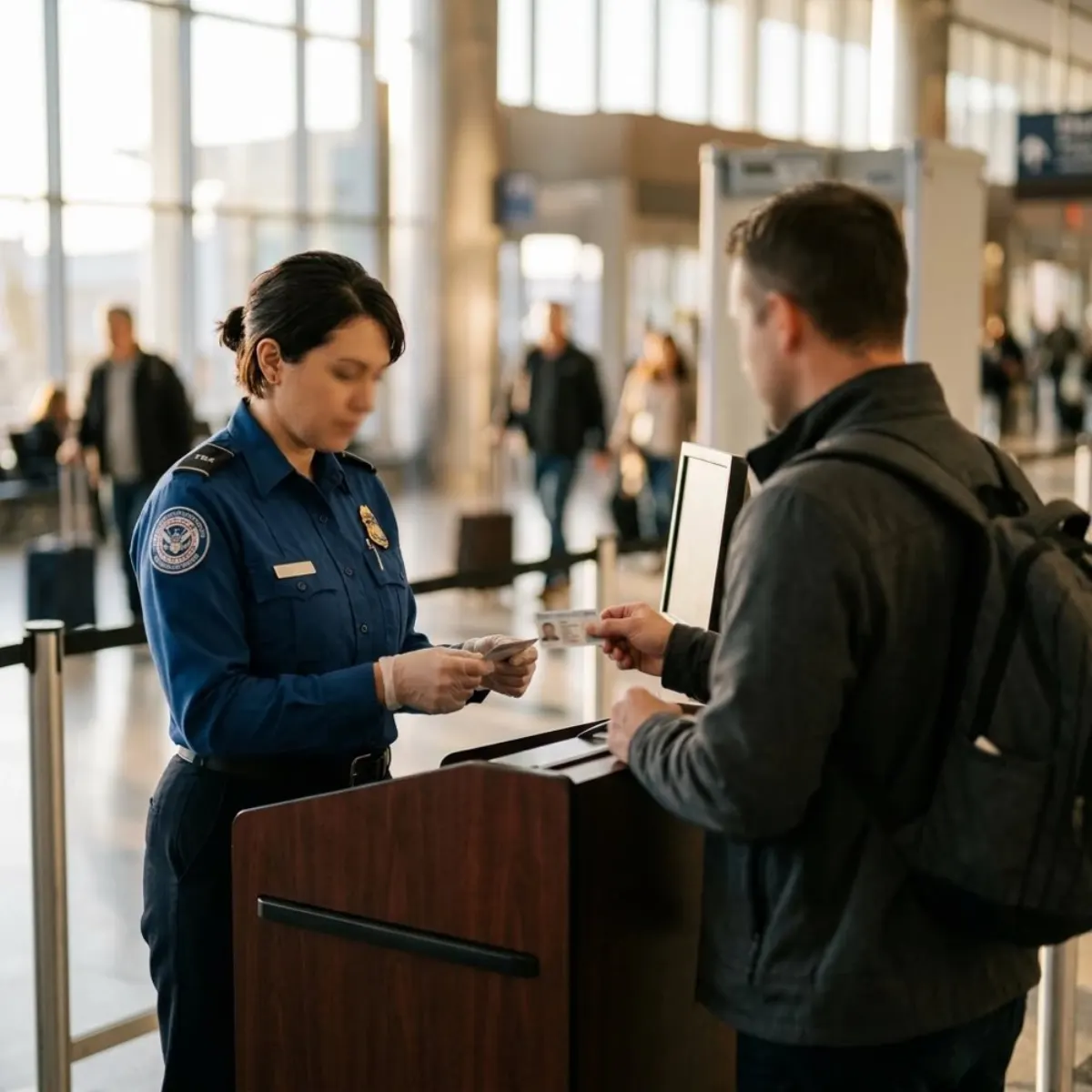
Expect delays and additional screening rather than an automatic turn-away. A TSA officer may ask follow-up questions, verify identity through other means, or bring in a supervisor before clearing someone through. None of that is checking a driving record. TSA’s job at the checkpoint is confirming who someone is, not whether a state still lets that person drive, so a suspension by itself isn’t a reason to deny boarding. The document doing the talking is what decides how smooth that process is, and the final call at the checkpoint sits with TSA, not with any article written about it.
What the Extra Screening Involves
A traveler without a clearly accepted document typically goes through an identity-verification process instead of a quick glance at a card. That can include confirming personal details against public records, answering questions a stranger couldn’t answer, and a more thorough physical screening than a standard checkpoint pass. None of it is a criminal background check, and it isn’t a DUI case review. It’s the same identity-verification process TSA uses for anyone whose ID doesn’t clearly settle the question, suspension or not.
Arriving early buys back the time additional screening takes. Beyond that, the outcome on a given morning depends on the specific checkpoint and the specific officer working it, which is exactly why TSA’s own accepted-ID list is the safer plan whenever there’s time to act on it before the trip.
A Restored License Changes the Whole Question
Once a restricted license, a hardship license, or a fully reinstated license is in hand, the airport question stops existing. Any of those is a state-issued license, and a state-issued license is on TSA’s accepted list without qualification.

The path back usually runs through the court or DMV process tied to the original suspension, and the specifics (how long the suspension runs, what has to happen before reinstatement) vary by state and by case. Some drivers get there through a hardship license that allows driving for work, school, or medical appointments while the full suspension is still in effect, or through an ignition interlock limited license tied to a court-ordered device. Others wait out the suspension and go through the steps for getting a suspended license reinstated in full.
When a court or DMV orders an ignition interlock device as part of that path, the device logs test results, engine starts and stops, and any tampering, and that record is what the monitoring authority reviews before signing off on the next step toward a restored license. A driver who isn’t sure whether a device applies to their case can ask their attorney.
Schedule the Interlock Once a Court or DMV Orders One
Low Cost Interlock installs the device on the schedule a court or DMV sets, with transparent pricing, no hidden fees, and a Price Match Guarantee against a lower advertised rate. The team can walk through which device applies in your state once an order is in hand, and flexible billing options cover the monthly cost. Get a 60-second quote from Low Cost Interlock or call (844) 387-0326 to see what installation and monthly costs look like where you live.
Frequently Asked Questions
Can I fly in the US with a suspended license?
The question only applies to domestic flights, because an international departure already requires a passport, which settles the ID question on its own regardless of what happened to a driver’s license. For a domestic itinerary, the trip depends on the document in hand at the checkpoint, not on an itinerary rule written anywhere specific to suspensions.
Can I get through TSA if my license is suspended?
Nobody, including TSA, has written an answer to this down anywhere, which sets it apart from most airport questions. A fee, a banned item, a REAL ID deadline all trace back to a published rule. A suspended license traces back to nothing, so the honest answer is that the outcome isn’t knowable in advance, and carrying a different document is the only move that removes the unknown.
Is a suspended license still a valid form of ID?
Outside an airport, a suspended license often still works fine as ID: a store checking age for alcohol, a bank verifying identity, a notary confirming a signature typically accept it, since none of those situations check driving status either. Air travel is the one setting where TSA’s silence on the question creates doubt a grocery store or a bank never would.
What can I use to fly if I can’t find my ID?
TSA ConfirmID doesn’t ask why a traveler has no accepted document in hand, so a lost wallet and a suspension that left someone without a usable card both route to the same process. The one difference: a lost ID can usually be replaced before the next trip, while a license held up in a DUI case may need a state ID or passport card as the standing fix until the case resolves.
Disclaimer: This article is provided by Low Cost Interlock for general informational purposes only and is not legal, financial, or medical advice. DUI and ignition interlock laws, penalties, fees, and program requirements vary by state, county, and individual circumstances, and they change over time. Any costs, timelines, or figures mentioned are general estimates, not quotes or guarantees. Nothing here should be relied on as a statement of the law in your jurisdiction. Always confirm current requirements with your state DMV, the court handling your case, a licensed attorney, or Low Cost Interlock directly before making decisions. Product features, pricing, availability, and promotions referenced are subject to change and may not be available in every state Low Cost Interlock serves.