
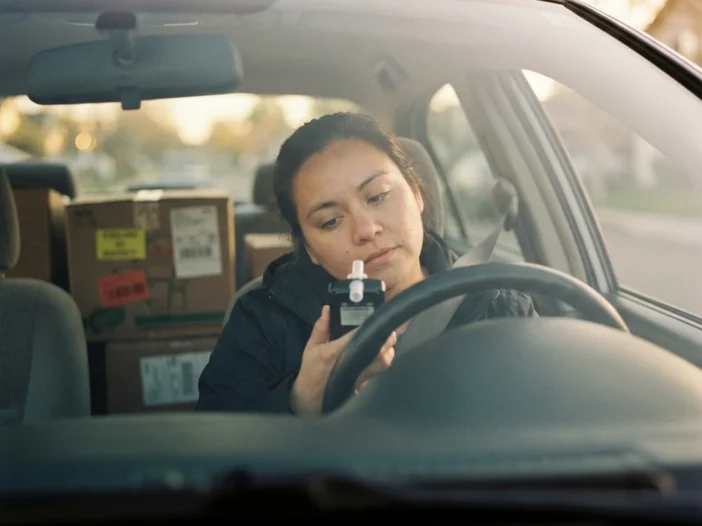
You’re planning a move, but an ignition interlock requirement still hangs over your driver’s license. Relocating while you’re in an IID program is stressful because you’re juggling normal moving tasks with court orders, DMV rules, and device contracts that don’t automatically change just because your ZIP code does.
This guide breaks down how ignition interlock obligations usually transfer when you move to a new state, what to do before and after you relocate, and the common mistakes that lead to license holds or extra time on the device. You’ll learn the role of interstate compacts, how courts and DMVs communicate, and practical steps to keep your move legal and as smooth as possible.
Why your ignition interlock requirement rarely disappears when you move
Many drivers assume that once they cross a state line, their ignition interlock requirement will somehow reset or quietly expire. In reality, most states treat DUI-related orders as obligations that follow you, especially when they involve your ability to drive.
Courts, DMVs, and law enforcement want to prevent repeat drunk driving, so they share information about serious violations. That information includes whether you’re supposed to have an ignition interlock on any vehicle you drive, even if you now live somewhere else.
How interstate compacts affect drivers with an IID
States coordinate driver licensing through a set of agreements and databases, and these sit in the background of every “ignition interlock moving states” question. The Interstate Driver License Compact (IDLC) is one of the most important, because it’s the agreement that lets states honor each other’s suspensions and DUI-related actions.
According to a National Conference of State Legislatures overview of ignition interlock laws, 44 of 50 states participate in the IDLC, which means the vast majority of DMVs share DUI and license action information when you move. On top of that, the National Driver Register stores data about serious driving offenses and license withdrawals, giving your new state a way to see if you still have any open requirements.
Because of these systems, your new DMV will usually see that you were ordered to install an ignition interlock, or that your old state is only allowing you to drive if you stay in an IID program. If you try to apply for a new license while ignoring those obligations, you’re likely to run into a “hold” that blocks issuance until you clear it with the original state.
Myths about moving to escape an ignition interlock
One persistent myth is that you can avoid an IID simply by never installing it and starting fresh somewhere else. A Washington State Legislative Auditor performance audit on ignition interlock programs found that only 41% of drivers ordered to install an interlock actually do so, which is one reason states are tightening monitoring and reciprocity.
Another misconception is that your time in an IID program will keep running even if you stop using the device. In most states, you receive “credit” only for the time when a functioning ignition interlock is installed, monitored, and violation-free. If you uninstall it without permission, move, or simply stop driving, your requirement time often pauses until you’re back in full compliance.
As mentioned earlier, your new state can’t usually give you a clean license if the old state is reporting an active interlock requirement, so trying to outrun the device by moving almost always backfires.

Ignition interlock moving states: core transfer rules
When you’re dealing with an ignition interlock moving states scenario, the safest mindset is that nothing changes automatically. You have to coordinate three things: legal orders, DMV licensing, and the device itself.
Think of your move in three phases—before you go, during your travel days, and after you arrive. Each phase has its own must-do tasks to keep you legal and avoid extending your IID time.
Before you move: ignition interlock checklist
Start planning as soon as you know you might relocate. Courts and DMVs move slowly, and probation officers often need written notice and documentation before they will sign off on your plans.
Use this pre-move checklist as a starting point and adapt it to your specific orders:
- Get a copy of all current orders and conditions that mention your ignition interlock or restricted license.
- Contact your current DMV (or licensing agency) and ask what will happen if you change your address or move out of state while under an IID requirement.
- Talk to your probation officer, attorney, or court contact to confirm whether you are allowed to move and what approvals you need in writing.
- Call your current interlock provider and ask whether they operate in your destination state and how they handle out-of-state transfers.
- Ask your provider and court whether your completed IID time so far will count in the new state, or whether you should finish your requirement before moving if possible.
- Confirm how long you can be without a vehicle or device (for example, between uninstall and reinstall) without being considered non-compliant.
- Check your auto insurance and any SR-22/FR-44 filing requirements to see how a move will affect your coverage and proof-of-insurance filings.
Document every conversation in writing—email follow-ups and written notes give you something to show a new judge or DMV official if there’s confusion later about what you were told.
During the move: driving and device logistics
Your ignition interlock usually needs to stay installed and functional while you drive to your new home. That means you’ll still be doing breath tests at the start of trips and possibly during rolling retests along the way.
Some drivers choose to ship their personal car and fly, using a rental truck or friends’ vehicles for the actual move. If your court order says you can only drive a vehicle equipped with an IID, you should not drive any vehicle without one, even temporarily. If you must rent a vehicle, ask your provider if they can install a temporary ignition interlock in a rental or moving truck, and get written approval from the rental company if so.
If your device requires periodic data uploads through a cellular connection, check coverage along your route and avoid disconnecting the power source, which can be logged as tampering. Keep your power cables, mouthpieces, and any documentation handy while traveling, in case law enforcement has questions during a traffic stop.
After you arrive: updating your license and monitoring
Once you’re in your new state, you’ll usually have two clocks ticking: one for how quickly you must update your license address, and one for how soon you must get formally licensed there. Some states treat living, working, or enrolling in school as creating “residency,” which starts those clocks even if you still have out-of-state plates.
Florida’s legislature highlighted this in a 2025 update to its driver licensing laws. The Florida Statutes – Chapter 322 now spell out that many drivers with existing restrictions must petition the Department of Highway Safety and Motor Vehicles for a restricted license after a set period, honor any out-of-state interlock orders under reciprocity, and update their driver-license address within a short window once they establish residence. State reports cited in that update showed a 27% drop in “failure-to-transfer” suspensions after these timelines were clarified, underscoring how critical it is to meet your new state’s deadlines.
Device servicing is another area where timing matters. In Colorado, for example, ignition interlock devices must be serviced every 60 days and missing a service appointment counts as a violation that can lead to extra sanctions, according to the Colorado Department of Motor Vehicles ignition interlock program. Even if your new state uses a different schedule, you are expected to stay on whatever service and calibration interval applies once you transfer there.
To keep everything straight, it helps to see your move as a three-stage process with specific IID tasks at each stage:
| Stage of move | Key ignition interlock tasks | Main contacts |
|---|---|---|
| Before you move | Confirm legal permission to relocate, understand how time served will transfer, and plan device uninstall/reinstall if needed. | Court, probation officer, current DMV, current IID provider |
| During the move | Keep the device installed while driving, avoid tampering, and protect equipment during long travel days. | IID provider, law enforcement (if stopped), rental company if using a rental vehicle |
| After you arrive | Update license and address, enroll in the new state’s monitoring system, and resume regular service appointments. | New state DMV, new probation or monitoring office, local IID service center |

How states track ignition interlock moves behind the scenes
While you’re busy packing boxes, there is usually a parallel process happening between your old and new jurisdictions. Courts, probation departments, and DMVs coordinate to make sure your ignition interlock requirement is monitored continuously, even when you cross state lines.
Understanding this behind-the-scenes workflow can help you know who to contact, what forms to expect, and why delays sometimes occur when you apply for a new license.

What agencies actually do with your ignition interlock record
In a typical case, your sentencing court orders you to install an ignition interlock and either the court or DMV notifies a monitoring agency or probation office. That office then tracks reporting from your IID provider—things like passed tests, failed tests, missed appointments, or tampering alerts.
When you move, that monitoring responsibility has to be handed off. Some states have formal processes where the original monitoring agency sends your case file, violation history, and remaining IID time to a counterpart in the new state. Others rely on manual letters, phone calls, or even you bringing documents in person to your new probation or licensing office.
If your new state can’t confirm that you’re in an active, monitored ignition interlock program, they may refuse to issue a local license or may place strict restrictions on it until they receive proof of compliance from your old provider and court.
Lessons from New York and national best practices
Some states have formalized this handoff to reduce confusion. New York’s Office of Probation & Correctional Alternatives (OPCA) found that relocated DWI cases were falling through the cracks because each county and state handled interlock transfers differently. According to the New York State Division of Criminal Justice Services, OPCA issued 2026 guidance that created a uniform workflow requiring notice to both sending and receiving jurisdictions, a standard monitoring form, and designated Ignition-Interlock Monitors to oversee each transfer until the new state confirmed enrollment; this eliminated a prior 18% documentation gap and cut average processing time from 30 to 9 days.
At the national level, the National Highway Traffic Safety Administration developed an ignition interlock “toolkit” for courts and agencies. The NHTSA ignition interlock toolkit gives judges a step-by-step protocol for recognizing another state’s interlock order, defining tamper violations, and coordinating vendor data, and its recommended 45–120 minute standard installation window has been adopted or cited by 38 states in rulemakings and is associated with a reported 70% reduction in circumvention attempts compared to earlier baselines.
For you as a driver, the takeaway is that many states now have formal rules for how your ignition interlock case should move with you. When you meet with probation, a licensing hearing officer, or your attorney, ask whether your state follows these kinds of written protocols and what documentation they need from you or your provider to complete the transfer.

If this all feels overwhelming, working with an experienced, multi-state ignition interlock provider can simplify the process. A company like Low Cost Interlock focuses on helping drivers stay compliant across different state rules by coordinating installation, calibration, and reporting when you relocate. You can explore how their state-approved ignition interlock services handle transfers and ask specific questions about your move before you change your residence.
Costs, contracts, and common mistakes when moving with an IID
On top of legal requirements, you also have a private contract with your ignition interlock vendor. Moving can trigger new installation fees, early-termination charges, or duplicated costs if you’re not careful about timing and communication.
Most IID contracts include a monthly lease fee, installation and removal charges, and regular calibration or service fees. When you move to a new state, you may be able to transfer your existing device and contract, but sometimes you’ll need a fresh installation under the new state’s rules.
Managing costs when your ignition interlock moves
To keep expenses under control, ask your provider specific money-related questions before you schedule anything. Clarify whether there is a transfer fee, whether your current deposit carries over, and whether you will be billed twice if you have a short overlap between old and new service centers.
If your provider does not operate in your destination state, ask whether they have partner locations or whether you must close your contract completely and start over with a new vendor. In some cases, it may be cheaper to finish your ignition interlock requirement in your current state before moving, especially if you’re close to your removal date and can legally delay your relocation.
Some providers focus on transparent pricing by offering no hidden fees and flexible billing plans, which can be especially important during an expensive move. Low Cost Interlock, for example, emphasizes bi-weekly payments and no penalty fees for failed tests, and its lowest cost ignition interlock device guarantee can help keep program costs predictable while you’re juggling moving expenses.
Common mistakes to avoid with an ignition interlock move
Certain errors come up over and over again for drivers who move before finishing an IID program. Avoiding them can save you months—or years—of additional restrictions.
- Letting a shop remove your device without written authorization from the court or monitoring agency, which can be recorded as tampering or non-compliance.
- Failing to tell your probation officer, court, or monitoring agency that you are moving, leading to warrants or violations when mail is returned or appointments are missed.
- Missing a scheduled calibration or service visit because you’re on the road, without arranging an earlier appointment or approved grace period.
- Assuming your old state will automatically credit you for time in a new state’s interlock program, without getting that agreement documented in writing.
- Applying for a new license in your destination state before your old state has updated your status, resulting in confusing “holds” or denials.
- Driving a friend’s or family member’s vehicle without an ignition interlock, even for short trips, when your order says every vehicle you operate must be equipped.
Most of these problems come down to gaps in communication and documentation. Keeping a folder—physical or digital—with your orders, receipts, calibration reports, and notes from every call can make it much easier to clear up misunderstandings if they arise.
Frequently Asked Questions
Will moving to a new state with an ignition interlock affect my job if I drive for work?
It can, especially if your job requires you to drive company vehicles without interlocks or hold a commercial license. Before you move, talk with your employer’s HR or safety department about your driving restrictions and get written confirmation of any accommodations or limitations so you can plan your work situation in the new state.
How does an ignition interlock requirement impact a commercial driver’s license (CDL) when I relocate?
Many states impose stricter rules on CDL holders, including longer disqualification periods and tighter monitoring after a DUI. If you hold or plan to get a CDL in your new state, consult both DMVs or a CDL-focused attorney to see whether your current interlock requirement will delay, restrict, or prevent commercial driving there.
What if my new state’s ignition interlock laws are more or less strict than my current state’s rules?
Typically, your originating state’s order still controls the minimum requirement, while your new state can layer on its own conditions for issuing or maintaining a license. Expect to comply with whichever rules are stricter in practice, and confirm this in writing with both DMVs before you move.
Can I install an ignition interlock on a vehicle that’s not in my name if I’m moving?
Yes, in most cases you can install an interlock on a spouse’s, family member’s, or employer’s vehicle as long as the registered owner signs the appropriate consent forms. When you relocate, make sure any new vehicle owner in your destination state is prepared to sign similar paperwork so the device can be installed legally.
How are my ignition interlock test results and violations shared when I move to another state?
Your provider typically sends electronic reports to the agency supervising your case, and those records can be forwarded or accessed by your new state’s monitoring authority. If you’re concerned about privacy or data use, ask your provider for their written policy on data retention, sharing, and how long records remain visible to agencies after you finish the program.
Should I hire a lawyer to help with an out-of-state ignition interlock transfer?
Legal help is especially useful if you’ve had prior violations, complex court orders, or if the two states’ rules conflict. An attorney licensed in your sentencing state—and coordinating with counsel in the new state if needed—can request clarifying orders, negotiate credit for time served, and help resolve any license holds more quickly.
What happens if I move first and only then discover I can’t get an immediate license because of my interlock requirement?
You may be stuck legally unable to drive in the new state until you resolve the hold with your original jurisdiction, which can take weeks or months. In that scenario, line up alternative transportation (rideshare, public transit, carpooling) and work with your provider and old-state DMV to get back into compliance as fast as possible so your new state can issue or reinstate your license.
Keeping your move and your ignition interlock on track
Moving to a new state with an ignition interlock requirement is more complicated than a normal relocation, but it’s manageable when you treat your legal obligations as part of the move, not an afterthought. By confirming your permissions up front, coordinating with both DMVs, and planning your device transfer or re-install carefully, you reduce the risk of extra time on the interlock, surprise suspensions, or costly violations.
If you want support from a provider that understands multi-state IID rules and emphasizes affordability, Low Cost Interlock can help you navigate the process. Their LCI-777 ignition interlock device program combines fast installation, routine calibrations, and clear reporting to keep you compliant before, during, and after your move, with no hidden fees and flexible bi-weekly payments.
Don’t let an ignition interlock requirement derail your plans for a fresh start. Call Low Cost Interlock at 844-218-5398 or visit their ignition interlock resource center to schedule installation, map out your transfer, and get back on the road legally and confidently in your new state.