
Navigating a DUI in a Commercial Vehicle: A Guide for CDL Holders
CDL DUI consequences can jeopardize your license, income, and long-term career in a single night. As a commercial driver, you operate under stricter rules than everyday motorists, so one alcohol-related arrest can trigger automatic suspensions, federal disqualifications, and company discipline that go far beyond a standard DUI.
This guide walks through how a DUI affects commercial drivers from start to finish. You will learn about lower BAC limits for commercial vehicles, what happens if you are arrested in your truck versus your personal car, how federal and state rules interact, typical suspension and disqualification timelines, and practical steps to protect your CDL and your future after an arrest.
Why CDL DUI consequences hit harder than a regular DUI
For non-commercial drivers, a first-time DUI is serious but often viewed as a mistake that can be overcome. For CDL holders, the same incident can instantly remove your ability to work because your license is your livelihood and the federal government imposes extra penalties on commercial drivers.
Even if you are off duty and driving your own car, a DUI can still be treated as a “major offense” under federal rules once it results in a license suspension or conviction. That classification is what opens the door to long CDL disqualification periods that many drivers are shocked to discover only after the fact.
On top of court and DMV penalties, you also face strict company policies, Department of Transportation (DOT) drug and alcohol testing rules, and insurance pressures. Taken together, CDL DUI consequences can include loss of current employment, long periods where you cannot drive commercially, and difficulty getting rehired when your record shows a DUI.
BAC limits for CDL drivers and why they are stricter
Commercial drivers are held to a lower legal blood alcohol concentration (BAC) when operating a commercial motor vehicle (CMV). According to Federal Motor Carrier Safety Administration (FMCSA) data, the legal BAC limit for drivers operating a CMV is 0.04%, compared with 0.08% for most non-commercial drivers.
This lower threshold means a quantity of alcohol that might leave a non-commercial driver legally under the limit can still put a CDL holder at risk for a DUI when behind the wheel of a truck, bus, or other CMV. It also means that “I only had a couple of drinks” is far more dangerous for professional drivers than many people realize.
Some carriers and safety-sensitive employers go further with zero-tolerance policies or internal rules that prohibit any detectable alcohol while on duty or immediately before a shift. Violating those policies can lead to termination or removal from driving duties even if you are below criminal DUI limits.
CDL DUI consequences by offense type
The specific penalties you face depend on where you were driving, your BAC, whether you refused testing, your cargo, and your prior record. The table below summarizes typical federal-level CDL impacts for common DUI-related situations; state law can add extra penalties on top of these baselines.
CDL DUI consequences by offense type (quick table)
| Scenario | CDL impact (federal baseline) | Regular license impact (typical) | Employment impact snapshot |
| First DUI in a commercial vehicle (BAC at or above legal limit or test refusal) | At least a one-year CDL disqualification; longer if state adds penalties | State-level suspension or revocation based on DUI laws | High risk of termination and difficulty finding new driving jobs in near term |
| First DUI in a personal vehicle while holding a CDL | Often treated as a major offense once license is suspended, triggering at least a one-year CDL disqualification | Suspension or revocation under state DUI statutes | Many carriers treat this similarly to a DUI in a CMV for hiring decisions |
| Refusal to submit to breath, blood, or urine testing | Frequently handled the same as a DUI for CDL disqualification purposes | Administrative license suspension under implied consent laws | Seen by employers as equivalent to a DUI; may be disqualifying |
| DUI while transporting hazardous materials requiring a placard | Minimum three-year CDL disqualification for a first offense | State DUI suspension or revocation also applies | Severe impact on hazmat-related work and future endorsements |
| Second DUI (in any motor vehicle) or second major alcohol-related offense | Lifetime CDL disqualification, sometimes eligible for reduction depending on state law | Additional suspension periods and harsher criminal penalties | Often career-ending for over-the-road or bus driving jobs |
As the table shows, even a first offense can sideline your CDL for at least a year, and repeat violations can permanently bar you from commercial driving. These CDL DUI consequences apply whether the underlying case comes from a CMV stop or a personal vehicle DUI that results in license action.
DUI in a commercial vehicle vs a personal car
Many CDL holders are surprised to learn that a DUI in their personal car can be just as damaging to their commercial license as a DUI in a semi-truck or bus. The criminal charge might look the same on paper, but once a conviction or license suspension is reported, federal disqualification rules are triggered regardless of what type of vehicle you were driving.
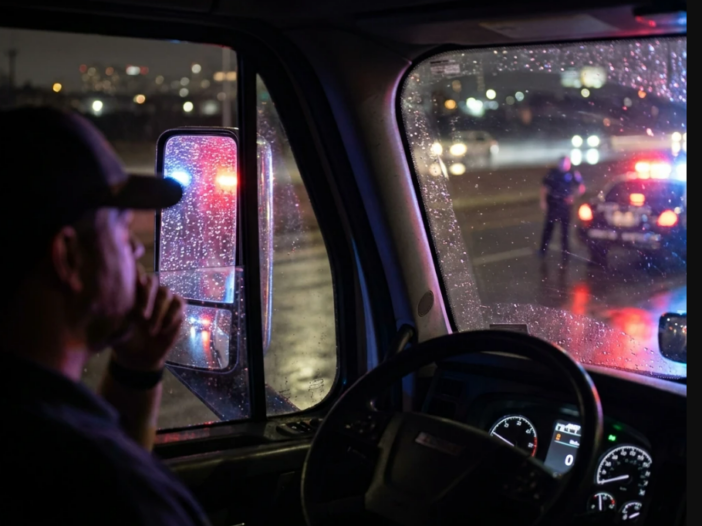
When the stop happens in a CMV, there are often additional complications. You may be placed out of service at the roadside, freight can be delayed or stranded, and your employer may be notified immediately. If you were transporting passengers or hazardous materials, prosecutors may file additional charges or seek sentence enhancements based on the increased risk to the public.
Example scenarios with very different CDL outcomes
Consider two drivers with identical BAC levels and no prior record. One is stopped in a private vehicle on a weekend off; the other is stopped mid-shift in a tractor-trailer. Both may face similar criminal DUI charges, but the driver in the truck is more likely to face immediate company discipline, freight-related losses, and stricter scrutiny from regulators for on-duty conduct.
Now compare a driver arrested in a personal car whose license is later suspended for DUI. Once that suspension is entered, it can trigger a CDL disqualification as a major offense. Both drivers may ultimately be unable to drive commercially for an extended period, demonstrating how CDL DUI consequences do not stop at the criminal court level.
How federal rules and state DUI laws interact for CDL holders
Commercial drivers live under two overlapping systems: federal rules administered through the FMCSA and state DUI and driver’s license laws. States control the criminal DUI case and regular license suspensions, but they must also enforce federal minimum disqualification standards for CDL holders.
When you are convicted of DUI or suffer a qualifying license suspension, your state reports that event to the CDL system. That report is what triggers the disqualification periods shown earlier, even if the state’s own DUI penalties are shorter or longer. In a conflict, federal disqualification minimums generally cannot be reduced by state law.
In addition, the DOT drug and alcohol clearinghouse tracks certain violations and test results for CDL drivers. A positive alcohol test, refusal, or certain rule violations can appear there even if they do not result in a criminal DUI, and employers must check this database before allowing you to perform safety-sensitive functions.
Administrative suspensions and implied consent for CDL holders
Many drivers expect all license consequences to come from the courtroom, but administrative license suspension (ALS) often starts at the DMV level before your criminal case is resolved. When you are arrested for DUI or refuse a chemical test, implied consent laws in most states authorize an immediate or near-immediate suspension separate from any court conviction.
For CDL holders, that administrative action can have a rapid effect on commercial driving privileges. A failed or refused test may lead to an out-of-service order at the time of the stop and then to a CDL disqualification once the state records the suspension. You usually have only a short window to request a DMV hearing to challenge or delay that suspension.
Because ALS proceedings are civil and separate from the criminal case, winning in court does not automatically undo every administrative consequence. Understanding and meeting the deadline to contest an administrative suspension can be just as important as defending the criminal DUI charge when trying to protect your CDL.
Job, insurance, and money fallout after a CDL DUI
The legal penalties are only part of the story; the employment and financial impact of a DUI can be even more disruptive for professional drivers. Many carriers have policies that require immediate termination or reassignment if a driver is convicted of DUI, loses a CDL, or is disqualified under DOT or FMCSA rules.
Even if your current employer keeps you in a non-driving role, a DUI on your record often makes it harder to find equivalent work with other carriers, especially in over-the-road trucking, passenger transport, or hazmat hauling. Recruiters and safety departments review motor vehicle records, criminal histories, and clearinghouse reports, and a recent DUI frequently triggers automatic rejection.

CDL DUI consequences for your wallet and insurance
On the financial side, you may face fines, court costs, higher personal auto insurance premiums, and lost income during any period when you cannot drive commercially. Some states and insurers require proof of financial responsibility, which can raise costs further and limit which carriers are willing to insure you as a driver.
For owner-operators or small fleet owners, a DUI can also affect access to commercial insurance policies and freight contracts. Shippers and brokers often have minimum safety standards that disqualify carriers with recent serious violations, making it harder to secure profitable loads until enough time has passed since the incident.

Immediate steps after a CDL DUI arrest
What you do in the hours and days after a DUI arrest can significantly affect both your criminal case and your CDL status. Staying organized and acting quickly helps you avoid missed deadlines and unforced errors that can extend disqualification periods.
Use this practical checklist as a starting point:
- Respect your right to remain silent beyond providing identification and basic information; avoid volunteering explanations or estimates of how much you drank that can later be used against you.
- Preserve evidence such as dashcam footage, electronic logs, dispatch messages, and delivery records that may help establish timing, fatigue, or other factors relevant to your defense.
- Consult an attorney experienced in both DUI defense and CDL or trucking regulations as soon as possible, so they can advise you before arraignment and any DMV hearings.
- Note all deadlines on your paperwork, especially for requesting an administrative or DMV hearing, and calendar them so you do not miss your opportunity to contest an immediate suspension.
- Review your company’s reporting and drug and alcohol policies with counsel and then notify your employer as required, focusing on facts rather than speculation about outcomes.
- Start documenting all costs and lost work days from the incident; this record can help you plan financially and provide context if you later apply for new driving positions.
Taking calm, organized steps does not guarantee a specific legal result, but it does maximize your chances of limiting the CDL DUI consequences you ultimately face.
Reinstating your CDL after a DUI
Reinstating a CDL after a DUI usually involves multiple layers of requirements: criminal court orders, DMV or licensing agency conditions, and DOT return-to-duty (RTD) procedures if you are subject to federal testing rules. Each layer must be satisfied before you can legally return to safety-sensitive driving work.
Return-to-duty process and ignition interlock requirements
Many drivers must complete a substance abuse professional (SAP) evaluation, follow recommended education or treatment, and successfully pass a return-to-duty alcohol or drug test before resuming covered duties. Follow-up testing for a set period may also be required, and missed or positive tests can restart the process or extend your time off the road.
Depending on your state and case details, you may be required to install an ignition interlock device (IID) on any vehicle you drive as a condition of license reinstatement. Choosing a provider that understands DUI compliance and commercial driving realities can simplify installation, calibration, and reporting so you stay on track.
For drivers who need an IID, working with ignition interlock specialists such as Low Cost Interlock can reduce stress by handling device setup, ongoing calibration, and reminder schedules in one place. Their team focuses on helping drivers meet court and DMV requirements so they can move toward full reinstatement.
If you are unsure how an IID fits into your reinstatement plan, you can review detailed ignition interlock information and scheduling options through the company’s ignition interlock resources. Understanding these requirements early helps you map out a realistic timeline for regaining commercial driving privileges.
Off-duty and out-of-state DUI scenarios for CDL drivers
Not every CDL DUI case starts with a typical traffic stop during a delivery. Off-duty scenarios, parked vehicles, and out-of-state arrests can all raise questions about how and where consequences will apply. For CDL holders, the key issue is usually whether the incident leads to a DUI conviction or qualifying license suspension that gets reported to the CDL system.

If you are arrested for DUI in another state while holding a home-state CDL, the arresting state typically reports the outcome back to your licensing state. Your home state then applies its own rules for CDL disqualification based on that report, so you cannot avoid CDL DUI consequences simply because the incident happened elsewhere.
Situations like sleeping in the cab with keys nearby or being parked at a truck stop may still lead to DUI charges if law enforcement believes you were in “actual physical control” of the vehicle under local law. Because these cases can be fact-specific, early legal advice is especially important when your livelihood depends on how the situation is ultimately interpreted.
Protecting your career after CDL DUI consequences
Facing CDL DUI consequences is overwhelming, but understanding how BAC limits, federal and state rules, administrative suspensions, and employment pressures fit together puts you back in a position to make informed decisions. The sooner you grasp the stakes and timelines, the better your chances of protecting both your license and your long-term earning power.
If an IID is part of your path back to legal driving, partnering with a provider that prioritizes affordability, clear communication, and fast service can make the compliance process far less stressful. The ignition interlock specialists at Low Cost Interlock are dedicated to helping drivers meet court and DMV requirements while keeping costs predictable.
To discuss your ignition interlock options, schedule installation, or get answers about device requirements tied to your case, use the company’s online form and Contact Us. Taking proactive steps today—legally, financially, and with the right compliance tools—gives you the best possible chance to move past a DUI and rebuild a stable future in commercial driving.
Frequently Asked Questions
How long will a DUI stay on my record as a CDL holder, and does it ever stop affecting my job prospects?
A DUI can remain on your motor vehicle record for many years, but its impact on hiring decisions usually lessens over time if you maintain a clean record afterward. Carriers often have lookback periods—such as three, five, or ten years—so the further you get from the incident without new violations, the more hiring doors typically reopen.
Can I switch to non-driving or non-CDL work while my CDL is disqualified?
Yes, many drivers temporarily move into warehouse, dispatch, mechanic, or office roles while resolving DUI-related suspensions. Make sure any new role does not involve safety-sensitive driving covered by DOT rules, and get written clarification from your employer about your duties.
What should I look for when choosing an attorney for a CDL-related DUI case?
Prioritize lawyers who regularly handle both DUI defense and commercial driver or trucking regulation issues. Ask specific questions about their experience with CDL disqualifications, DMV hearings, and negotiating outcomes that protect your ability to work.
Will a CDL DUI affect my ability to get or keep endorsements like passenger or tanker?
Serious alcohol-related violations can lead to additional scrutiny or waiting periods for certain endorsements, and some may be denied or revoked after a DUI. When you reapply or renew, expect background checks and be prepared to show proof of compliance and a clean record since the incident.
How can I talk to potential employers about a past DUI without ruining my chances?
Be honest but concise: acknowledge the DUI, explain the steps you took to comply with all requirements, and highlight your safety record since then. Employers respond better when you show responsibility, provide documentation, and focus on what you’ve done to prevent a repeat issue.
Are there insurance strategies that can make me more hireable after a CDL DUI?
You can work with brokers or agents who specialize in high-risk or commercial driver coverage to find policies that satisfy carrier requirements. Demonstrating continuous insurance, completing safety courses, and avoiding any new violations can gradually reduce your risk profile and insurance costs.
What proactive steps can I take to prevent another incident once I’m back on the road?
Create firm personal rules around alcohol and medication use, such as zero drinking within a set number of hours before any driving. Combine that with using designated drivers or rideshares off-duty, tracking rest and fatigue, and regularly reviewing your company’s safety policies so you never operate in a gray area again.