
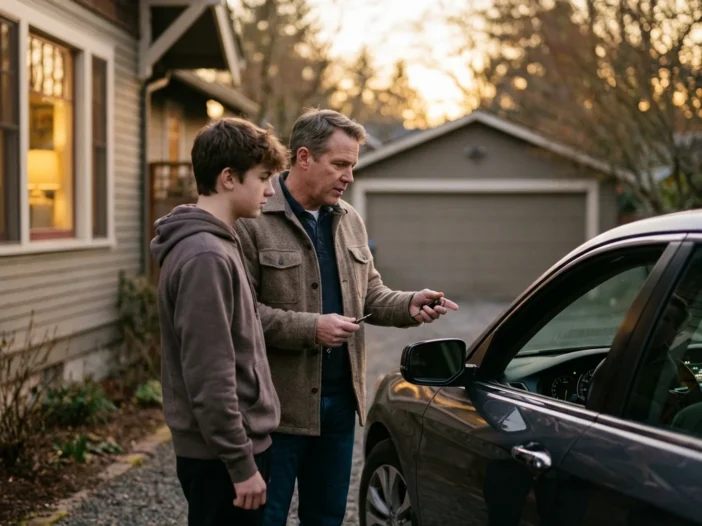
Choosing a voluntary ignition interlock for your teen might sound extreme, but for many families it has become a practical way to prevent drunk driving without completely taking away the car keys. As more teens drive themselves to school, work, and social events, parents are looking for reliable tools that step in when house rules and good intentions are not enough.
This guide explains how these devices work, why they are showing up in more family cars in 2026, and how to decide whether one fits your situation. You will see how a voluntary interlock compares with other teen driving safety technology, what conversations to have with your teen, what it costs, how data and privacy are handled, and the exact steps to go from idea to installation.
Teen driving risk and alcohol: why extra safeguards matter
The first years of driving are the most fragile for young people because they are still learning how to read the road, other drivers, and their own limits. Inexperience, peer pressure, and overconfidence can combine in ways that even a careful parent cannot fully control from the passenger seat.
Alcohol and drugs add another layer of danger, even when your teen understands the law and your rules. Social situations change quickly, rides fall through, and a teen who never planned to drink can find themselves facing a choice between driving impaired, riding with an unsafe driver, or calling home.
That is why many families rely on a mix of rules, coaching, and technology to keep new drivers safer. Graduated licensing rules, curfews, seat belt expectations, and clear no-alcohol policies create the foundation, and tools like apps, in‑vehicle settings, and in some cases interlocks can reinforce those expectations in the real world.
Some of the biggest risk factors for teen drivers include:
- Inexperience: Teens are still learning how to react to sudden hazards, bad weather, and aggressive drivers.
- Night driving: Darkness, fatigue, and more impaired drivers on the road make late-night trips riskier.
- Teen passengers: Friends in the car can increase distraction, pressure, and risky choices.
- Speeding: Driving too fast for conditions gives new drivers very little margin for error.
- Distraction: Phones, music, and conversations can pull attention away from the road.
- Not buckling up: Seat belts dramatically reduce injury, but some teens still skip them on short trips.
- Impaired driving: Any alcohol or drug use makes every other risk factor more dangerous.

How a voluntary ignition interlock works in a teen’s car
An ignition interlock device is a small, in‑car breath tester wired into the vehicle’s starter system. Before the engine will start, the driver must blow into a mouthpiece so the device can measure breath alcohol concentration; if the reading is above a preset limit, the vehicle stays off.
In a voluntary teen setup, parents choose to install the same kind of safety technology that courts require after DUI convictions, but they use it proactively instead of as a punishment. The goal is simple: if your teen has been drinking, the car does not move, no matter what social pressure they feel in the moment.
Ignition interlock core features parents should understand
Most modern interlocks use fuel‑cell sensors, which are more precise than cheap keychain breathalyzers and are designed to be highly accurate at very low alcohol levels. For teen drivers, the device can typically be programmed to react at a near‑zero breath alcohol threshold so that “just one drink” or “only a sip” still keeps the car from starting.
To give a sample, the driver exhales steadily into the mouthpiece for a few seconds until the device beeps or indicates the test is complete. Many systems use disposable mouthpieces so each driver has their own, which helps with hygiene if multiple family members share the vehicle.
Once the sample is taken, the device quickly analyzes breath alcohol concentration and either allows the engine to start or keeps it locked. During longer trips, some systems also request rolling retests, where the driver provides another quick sample while driving to confirm they have not started drinking after the first test.
What your teen experiences using an interlock day to day
For a teen, using an interlock quickly becomes a routine part of starting the car, much like fastening a seat belt. They sit in the driver’s seat, attach a clean mouthpiece, take the breath test, and wait a few seconds for the approval tone before turning the key or pushing the start button.
The device records test results and important events, such as attempts to start with alcohol present or missed rolling retests. In California alone, ignition interlocks prevented more than 30,500 attempts to drive drunk in 2023, according to a Senate Committee on Public Safety analysis of AB 366, showing how often these systems quietly stop dangerous trips before they begin.
The 2026 landscape: laws, programs, and support for teen interlocks
By 2026, ignition interlocks are no longer rare, niche devices used only after severe court cases. They are woven into many state safety programs, and this growth has created clearer legal pathways and more practical options for families who want to use them voluntarily with teen drivers.
The Insurance Institute for Highway Safety tracks ignition interlock laws and publicly backs voluntary installation in vehicles driven by teens; its law maps show that 31 states plus the District of Columbia now have all‑offender interlock laws and reinforce an evidence‑based 0.02 breath alcohol start‑lock threshold for young drivers. That combination of broad legal use and expert endorsement helps parents feel less like they are experimenting and more like they are following a proven safety approach.
In California, AB 366 extends the state’s ignition‑interlock program for another seven years, and the California Department of Motor Vehicles has highlighted that families can equip teen‑driven vehicles with interlocks even without a court order. The program’s expansion supports more than 2,100 service locations statewide by 2026 and has opened the door to insurance discounts that can reach up to 15 percent for some drivers who participate.
Parents are also increasingly open to technology that verifies safe driving habits rather than just trusting that rules will be followed. A 2025 Talker Research nationwide survey found that 74 percent of parents would install a voluntary breath‑based interlock if it guaranteed that the car could not start when their teen had any alcohol, signaling strong interest in this kind of tool as new 2026 products roll out.

Is a voluntary interlock right for your teen driver?
A voluntary interlock is not the right answer for every family, and it is important to think about your specific teen, household, and community. Some parents will feel that clear rules and less invasive technology are enough, while others will only feel comfortable if there is a physical barrier between alcohol and the ignition.
Situations where parents often consider teen interlocks
Common situations where families explore a voluntary ignition interlock for teens include:
- New license plus late‑night driving: Your teen just earned their license and will be driving themselves home from work, sports, or social events after dark on a regular basis.
- Early signs of alcohol use: You know your teen or their close friends have experimented with alcohol, even if there has not been a serious incident yet.
- A close call or breach of trust: Your teen was caught drinking at a party, riding with an impaired driver, or lying about where they were, and you want a clear safety reset rather than taking away driving entirely.
- Shared vehicles: Multiple teens or young adults share one family car, and you need consistent rules and safeguards no matter who is behind the wheel.
- Limited transportation options: In rural or spread‑out areas, teens may have few alternatives to driving themselves, which raises the stakes for every trip.
In these kinds of scenarios, a voluntary device can give parents confidence that “I had a drink but I feel fine” will not turn into a dangerous drive. It can also feel like a middle path between allowing unrestricted access to the car and grounding your teen from driving for months.
There are trade‑offs to weigh. Teens may worry that friends will see the device and judge them, or they may feel that a voluntary ignition interlock signals permanent distrust. There is also the inconvenience of extra steps at startup and the small chance of a non‑alcohol product, like certain mouthwashes, triggering a failed test that has to be cleared.
Because laws and reporting practices differ, it also makes sense to ask your provider and your state motor vehicle agency how voluntary interlock use is treated where you live. In many places, a family‑chosen interlock is handled differently from a court‑ordered program, but responsibility for understanding the details rests with you as the parent.
Communication, trust, and privacy when you use an interlock
The technology only works well if it fits into a larger family conversation about responsibility, alcohol, and driving. If a teen experiences the device purely as punishment or spying, they may comply on the surface while hiding problems that you actually want them to share.

Talking to your teen about a voluntary ignition interlock
When you first bring up the idea, start with your goals, not the gadget. You might explain that you are less worried about their honesty than about the fact that even one bad decision behind the wheel can end a life, and you want a backup system built into the car itself.
Frame the interlock as a temporary tool to help them prove how responsible they can be, not as a label that they are untrustworthy. It can help to set a clear review date, such as “We will use this for your first year of driving, then sit down together and decide whether we still need it based on how things have gone.”
Invite questions and listen carefully to concerns about embarrassment, independence, or how the device will work when friends are riding along. Collaborating on ground rules—for example, agreeing on what they will say if someone asks about the device—can turn a potential power struggle into a shared plan.
Handling data, privacy, and consequences
Ignition interlocks typically log test results, the times and dates of starts, and notable events such as failed tests or missed rolling retests. In court‑ordered programs, that data may be reported to supervising agencies, but in voluntary family setups, you usually have more choices about how results are used.
Before installation, ask the provider exactly what information is stored, how long it is kept, and who can access it. Some systems may allow parents to see summaries or receive notifications, while others simply store the data for technical checks and calibrations.
Share your plan with your teen so they know what you will and will not look at, and agree in advance on what will happen after a failed test. Many families choose responses that focus first on safety, such as confirming that the teen will not attempt to drive again that day and arranging a ride, then follow up later with conversations or consequences that fit your family’s values.

Where interlocks fit in teen driving safety technology
Families today can choose from a wide range of tools aimed at teen driver safety, from built‑in vehicle settings to phone apps and aftermarket devices. Each one addresses different parts of the risk picture, and it helps to see where an interlock sits among those choices.
Vehicle‑integrated systems can limit top speed, mute audio until seat belts are fastened, or send driving reports to parents. Smartphone tools can block texts and calls while driving, while telematics programs from insurers track hard braking, late‑night trips, and other patterns that affect risk and premiums.
The unique role of a voluntary interlock is that it focuses specifically on alcohol, preventing the car from moving when breath alcohol is present instead of just warning the driver or logging behavior. The table below summarizes how this compares with other common teen safety tools.
| Tool | Main focus | What parents can monitor | Best used when |
|---|---|---|---|
| Voluntary ignition interlock | Blocks engine starts when breath alcohol is detected | Start attempts, failed tests, and sometimes patterns of use over time | Alcohol access is a concern, or a family wants a firm barrier against impaired driving |
| Built‑in teen driver modes | Encourages seat belt use, manages speed, and limits audio volume | Trip summaries, alerts for speeding or safety system activations | A newer vehicle has manufacturer teen settings you want to take full advantage of |
| Phone‑locking and distracted‑driving apps | Reduces texting, calling, and social media use behind the wheel | Phone use while driving, app overrides, and sometimes trip routes | Distraction is a bigger worry than alcohol, or your teen already relies heavily on their phone |
| Usage‑based insurance or telematics | Improves driving habits and may lower premiums | Speeding, hard braking, time of day, and mileage | You want financial incentives for safer driving and insight into patterns over months |
| Dash cams or in‑cabin cameras | Provides visual records of driving and passenger behavior | Video of specific trips or incidents for review after the fact | You need documentation after a crash, dispute, or repeated rule‑breaking |
Seeing these options side by side can clarify that interlocks are not a replacement for other tools but a focused answer to one high‑stakes risk: driving after drinking. Many families decide to pair an interlock with at least one other technology, such as a phone‑blocking app, so that alcohol and distraction are both addressed.
Step-by-step: getting an ignition interlock for your teen
Once you have decided that an interlock might fit your family’s needs, the practical next question is how to put one in your teen’s car. While exact procedures vary by state and provider, most parents follow a similar sequence from planning through installation and everyday use.
- Clarify your goals and timeframe. Decide whether you want the device for a set period—such as the first year of driving—or until specific milestones are met, such as high school graduation or a stretch of clean driving behavior.
- Review state information on voluntary use. Check your state motor vehicle agency’s guidance or statutory language so you understand any paperwork, consent forms, or reporting that might apply even in voluntary situations.
- Choose a state‑approved provider. Look for a company that offers fuel‑cell‑based devices, clear pricing, convenient service center locations, and features that make daily life easier for teens, such as compact handheld units, single‑use mouthpieces, and mobile apps for remote warm‑ups in cold weather.
- Schedule installation and training. Installation is typically done at an authorized service center, where technicians wire the device into the ignition, test it, and show you and your teen how to use it, including how to handle retests and what different alerts mean.
- Prepare your teen and household. Before the first solo drive, practice using the device together in a driveway or parking lot so your teen is comfortable with the process, and make sure everyone who might drive the car knows the rules and has access to mouthpieces.
- Monitor the first weeks and adjust. Pay extra attention in the early days for any confusion, false positives, or anxiety about the device, and keep talking about what is working well and what might need to change in your agreement.
Costs, insurance, and choosing a provider
Interlock costs usually include installation, a monthly lease fee for the device, regular calibrations, and removal at the end of the program. Some companies make this easier with bi‑weekly payments, low calibration fees—such as $20 per routine visit—and clear promises about no hidden fees or penalty charges for failed tests.
When comparing options, look beyond the base monthly rate and ask detailed questions about fees, service center hours, calibration schedules, and support availability. A provider that offers bilingual support, reminders for appointments, and a reliable mobile app can reduce stress for you and your teen over the months you use the device.
Providers like Low Cost Interlock specialize in state‑approved programs and offer the LCI‑777 ignition interlock device with a three‑second exhale requirement, a fuel‑cell sensor calibrated to your state’s BrAC limit, and a compact design that is easy for teens to handle discreetly. Many families appreciate working with a company that emphasizes the lowest cost ignition interlock device guaranteed, plus transparent billing without surprise charges.
Some insurers may view voluntary safety measures favorably, especially when you can document that the vehicle will not start if the driver has been drinking, so it is worth asking your agent how an interlock could affect premiums. If you decide to move forward, you can contact Low Cost Interlock’s ignition interlock installation and support team or call 844-218-5398 to schedule an appointment that fits your teen’s school and activity schedule.
Frequently Asked Questions
How should parents decide whether to use a voluntary interlock versus less intensive options like breathalyzers or ride-share budgets?
Consider how likely it is that your teen will encounter alcohol, how much you trust them to self‑police in the moment, and how high the stakes are if they misjudge. If you’ve already tried rules, coaching, and lighter tools without feeling confident, an interlock offers a more reliable backstop than voluntary testing or extra cash for rides.
What happens if someone tries to tamper with or bypass a voluntary ignition interlock?
Most devices are designed to detect unplugging, power interruptions, or suspicious patterns and log those events as potential tampering. While voluntary family setups don’t always involve the courts, tampering should still trigger a serious family response because it defeats the safety purpose of the device.
How can parents introduce a voluntary interlock without damaging trust or making their teen feel labeled?
Position the device as a shared safety agreement rather than a verdict on your teen’s character, and acknowledge that you’re also holding yourself accountable by investing in extra protection. Emphasize that the goal is to help them gain more independence sooner and revisit the decision together at a specific date.
What should a teen say if friends notice the interlock and ask about it?
Help your teen prepare a simple, non‑defensive script such as, “My parents and I agreed on this so there’s never any chance I drive after drinking.” Framing it as a family safety rule instead of a punishment makes it easier for your teen to own the decision and move the conversation along.
How do voluntary interlocks handle emergencies when an adult needs to drive the teen’s car unexpectedly?
Any driver must pass the breath test to start the vehicle, so adults using the car in an emergency should be prepared to provide a sample. Families can keep extra mouthpieces on hand and make sure all potential drivers know where the device is and how to use it before an urgent situation arises.
How can parents plan a smooth transition off the interlock once they decide it’s no longer needed?
Set clear milestones ahead of time—such as a period with no failed tests or rule violations—and review them with your teen before scheduling removal. Use the transition as a chance to reinforce expectations about alcohol and driving so safety habits continue without the device.
Does using a voluntary interlock affect a teen’s future record, such as college applications or job prospects?
Voluntary family use is generally treated as a private safety choice and not as a criminal or administrative sanction, so it typically doesn’t appear on legal or school records. If you’re concerned about how information is stored or shared, ask the provider and your DMV specifically about data reporting for non‑court‑ordered installations.
Stronger guardrails for teen drivers in 2026
Letting a teenager drive is always a balancing act between safety and independence, and alcohol complicates that balance more than almost anything else. A voluntary ignition interlock offers one of the firmest guardrails available by turning the family rule “never drive after drinking” into a hard stop built into the car itself.
For some families, that extra safeguard will feel unnecessary; for others, especially where there has already been a scare or alcohol is easy to access, it may be the key that allows you to hand over the keys with less fear. When combined with clear expectations, honest conversations, and other sensible teen driving safety technology, an interlock can support your teen as they build a track record of safe choices.
If you are considering this step, start by talking with your teen, reviewing your state’s rules, and speaking with an ignition interlock provider about voluntary options for teens. Companies such as Low Cost Interlock can walk you through device features, installation logistics, and affordability so you can decide whether a voluntary ignition interlock is the right fit for your family’s 2026 safety plan. When you are ready, you can call 844-218-5398 to schedule installation and help your teen stay on the road—and out of danger—with stronger, smarter guardrails.