
Understanding Implied Consent Laws and Penalties
According to the National Highway Traffic Safety Administration (NHTSA), drunk driving remains a significant public safety issue, with thousands of fatalities occurring annually in the United States [1]. To combat this, law enforcement relies on tools like the breathalyzer to measure a driver’s blood alcohol concentration (BAC) and determine if they have exceeded the legal limit of 0.08%.
When pulled over on suspicion of driving under the influence (DUI) or driving while intoxicated (DWI), one of the most immediate questions a driver faces is whether to submit to a breathalyzer test. While the simple answer to “Can you refuse a breathalyzer test?” is yes, the more critical question is “Should you refuse?
For most drivers, the decision to refuse a chemical test is a costly one, often resulting in penalties that are more severe than those for a first-time DUI conviction. This article explores the legal framework surrounding breathalyzer refusal, the critical distinction between different types of tests, and the state-specific consequences of saying no.
The Foundation: Implied Consent Laws
The legal authority for police to request a breathalyzer test stems from Implied Consent Laws, which are enacted in every U.S. state. These laws operate on a simple premise: by accepting the privilege of driving on public roads within that state, you have automatically given your consent to a chemical test of your breath, blood, or urine if you are lawfully arrested for a DUI/DWI.
Refusing a chemical test is not a criminal offense in most jurisdictions, but it is a violation of the state’s administrative implied consent law. This distinction is crucial because the penalties for refusal are administrative, meaning they are handled by the state’s Department of Motor Vehicles (DMV) or equivalent agency, and are entirely separate from any criminal proceedings for the DUI charge itself.
Key Takeaway: Even if you are later found not guilty of a DUI in criminal court, you will still be subject to the administrative penalties for violating the implied consent law by refusing the test.
A Crucial Distinction: PBT vs. Evidentiary Test
A common source of confusion for drivers is the difference between the two main types of breath tests: the Preliminary Breath Test (PBT) and the Evidentiary Chemical Test. Understanding this difference is vital to knowing your rights.

1. Preliminary Breath Test (PBT)
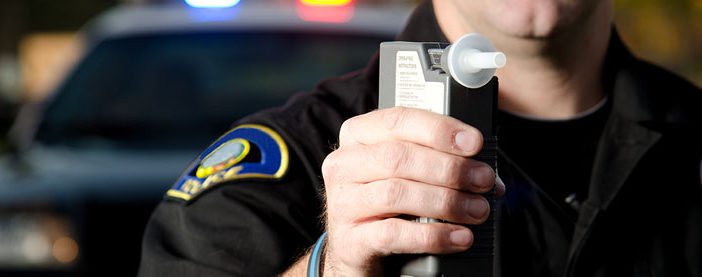
- What it is: A small, handheld device used by an officer at the roadside.
- Purpose: To establish probable cause for an arrest.
- Admissibility: Results are generally not admissible as evidence in a criminal trial.
- Refusal: In many states, you can legally refuse a PBT without facing the administrative penalties associated with implied consent laws. However, the officer may still use your refusal, along with other observations (smell of alcohol, slurred speech, failed field sobriety tests), to establish probable cause and make an arrest.
2. Evidentiary Chemical Test
- What it is: A more sophisticated, stationary machine (often at the police station) used to determine the driver’s precise BAC. This is the test that is admissible in court.
- Purpose: To gather definitive evidence for a criminal DUI/DWI charge.
- Admissibility: Results are admissible as evidence in a criminal trial.
- Refusal: This is the test governed by Implied Consent Laws. Refusing this test will trigger the severe administrative penalties, such as mandatory license suspension.
Consequences of Refusal: A State-by-State Reality
The penalties for refusing an evidentiary breathalyzer test vary dramatically by state, but they are almost universally harsh. The primary consequences are an automatic, mandatory license suspension and significant fines.
|
State Example |
First Offense Refusal Penalty |
Second Offense Refusal Penalty |
Used as Evidence in DUI Trial? |
|---|---|---|---|
|
California |
1-year license suspension |
2-year license suspension |
Yes |
|
Texas |
180-day license suspension |
2-year license suspension |
Yes |
|
Florida |
1-year license suspension |
18-month license suspension |
Yes |
|
New York |
1-year license revocation and $500 civil penalty |
18-month license revocation and $750 civil penalty |
Yes |
In most states, the administrative license suspension for refusing the test is longer than the suspension for failing the test (i.e., blowing over the legal limit). For example, in California, a first-time DUI conviction may result in a four-month suspension, while a refusal results in a mandatory one-year suspension.
Furthermore, a refusal can be used as evidence of guilt in the criminal DUI trial. Prosecutors can argue that the driver refused the test because they knew they were intoxicated, which can be a powerful piece of circumstantial evidence for a jury.
Why Refusal is Often the Worse Choice
The core reason legal experts advise against refusing the evidentiary test is the certainty and severity of the administrative penalties.
- Guaranteed Penalty: A refusal guarantees an immediate, mandatory license suspension, regardless of the outcome of the criminal case. If you take the test and pass (blow under 0.08%), you face no administrative penalty.
- Harsher Suspension: The suspension period for refusal is frequently longer than the suspension for a first-time conviction.
- No-Refusal Policies and Warrants: In jurisdictions with “No-Refusal” policies, or even without them, police can quickly obtain a search warrant from a judge to compel a blood draw. This means you incur the penalty for refusal and the police still obtain the chemical evidence they need for the criminal case. Refusing a test after a warrant has been issued can lead to additional charges, such as contempt of court.
The Interlock Solution
If you are facing a license suspension due to a DUI/DWI conviction or a breathalyzer refusal, an Ignition Interlock Device (IID) may be required or an option for early license reinstatement. An IID is a small, in-car breathalyzer that prevents the vehicle from starting if it detects alcohol on the driver’s breath.
For those navigating the complex legal landscape of DUI/DWI and implied consent laws, having a reliable and low-cost interlock device is a necessary step toward regaining driving privileges.
To learn more about our Low Cost Interlock car breathalyzers, please contact our customer service today.
From California to Alaska, Low Cost Interlock serves 30 states with professional ignition interlock solutions. Contact us today to find a certified location near you and begin your journey toward license reinstatement.
References
[1] National Highway Traffic Safety Administration. (2024). Drunk Driving. Retrieved from https://www.nhtsa.gov/risky-driving/drunk-driving [2] California Vehicle Code § 13353. Refusal to Submit to Chemical Test. [3] Texas Transportation Code § 724.035. Suspension of License. [4] Florida Statutes § 316.1932. Implied Consent; Penalties. [5] New York Vehicle and Traffic Law § 1194. Arrest and Testing.