
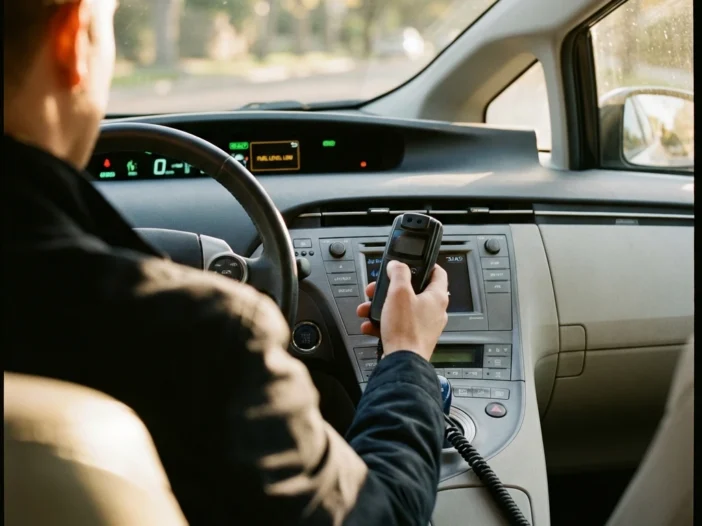
Ignition interlock requirements are expanding just as more drivers switch to hybrid and plug-in cars, and that mix can create a lot of confusion. If you drive a newer vehicle with push-button start, start–stop technology, or a traction battery, you may be unsure how a court-ordered device will work—or whether it can even be installed without damaging your car.
This guide explains how ignition interlock devices interact with hybrid and plug-in powertrains, what to expect from 2026 compatibility rules, and how to protect both your license and your vehicle. You’ll learn how installers connect to modern electrical systems, which popular hybrid models are typically compatible, how regulations are evolving, and what questions to ask when choosing a provider.
Core ignition interlock basics for hybrid and plug-in drivers
An ignition interlock device (IID) is an in-car breathalyzer that prevents the vehicle from starting if alcohol is detected above a preset breath alcohol concentration (BrAC). The handset prompts you to blow, analyzes your breath, and communicates with a control module wired into the vehicle’s low-voltage circuitry.
Even in hybrids and plug-in vehicles, the IID works primarily with the 12‑volt system, not the high-voltage traction battery that powers the electric motor. The device monitors power and starter or “ready” signals, so that if your test is clean the car can enter its normal drive-ready state.
Courts and motor vehicle departments use ignition interlock programs to keep roads safer while allowing eligible drivers to regain limited driving privileges. As long as you follow the program rules—providing breath samples when prompted, attending scheduled calibrations, and avoiding tampering—the IID logs help prove you are driving alcohol-free.
For hybrid and plug-in drivers, the main difference is not what the device does, but how it integrates with advanced electronics. The rest of this guide focuses on that integration so you know what is realistic, safe, and compliant in 2026 and beyond.
How ignition interlocks interface with hybrid and plug-in powertrains
Under the hood, every hybrid and plug-in car has two distinct electrical layers: a conventional 12‑volt system for accessories and control modules, and a much higher-voltage system for the traction motor and main battery pack. The ignition interlock connects only to carefully selected 12‑volt circuits.
Installers avoid the orange high-voltage cables and components that manage propulsion. Instead, they tap into low-voltage wiring associated with the body control module, start/request circuits, and power management, following manufacturer documentation and IID-specific wiring diagrams.
Ignition interlock behavior in push-button and start–stop systems
Many modern hybrids and plug-in hybrids use push-button start rather than a mechanical key. In these vehicles, the ignition interlock is wired so that your breath test must be passed before the car can enter “READY” mode.
When you press the start button, nothing will happen until you blow into the device and pass. Once the IID sends a permit signal, the hybrid system can close its contactors and power up. To you, this feels similar to a key-based car: a short pause for the breath sample, then the dashboard lights up and the vehicle becomes drivable.
Start–stop systems, which shut the engine off at red lights, do not normally interfere with IID operation. The interlock tracks when a driving cycle begins and ends; engine restarts at stoplights are treated as part of the same trip, so you won’t be asked for a new test every time the gas engine cycles on and off.
EV mode, regenerative braking, and silent operation
Hybrid and plug-in cars can often move silently in EV mode, which can make drivers nervous about whether the ignition interlock is really controlling anything. Remember that the IID is monitoring readiness and electrical state, not sound.
Once the device has allowed the car to go into READY mode, it does not care whether the gasoline engine or electric motor is propelling the car. Regenerative braking, blended braking, and automatic switching between EV and hybrid modes do not change how the device enforces your breath-test requirements.
Silent operation can actually make it easier to notice audio or on-screen prompts from the IID. You’ll want to get familiar with its beeps, messages, and any display icons, since they may be the only obvious cues during rolling retests while the cabin is very quiet.

Can an ignition interlock be installed on my hybrid or plug-in vehicle?
In most cases, yes—an ignition interlock can be installed on a hybrid or plug-in vehicle as long as a trained technician follows approved wiring methods. Courts and DMVs expect compliance regardless of whether your car has a traditional engine, a hybrid system, or a plug-in battery.
Compatibility is less about the fuel type and more about whether low-voltage access and safe start-control points are available. Almost all mainstream hybrids and plug-in hybrids sold in North America since about 2010 meet that standard.
Popular ignition interlock hybrid car models for 2026
Here are examples of common hybrid and plug-in models where installers frequently complete IID wiring successfully. Exact procedures vary by model year and trim, so these notes are general, not guarantees.
| Brand | Model family | Powertrain type | Typical IID compatibility notes |
|---|---|---|---|
| Toyota | Prius, Prius Prime, RAV4 Hybrid, RAV4 Prime, Camry Hybrid | Hybrid / Plug-in hybrid | Generally good 12‑V access; push-button start requires careful integration with READY signal. |
| Honda | Accord Hybrid, CR‑V Hybrid | Hybrid | Common IID installs; routing wires cleanly to cabin and avoiding airbag circuits is critical. |
| Ford | Escape Hybrid, Explorer Hybrid, older Fusion Energi | Hybrid / Plug-in hybrid | Push-button systems supported; some trims require extra dash disassembly for ignition circuits. |
| Hyundai / Kia | Hyundai Ioniq Hybrid/Plug-in, Tucson Hybrid; Kia Niro Hybrid/Plug-in | Hybrid / Plug-in hybrid | Generally compatible; installers must respect manufacturer guidance on battery-management interfaces. |
| Other EV makers | Various plug-in and full EV models | Plug-in hybrid / Battery electric | IID connects to 12‑V system; full EVs can require more model-specific research and time. |
For full battery-electric vehicles, especially newer designs, installation may still be possible but often requires more research and sometimes coordination with manufacturer guidance. An experienced ignition interlock provider will check your exact year, make, and model before scheduling installation.
Factors that can complicate ignition interlock installs on hybrids
Even when a hybrid platform is generally compatible, a few details can make an installation more complex.
Common complicating factors include:
- Unusual push-button start logic that hides ignition signals behind multiple control modules.
- Limited access to safe 12‑V tap points without removing interior trim or tightly packaged panels.
- Aftermarket remote-start systems that were added before the IID requirement.
- Very small 12‑V batteries that are more sensitive to parasitic loads if the car sits undriven for long periods.
These issues do not necessarily prevent an ignition interlock hybrid car installation, but they may affect appointment length or require additional harnesses and testing. A transparent provider will explain any extra labor up front so you can plan around it.

Regulation, safety, and training shaping 2026 hybrid interlocks
Regulators are actively updating IID rules to keep pace with hybrid and plug-in technology. For example, the Minnesota House File 2438 appropriation dedicates $317,000 in fiscal year 2026 specifically to ignition interlock rulemaking that addresses hybrid-electric vehicles, signaling that states are now writing compatibility into statute and program design.
At the federal level, the NHTSA FY 2026 budget estimates allocate more than $849,654,625 to programs that include ignition-interlock countermeasures, helping fund research, data systems, and technical assistance that directly influence how devices integrate with advanced powertrains.
The market itself is expanding quickly. According to the Ignition Interlock Device Global Market Report 2025, the global IID market is projected to grow from $8.3 billion in 2024 to $9.21 billion in 2025, an implied growth rate that reflects more installations on late-model vehicles, including hybrids and plug-ins.
Technical guidance is also improving. A NHTSA ignition interlock symposium summary describes how regulators, automakers, and IID technicians created a compatibility checklist for 2026 hybrid and EV platforms, covering 12‑V tap points, high-voltage isolation, and software handshake procedures to reduce installation failures.
Installer safety is being standardized as well. The ASE xEV High-Voltage Electrical Safety Standards outline de-energization steps, personal protective equipment, and approved low-voltage connection methods, and these requirements are now part of ASE’s electrified-vehicle certification path used by many IID technicians.
Looking ahead, workforce development programs are preparing future installers for hybrid and EV work. The South Carolina Fundamentals of Hybrid/EV course standards for the 2025–26 school year, for example, include learning objectives on ignition interlock circuit integration and regulatory inspection checklists so entry-level technicians can handle 2026 powertrains.
Installation, costs, and day-to-day use on hybrids and plug-ins
When you schedule an ignition interlock installation for a hybrid or plug-in, the overall process is similar to a conventional car, but the technician will spend more time verifying safe wiring and proper system behavior. Understanding each step can make the appointment smoother and help you budget correctly.
Step-by-step ignition interlock installation on a hybrid
A typical hybrid or plug-in installation follows a structured sequence.
- Pre-check and documentation: The technician records your vehicle information, checks for existing aftermarket electronics, and confirms the court or DMV paperwork.
- Safety preparation: The 12‑V system is secured, and high-voltage components are identified and avoided based on service information and safety standards.
- Wiring and mounting: The control module is mounted discreetly, low-voltage connections are made to approved circuits, and the ignition interlock handset cable is routed into the cabin.
- Software and calibration: The device is programmed to your jurisdiction’s BrAC limit and test schedule, then paired to your vehicle.
- Functional testing: The technician verifies that a passing test allows the car to enter READY mode, a failing test prevents operation, and rolling retests work as specified.
- Driver training: You are shown how to provide a proper breath sample, respond to prompts, and handle routine events such as calibration visits.
On many hybrids, technicians add extra testing time to observe behavior in both EV and hybrid modes, to confirm the IID does not conflict with normal transitions between electric and gasoline operation.
Will an IID drain my hybrid or plug-in battery?
Modern ignition interlocks are designed to draw very little current when the car is parked, but all electronics impose some load. On hybrids and plug-ins, the concern is usually the small 12‑V battery, not the large traction pack that powers the wheels.
Typical best practices to avoid battery issues include driving the car regularly, avoiding extremely long periods parked without starting, and notifying your provider if you see repeated low-voltage or battery-warning messages on the dash after installation.
If you must store the car for an extended time, your court or DMV may allow options such as temporarily suspending the requirement or using an approved storage procedure; always confirm with your supervising authority before disconnecting any IID equipment.
Day-to-day, using an ignition interlock hybrid car feels much like using one in a conventional vehicle. You perform a test before starting, complete occasional rolling retests during longer trips, and attend scheduled calibrations—while your hybrid system manages fuel and electricity in the background.

Choosing an ignition interlock provider for your hybrid or plug-in
Because hybrid and plug-in platforms are more complex than older cars, the experience and training of your ignition interlock provider matter even more. The right choice minimizes installation problems, protects your vehicle, and supports you through the entire compliance period.
Look for a provider that is state-approved, uses fuel-cell sensor technology for accurate BrAC readings, and can clearly describe how their technicians are trained on hybrids and electrified powertrains.
Questions to ask before you schedule
Before booking installation, ask potential providers the same focused questions you would use to evaluate any specialized auto service.
- How many installations have you completed on my specific hybrid or plug-in model and model year?
- Are your installers trained or certified on hybrid and EV electrical safety standards?
- What is your process if the car shows warning lights or does not enter READY mode after installation?
- How do you handle warranty concerns or communication with dealerships if questions arise?
- What are your total monthly and up-front costs, and are there any hidden or penalty fees?
A provider that can answer these questions clearly is more likely to keep your program simple and predictable. It is also worth asking whether they offer single-use mouthpieces for hygiene, app-based remote warm-ups, or discreet device designs if those details matter to you.
If you are weighing options, review information on a state-approved ignition interlock provider that emphasizes transparent pricing and electrified-vehicle compatibility. Many drivers on tight budgets also appreciate providers that allow bi-weekly payments and offer no-fee policies for failed tests.
Hybrid and plug-in owners often want to know how the hardware will look and feel in a modern cabin. You can typically ask to see photos of the compact in-vehicle unit—sometimes marketed as “The Can”—and learn how a modern LCI-777 ignition interlock device integrates quietly into the dashboard area.
For drivers balancing work, family, and court requirements, support matters as much as hardware. When comparing options, look for bilingual assistance, text or email reminders for calibrations, and straightforward guidance about hardship licenses or exemption programs, all of which can be found through a full-service ignition interlock installation and support program.

Frequently Asked Questions
Will installing an ignition interlock on my hybrid or plug-in void my factory warranty or lease agreement?
Most manufacturers and leasing companies do not automatically void a warranty or lease because of an IID, but they may require that wiring be reversible and done by trained technicians. Before installation, review your warranty or lease terms and ask your provider whether they offer documentation showing that only approved low‑voltage connections were used.
How does an ignition interlock affect over‑the‑air (OTA) software updates and dealer service on hybrid or plug-in vehicles?
In most cases, OTA updates and dealer diagnostics continue to work normally, but technicians should be informed that an IID is installed so they can avoid misinterpreting wiring or fault codes. If your vehicle receives a major software update, schedule a quick check with your IID provider to confirm the device still communicates correctly with your car.
Can I switch my ignition interlock from a gasoline vehicle to a hybrid or plug-in during my program?
You can usually transfer the IID, but the hybrid will require fresh wiring, testing, and paperwork with your monitoring authority. Always clear the vehicle change with your court or DMV first, then have the same provider handle removal from the old car and installation on the new one to keep reporting continuous.
How do ignition interlocks handle extreme temperatures in hybrid and plug-in vehicles?
IIDs are rated for automotive temperature ranges, but breath sensors can be slower or show errors in very hot or cold conditions. Ask your provider about warm‑up procedures, approved defrosting methods, and whether they offer heated mounts or protection sleeves suited for your climate.
What privacy protections apply to data collected by an ignition interlock in my hybrid or plug-in?
IID data is generally limited to breath test results, device status, and basic event timing, and is transmitted only to your court‑approved monitoring agency and provider. Review your provider’s privacy policy to understand how long information is stored, who can access it, and how it’s secured against unauthorized use.
What should I consider if I plan to sell or trade in my hybrid while I still have an ignition interlock requirement?
You’ll need to schedule IID removal before transferring ownership and arrange installation in your next vehicle without interrupting your monitoring period. Coordinate timing with your provider, and get written confirmation that the wiring was returned to stock to reassure dealers or private buyers.
Can I use rideshare, rental, or work vehicles if I’m under a hybrid ignition interlock requirement?
Many jurisdictions require every vehicle you operate to be equipped with an IID, which can restrict driving rentals, employer cars, or family vehicles without a device. Check your court or DMV order in writing and, if needed, ask about employer-vehicle exemptions or documented restrictions before driving any non‑equipped car.
Next steps to stay compliant and protect your hybrid in 2026
Owning a hybrid or plug-in vehicle does not exempt you from ignition interlock requirements, but it also does not have to put your car at risk. With trained technicians tapping only the 12‑volt system, evolving standards for high-voltage safety, and growing regulatory guidance, compatible installations on late-model hybrids and plug-ins are becoming routine.
Your main responsibilities are to choose a provider that understands electrified powertrains, schedule installation promptly, and use the device exactly as your court or DMV specifies. As mentioned earlier, most major hybrid and plug-in models can support IID wiring when installers follow current guidelines, so the real difference is the quality of the service you receive.
If you are ready to regain driving privileges and need a device that works seamlessly in a hybrid or plug-in, you can turn to Low Cost Interlock’s state-approved ignition interlock program for help coordinating installation, calibration, and reporting. Call 844-218-5398 to check your vehicle’s compatibility, get a quick price estimate with no hidden fees, and schedule an appointment so you can get back on the road with a compliant, hybrid-ready ignition interlock device.