
What is a Breathalyzer?
Alcohol-impaired driving incidents remain a significant problem in our country. According to the Centers for Disease Control and Prevention, about 1.1 million people were arrested for driving under the influence of alcohol or narcotics in 2015. The National Highway Traffic Safety Administration found that nearly 10,500 people died from alcohol-impaired driving crashes in 2016. About 29 people die from drunk driving-related incidences every single day, equating to about one preventable death every 50 minutes.
As a means of combating the problems with drunk driving, states and federal entities have enacted various laws designed to punish those found with a blood alcohol concentration of 0.08 or more. The primary tool used in the fight to prevent drunk driving is the breathalyzer. Let’s take a closer look at the breathalyzers in cars to see how do ignition interlock devices work.
What Is a Breathalyzer? Definition and Purpose
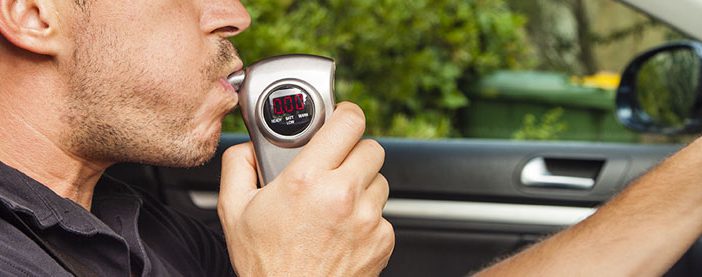
A breathalyzer is a device that measures the concentration of alcohol in a person’s breath to estimate their blood alcohol content (BAC). The term “breathalyzer” was originally a brand name created by inventor Robert Frank Borkenstein in 1954, but it has since become a generic term for any breath alcohol testing device.
Breathalyzers serve several important purposes:
- Law enforcement: Police use portable breathalyzers during traffic stops to establish probable cause for DUI arrests
- Ignition interlock systems: Court-ordered devices installed in vehicles to prevent drunk driving
- Personal monitoring: Individuals can use personal breathalyzers to monitor their own alcohol consumption
- Workplace testing: Employers use breathalyzers to ensure workplace safety in safety-sensitive positions
Understanding BAC
The main purpose of the breathalyzer is to measure BAC, or blood alcohol concentration. Blood alcohol concentration refers to the level of alcohol present in your blood and acts as a means of quantifying how drunk you are (which would otherwise be fairly subjective). BAC is expressed as the weight of ethanol in grams per 100 milliliters of blood. For example, a BAC of 0.05 percent equates to 0.05 grams of alcohol for every 100 milliliters of blood in your body.
On average, it’s suggested that one alcoholic beverage will increase your blood alcohol concentration by 0.02 and that it takes one hour to metabolize one standard drink, which is any drink that contains about 14 grams of pure alcohol. However, everyone processes alcohol at different rates, resulting in different blood alcohol concentrations, which means that even if you drank the same amount as someone else, you may not necessarily have the same BAC.
Factors That Affect BAC
Several factors influence how quickly alcohol is absorbed and metabolized in your body:
- Body weight and composition: Larger individuals typically have lower BAC levels after consuming the same amount of alcohol
- Gender: Women generally reach higher BAC levels than men due to differences in body composition and metabolism
- Food consumption: Eating before or while drinking slows alcohol absorption
- Medications: Certain medications can interact with alcohol and affect BAC
- Rate of consumption: Drinking quickly leads to higher peak BAC levels
- Age: Older adults may process alcohol more slowly
- Health conditions: Liver disease and other conditions can affect alcohol metabolism
Based on your BAC level, you can potentially predict your level of impairment. For example, a BAC of 0.02 (usually after about two standard drinks) can already bring on feelings of warmth and relaxation as well as a loss of judgment and a decline in visual function and multitasking abilities.
All states have set their legal limit at a BAC of 0.08, meaning that if you are driving with a BAC of 0.08 or higher, you are breaking the law and pose a danger to yourself and others. A 0.08 BAC is equivalent to about four drinks and often results in:
- Poor muscle coordination
- Impaired judgment, memory, reasoning, and self-control
- Problems concentrating
- Impaired information processing capability
- Impaired sensory perception
BAC Levels and Impairment Effects
Understanding the progression of impairment at different BAC levels:
| BAC Level | Typical Effects | Legal Status |
|---|---|---|
| 0.01-0.03% | Slight mood elevation, no obvious impairment | Legal for driving |
| 0.04-0.06% | Feeling of well-being, lowered inhibitions, minor impairment | Legal for most drivers |
| 0.07-0.09% | Slight impairment of balance, speech, vision, reaction time | Illegal for driving (0.08%+) |
| 0.10-0.12% | Significant motor impairment, loss of good judgment | Illegal, enhanced penalties |
| 0.13-0.15% | Gross motor impairment, lack of physical control | Illegal, severe penalties |
| 0.16%+ | Potentially life-threatening, severe impairment | Illegal, maximum penalties |
Alcohol and Your Breath
When you drink alcohol, it isn’t immediately digested. In fact, it maintains the same chemical structure in your bloodstream. The blood travels throughout your system, passing through your lungs. As it goes over your lungs, some of the alcohol evaporates and gets trapped within the lungs air sacs, known as alveoli.
The concentration of alcohol in your alveoli relates directly to the amount of alcohol in your blood at a ratio of about 2,100 to 1. That means that 2,100 milliliters of air that you exhale contains the same amount of alcohol as 1 milliliter of blood. This makes for a simpler means of measuring the alcohol in your system instead of drawing your blood or taking a urine sample.
The Science Behind Breath Alcohol Testing
The relationship between breath and blood alcohol is based on Henry’s Law, which describes how gases dissolve in liquids. When alcohol-containing blood passes through the lungs, alcohol molecules evaporate into the air spaces (alveoli) in proportion to the concentration in the blood.
This scientific principle allows breathalyzers to provide accurate estimates of blood alcohol content through breath analysis. The 2,100:1 ratio is an average that works for most people, though individual variations can occur due to:
- Body temperature
- Breathing patterns
- Lung capacity
- Recent alcohol consumption (mouth alcohol)
- Medical conditions affecting lung function
How Breathalyzers Work
So do you know how a breathalyzer works in a car? Well, breathalyzers come in several forms and varieties with different operating mechanisms. Most people think of breathalyzers as handheld devices carried by all law enforcement officers, but most police stations also have larger breathalyzers that are more advanced and provide more precise readings.
Types of Breathalyzer Technology
Modern breathalyzers use different technologies to detect alcohol:
Fuel Cell Technology
The most accurate and commonly used technology in professional-grade devices:
- Uses platinum electrodes with acid-electrolyte material
- Highly specific to ethanol (alcohol)
- Provides accurate, reliable results
- Used in police breathalyzers and ignition interlock devices
- More expensive but more precise
Semiconductor Technology
Used in less expensive, personal-use devices:

- Uses a heated semiconductor sensor
- Less specific than fuel cell technology
- Can be affected by other substances
- More affordable for personal use
- Less accurate than fuel cell devices
Infrared Spectroscopy
Used in some advanced laboratory-grade devices:
- Measures alcohol by analyzing infrared light absorption
- Highly accurate and specific
- Primarily used in forensic laboratories
- Most expensive technology
More modern handheld breathalyzer devices work using fuel cell technology containing two platinum electrodes with an acid-electrolyte material placed in between the two electrodes. When you blow into the device, the platinum electrodes oxidize any alcohol in the air, creating protons, electrons, and acetic acid in the process.
The protons move through a lower compartment and combine with oxygen to create water. The electrons flow through a wire that connects the two platinum electrodes, creating an electric current. The more alcohol that gets oxidized, the stronger the electric current. The device measures the strength of the electric current and calculates it into a BAC.
Types of Breathalyzers and Their Uses
Police Breathalyzers
- Portable devices: Used during traffic stops for preliminary testing
- Station devices: More accurate machines used at police stations for evidential testing
- Calibration requirements: Regular calibration ensures accuracy for legal proceedings
Ignition Interlock Devices
- Vehicle-installed breathalyzers: Prevent vehicle operation if alcohol is detected
- Rolling retests: Require periodic breath samples while driving
- Data logging: Record all tests and violations for court monitoring
Personal Breathalyzers
- Consumer devices: Allow individuals to monitor their own BAC
- Accuracy varies: Generally less accurate than professional devices
- Educational tool: Help users understand their alcohol consumption effects
Workplace Breathalyzers
- Employee testing: Used in safety-sensitive industries
- Random testing programs: Ensure workplace safety compliance
- Professional-grade accuracy: Similar to law enforcement devices
Breathalyzer Accuracy and Limitations
Factors Affecting Accuracy While breathalyzers are generally reliable, several factors can affect their accuracy:
- Calibration status: Devices must be regularly calibrated to maintain accuracy
- Mouth alcohol: Recent drinking, mouthwash, or breath spray can cause elevated readings
- Medical conditions: Diabetes, GERD, and other conditions may affect results
- Environmental factors: Temperature and humidity can influence readings
- Device maintenance: Proper maintenance is essential for accurate results
False Positives and Negatives
- False positives: Can occur from mouth alcohol, certain medications, or medical conditions
- False negatives: Rare but can occur with device malfunction or improper use
- Legal challenges: Accuracy issues can be grounds for challenging test results in court
Calibration and Maintenance
Professional breathalyzers require regular calibration using:
- Alcohol wet bath solutions with known concentrations
- Pressurized alcohol-gas mixtures
- Certified reference standards
- Professional calibration services
Legal Aspects of Breathalyzer Testing
Admissibility in Court
- Evidential standards: Breathalyzer results must meet specific legal standards
- Chain of custody: Proper procedures must be followed for legal admissibility
- Operator certification: Test administrators must be properly trained and certified
- Device certification: Breathalyzers must be approved for legal use
Implied Consent Laws
Most states have implied consent laws requiring drivers to submit to breathalyzer testing:
- Automatic consent: Having a driver’s license implies consent to testing
- Refusal penalties: Refusing testing often results in automatic license suspension
- Separate offense: Refusal is typically a separate charge from DUI
- Enhanced penalties: Refusal often carries harsher penalties than failing the test
Frequently Asked Questions About Breathalyzers
How accurate are breathalyzers?
Professional-grade breathalyzers using fuel cell technology are typically accurate within ±0.005% BAC when properly calibrated and maintained.
Can you beat a breathalyzer test?
No reliable method exists to “beat” a properly functioning breathalyzer. Myths about using mouthwash, breath mints, or other substances have been thoroughly debunked.
How long after drinking will a breathalyzer detect alcohol?
Breathalyzers can detect alcohol within minutes of consumption and will continue to detect it until your BAC returns to zero, which depends on how much you’ve consumed.
What can cause a false positive on a breathalyzer?
False positives can result from recent use of mouthwash, certain medications, medical conditions like diabetes, or recent consumption of alcohol-containing foods.
Do breathalyzers detect drugs other than alcohol?
Standard breathalyzers only detect alcohol. Separate devices are needed to test for other drugs.
How often do breathalyzers need calibration?
Professional breathalyzers typically require calibration every 30-90 days, depending on usage and manufacturer specifications.
Can medical conditions affect breathalyzer results?
Yes, conditions like diabetes (ketoacidosis), GERD, and certain lung conditions can potentially affect breathalyzer readings.
What’s the difference between a preliminary breath test and an evidential breath test?
Preliminary tests are used roadside to establish probable cause, while evidential tests are more accurate and admissible in court proceedings.
Given regular maintenance and calibration, breathalyzers are an accurate tool for measuring blood alcohol concentration, so don’t expect to “beat” a breathalyzer. If you have been drinking, either wait to drive or have a backup plan in place to ensure your safety and the safety of others.
To better understand your alcohol consumption limits, read about how many drinks does it take to reach .08 BAC and learn more about how do ignition interlock devices work if you’re required to install one after a DUI conviction.
Low Cost Interlock operates in 30 states nationwide, with dedicated service in California and Kentucky. Contact us today to learn how we can help you meet your ignition interlock requirements affordably.