
How Many Drinks Does It Take To Reach .08 BAC?
For many average-sized adults, rough estimates put a blood alcohol concentration of 0.08 somewhere around three to five standard drinks in a short window. That range is doing a lot of work, though. A smaller person, a woman, someone drinking on an empty stomach, or someone drinking strong craft beer can get there much faster.
There is no drink count that guarantees you stay under the limit. Two people can drink the same three beers and blow very different numbers.
This article explains what 0.08 actually means, what counts as one drink, the factors that move your BAC up or down, and why anyone driving with an ignition interlock device needs to think about this completely differently than the average driver.
The Short Answer: There Is No Magic Number
Official BAC estimation charts, like the ones published by the California Department of Alcoholic Beverage Control, put many average-sized adults near 0.08 after roughly three to five standard drinks consumed within an hour or two. Lighter people, and women in general, tend to reach it with fewer.
Every chart carries the same warning: these are estimates, not measurements. Your actual BAC depends on your body, your timing, and what was really in your glass. If you need to be certain you are under 0.08, the honest answer is that counting drinks cannot give you that certainty.
What Is BAC?
BAC, or blood alcohol concentration, is a measure of alcohol in your bloodstream. It is expressed as a percentage calculated by a ratio of ethyl alcohol (measured in grams) per 100 milliliters of blood. For instance, a BAC of 0.04 percent means that you have 0.04 grams of alcohol for every 100 milliliters of blood.
When you consume alcohol, it is metabolized by your liver. A general rule of thumb suggests that it takes about one hour to process a standard alcoholic drink. Drinking more than one drink in an hour results in higher concentrations of alcohol in your system and more time necessary to break down that alcohol. However, there are a huge variety of factors that affect how you metabolize alcohol, including your genetics, body size, age, and general health.
One more thing worth knowing: most roadside tests and every ignition interlock device measure breath alcohol, not blood alcohol. The two track each other closely but are not identical, which is one reason the same person can test slightly differently on different devices. The difference matters enough that we covered it separately in our guide to blood alcohol versus breath alcohol.
What Counts as One Standard Drink?
A standard drink in the United States contains about 14 grams of pure alcohol, per the National Institute on Alcohol Abuse and Alcoholism. The liquid in your glass is not the measurement; the alcohol in it is. That amount is found in:
- 12 fl oz of beer (about 5 percent alcohol by volume)
- 8 to 9 fl oz of malt liquor (about 7 percent alcohol by volume)
- 5 fl oz of wine (about 12 percent alcohol by volume)
- 1.5 fl oz of distilled spirits/liquor (about 40 percent alcohol by volume)
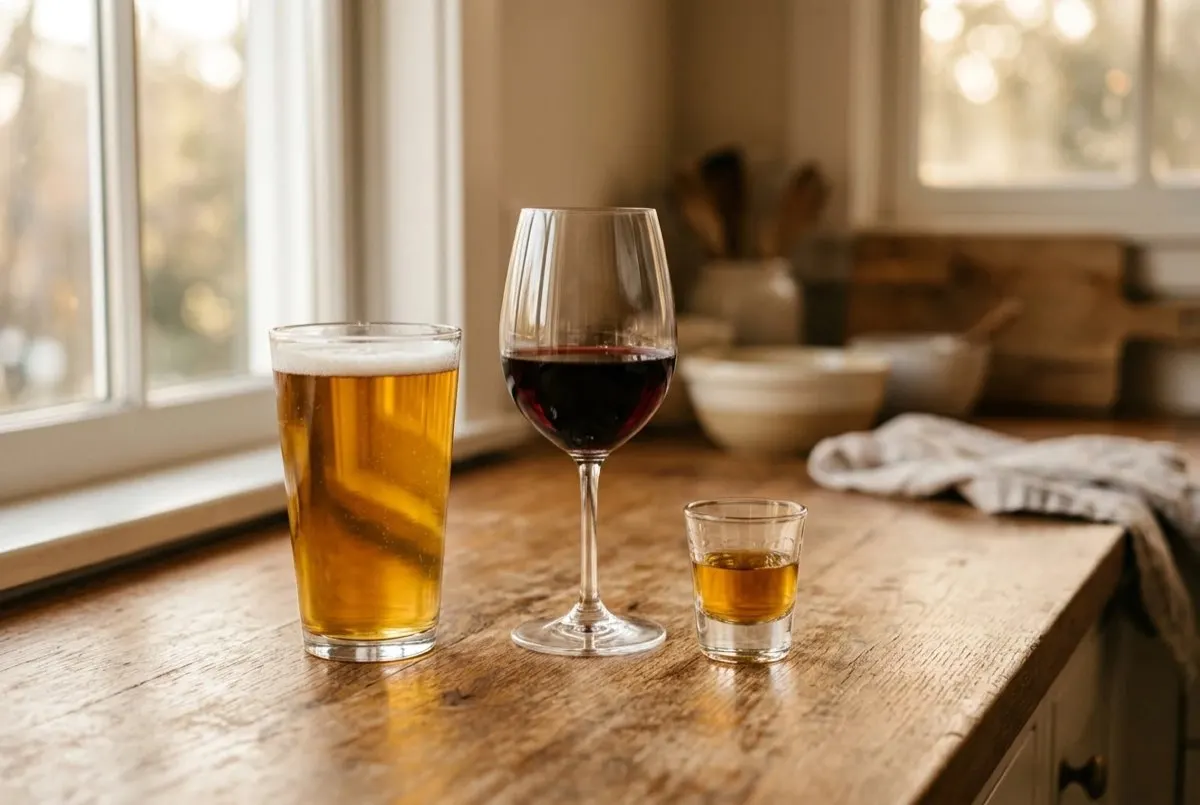
This is where drink counting quietly falls apart. Beer, wine, and liquor come in so many strengths and pour sizes that “one drink” rarely means one standard drink. A generous pour of wine, a strong cocktail, or a double all count as more than one.
How Many Beers Is .08?
There is no fixed number of beers that equals 0.08, because beers are not interchangeable. A 12-ounce light beer, a 12-ounce regular beer, and a 16-ounce craft IPA can each carry very different amounts of alcohol.
Run the standard-drink math and the problem gets obvious:
- A typical light beer runs a bit over 4 percent alcohol, so a 12-ounce can is slightly less than one standard drink. It still counts. Three or four light beers in a short window can put a smaller person in the 0.08 range.
- A regular 12-ounce beer at about 5 percent is exactly one standard drink.
- Many craft beers run 6 to 9 percent alcohol and often come in 16-ounce pours. One of those can equal nearly two standard drinks by itself.
So when someone asks how many Coors Lights or Bud Lights it takes to reach 0.08, the honest answer is that the count depends on their body and their timing far more than the label. Lower-alcohol beer buys you a little margin; it does not buy you a formula.
Why You Can’t Count Drinks to Stay Under 0.08
Two people drinking identical rounds can land at very different BAC levels. These are the variables that move the number:
- Body weight. Alcohol distributes through the body’s water. A heavier person has more of it, so the same alcohol produces a lower concentration.
- Sex. Women typically have less body water than men of the same weight, so the same drinks produce a higher BAC.
- Time. Your liver clears roughly one standard drink per hour. Three drinks across an evening is a different event than three drinks in 45 minutes.
- Food. Drinking on an empty stomach speeds up absorption, so BAC climbs faster and peaks higher.
- Drink strength and pour size. The gap between what you counted and what you actually drank is often the whole story.
- Genetics, age, health, and medications. All of these change how quickly you absorb and process alcohol.
If you want to see how these variables interact, use an official resource like the California ABC charts linked above rather than a bar napkin estimate. And treat any chart or calculator as a rough guide, never as clearance to drive.
Is .08 the Legal Limit Everywhere?
No. Most states set the legal limit for regular drivers at 0.08, but Utah’s limit is 0.05, according to the Centers for Disease Control and Prevention. The CDC also notes that impairment starts well below any legal limit.
Two other limits catch people off guard:
- Commercial drivers. Federal rules prohibit operating a commercial motor vehicle with an alcohol concentration of 0.04 or greater, under 49 CFR 382.201. That is half the standard limit, and CDL holders can face consequences at even lower readings.
- Drivers under 21. States set far stricter limits for underage drivers, in many cases effectively zero. The Governors Highway Safety Association tracks how these zero-tolerance laws vary by state.
And a limit is not a safe harbor. In many states you can be charged with impaired driving below the legal threshold if your driving shows it. Requirements and penalties vary by state and change over time, so check your state’s DMV or courts for current rules.
What Does 0.08 Actually Feel Like?
Often, not as drunk as people expect. That is part of the danger. By 0.08, measurable impairment is well established even when a person insists they feel fine. At a BAC of 0.08, you can expect impairment to:
- Muscle coordination (including speech, balance, vision, hearing, and reaction time)
- Judgment
- Self-control
- Reasoning
- Memory
That ultimately makes it harder to concentrate on the road or control your speed. You also won’t be able to perceive other cars or objects in and around the road as reliably, and you’ll generally have problems processing information, including recognizing turn signals and visual scanning.
The effects start much earlier than 0.08. At a BAC of 0.05, you can expect:
- Minor loss of muscle control
- Exaggerated behavior
- Released inhibitions
- Reduced alertness
- Impaired judgment
Even with a BAC of 0.02, your body will become more relaxed and your judgment will begin to waver. If you’re driving, you may experience a decline in visual function, and you may have trouble multitasking.
Drinking also tends to impair your ability to judge how impaired you are. If you have been drinking, your best bet is to wait it out, designate a sober driver, or call a ride. Don’t take the risk of drinking and driving.
Why Drink Counting Fails Completely with an Ignition Interlock
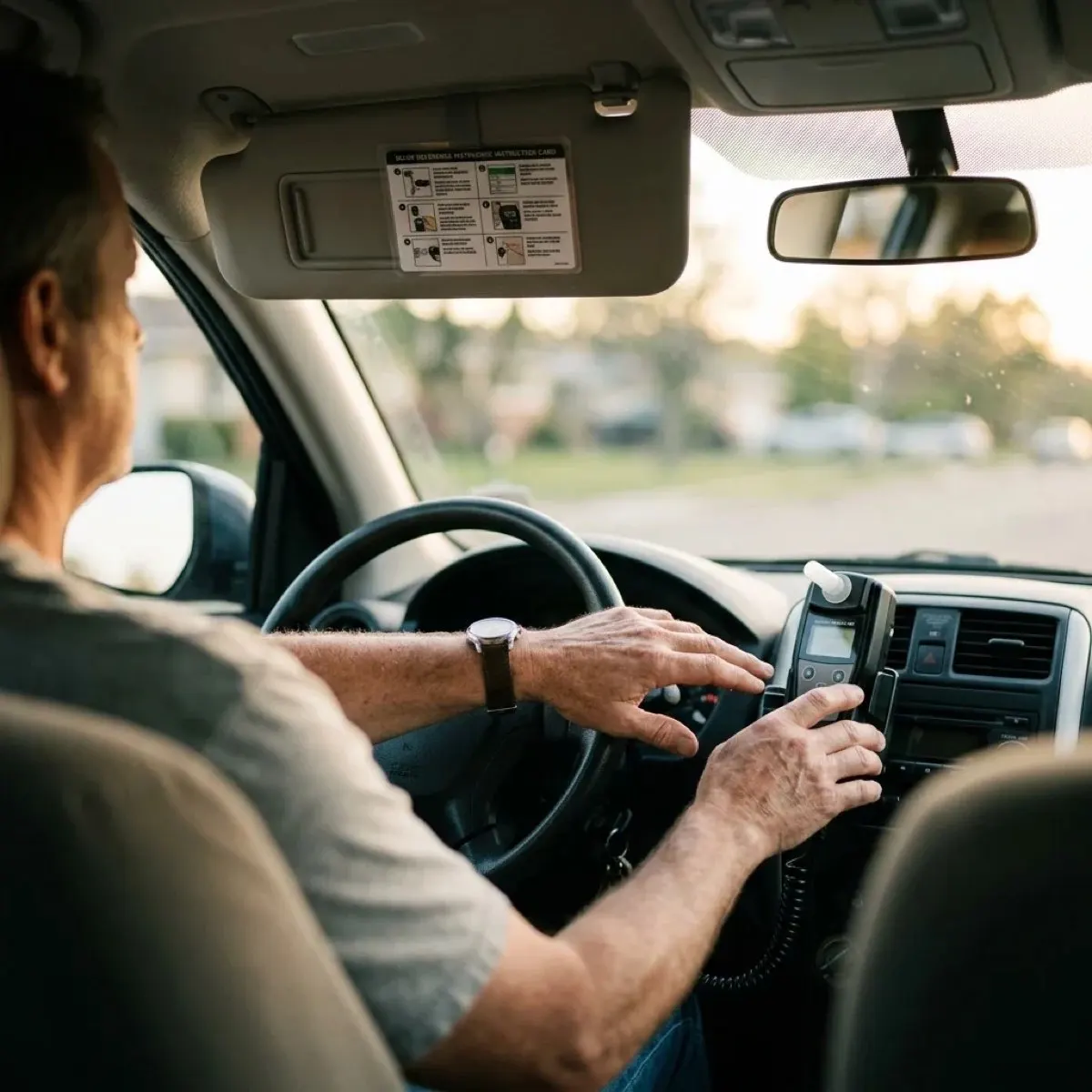
If you drive with an ignition interlock device, forget the 0.08 math entirely. It does not apply to you, for three reasons.
Your fail point is far below 0.08. Interlock devices are set to fail at thresholds well under the standard legal limit, and the exact setting varies by state and program. A drink count aimed at “staying under .08” is aiming at the wrong target by a wide margin. Our post on what happens if you fail an interlock test covers what a failed sample can trigger.
The device measures breath alcohol, and it measures it often. An interlock works like a breathalyzer built into your car: it reads the alcohol in your breath before the engine starts and again at random intervals while you drive. There is no timing window to manage. Any alcohol in your system can show up on any test.
Morning-after readings are real. Alcohol from a late night can still be in your system the next morning, long after you feel sober. Plenty of interlock violations happen at 7 a.m., not midnight. We wrote a full guide on how long after drinking you can use an ignition interlock for exactly this situation.
The only strategy that works with an interlock is a zero-alcohol buffer: if you have been drinking, you do not drive, period, and you leave generous time before your next test. Counting to some “acceptable” number is how violations happen.
Frequently Asked Questions
How many drinks is .08?
Rough estimates from official BAC charts put many average-sized adults near 0.08 after about three to five standard drinks within an hour or two. Body weight, sex, food, timing, and drink strength all shift that number, so treat any estimate as a ballpark, not a limit you can drive up to safely.
How many beers is .08?
It depends on the beer. A regular 12-ounce beer at 5 percent alcohol is one standard drink, so the three-to-five-drink ballpark applies. Light beers count slightly less; strong craft beers in 16-ounce pours can count nearly double. The beer’s strength matters less than your size, your timing, and what you ate.
Will 3 beers get you a DUI?
It can. Three regular beers in a short window can push a smaller person past 0.08, and past 0.05 in Utah. You can also be charged below the legal limit in many states if your driving is impaired. If you drive a commercial vehicle or you are under 21, three beers is far past your threshold.
What is my BAC after 2 drinks?
For many adults, two standard drinks within an hour lands somewhere roughly between 0.02 and 0.05, but that spread is wide for a reason. A lighter person or someone with an empty stomach can sit near the top of the range or above it. Even at 0.02, relaxation and small judgment changes begin.
Is 0.08 very drunk?
It is more impaired than most people feel. At 0.08, coordination, judgment, reaction time, and memory are all measurably degraded, even in someone who insists they are fine. That gap between how impaired you are and how impaired you feel is exactly why the limit exists.
Will 3 beers show up on a breathalyzer?
Yes. A breathalyzer detects alcohol, not drunkenness, and three beers put alcohol in your breath for hours. How long depends on your body and timing, since the liver clears roughly one standard drink per hour. On an ignition interlock, even leftover alcohol from the night before can register.
How long until I’m back under 0.08 after drinking?
There is no shortcut. Your liver processes roughly one standard drink per hour, and nothing speeds that up. Coffee, cold showers, and food do not lower BAC. If you drank enough to be near 0.08, you are looking at several hours minimum, and sleep does not guarantee a clean morning test.
Is .08 the legal limit everywhere?
No. Most states use 0.08 for regular drivers, but Utah’s limit is 0.05. Commercial drivers face a federal 0.04 standard, and drivers under 21 face zero-tolerance limits that sit at or near zero. Limits and penalties vary by state and change, so confirm current rules with your state’s DMV.
How many drinks is .08 for a woman?
Typically fewer than for a man of the same weight. Women generally have less body water, so the same alcohol produces a higher concentration. Chart estimates often put an average-sized woman near 0.08 after two to four standard drinks in a short window, but individual variation is large.
Can a BAC calculator tell me if I’m safe to drive?
No. Calculators and charts estimate an average body, not yours, and they cannot see your stomach contents, your medications, or your genetics. They are useful for understanding how fast BAC climbs, and nothing more. If the question is “am I under the limit,” the safe answer is to not drive.
What reading will fail an ignition interlock test?
Interlock fail thresholds are set well below 0.08 and vary by state and program, so even a small amount of alcohol can lock you out. Certain foods and products can also trigger a reading; see our list of items that can trigger a BrAC reading. The reliable approach is a zero-alcohol buffer before any test.
If you need an ignition interlock installed, Low Cost Interlock makes it simple: transparent pricing with no hidden fees and 100% state-approved devices. Schedule your installation online or call (844) 387-0326 to get set up.
Disclaimer: This article is provided by Low Cost Interlock for general informational purposes only and is not legal, financial, or medical advice. DUI and ignition interlock laws, penalties, fees, and program requirements vary by state, county, and individual circumstances, and they change over time. Any costs, timelines, or figures mentioned are general estimates, not quotes or guarantees. Nothing here should be relied on as a statement of the law in your jurisdiction. Always confirm current requirements with your state DMV, the court handling your case, a licensed attorney, or Low Cost Interlock directly before making decisions. Product features, pricing, availability, and promotions referenced are subject to change and may not be available in every state Low Cost Interlock serves.