
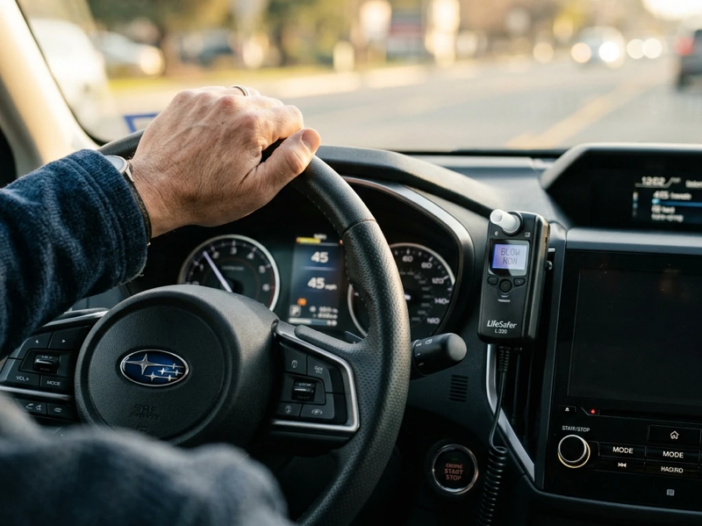
Interlock Camera Privacy: Who Sees Your Footage and Where Is It Stored?
Interlock camera privacy concerns hit differently when it’s your face
being photographed every time you start your car. If you’re required to
use an ignition interlock device, you probably already know it tests
your breath. What you might not know is what the camera actually
captures, who has permission to view those images, and how long the
records stick around after your program ends.
This guide walks through the full lifecycle of interlock camera data.
You’ll see what triggers a photo, where the image goes after it leaves
the device, and which parties typically have access. Camera rules,
retention periods, and access policies vary by state and by provider, so
you’ll also get a short list of questions to ask before installation
day.
How
Interlock Cameras Work and When Photos Are Taken
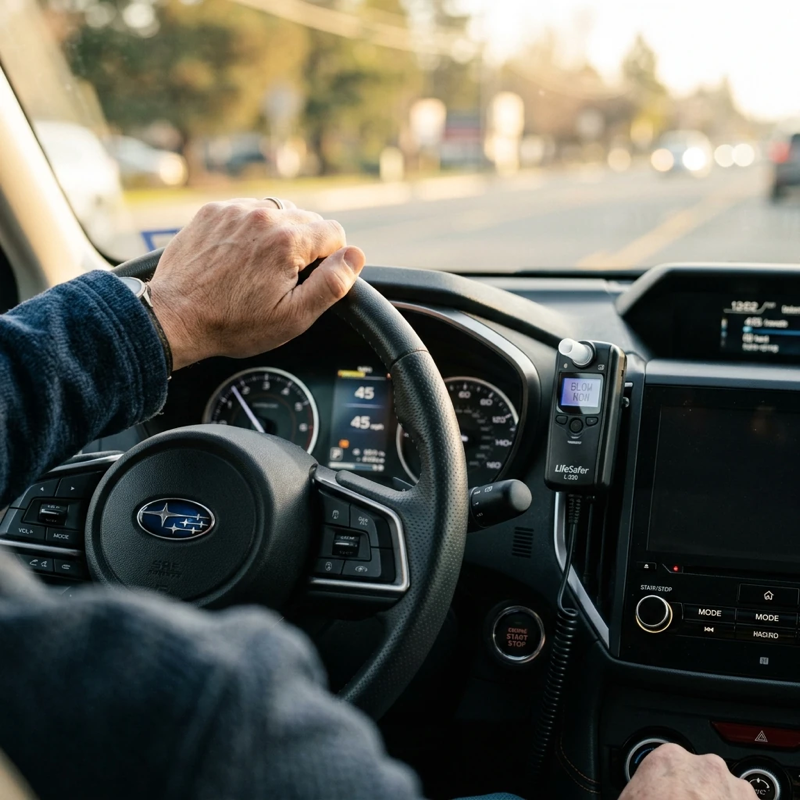
The camera inside an ignition interlock device exists for one main
purpose: confirming that the person providing the breath sample is the
person required to use the device. It’s an identity-verification tool,
not a surveillance system. That distinction matters.
Trigger Events That
Activate the Camera
The camera doesn’t run continuously. It activates around specific
events tied to a breath test. Common triggers include:
- The initial startup breath test when you turn on the vehicle
- Rolling retests requested by the device while you’re driving
- Failed breath tests or skipped retests
- Suspected tampering or circumvention attempts
Some states explicitly require cameras on interlock devices. Indiana,
for example, mandates camera-equipped IIDs in many cases, and parts of
Texas and other states have similar provisions. Other states leave
camera rules to the provider or the monitoring authority. Even within a
single state, the exact moments that trigger a photo can vary by device
model. Always confirm the specifics with your provider and your state’s
monitoring agency.
No
Continuous Video, No Audio, No Random Surveillance
A common misconception is that the device records video or audio
inside your vehicle. In most setups, it doesn’t. Most interlock cameras
capture still images only during the trigger events above. The device
generally doesn’t take photos when the car is off, and no one watches a
live feed of your interior. For more on what the hardware actually does,
our companion article on whether interlock
devices have cameras goes deeper on capabilities versus common
myths.
What’s in the frame varies too. Many devices are aimed tightly at the
driver’s face. Some setups capture a wider angle that can include part
of the passenger seat. Ask your provider about the camera’s field of
view if that matters to you.
What Data Is Collected
Beyond Photos
Photos get the most attention, but the device logs quite a bit more.
Each breath test typically generates a record that includes the breath
alcohol concentration (BrAC) result and a precise timestamp. Failed
tests, missed rolling retests, and lockout events get recorded too.
Depending on your state and provider, the device may also log service
appointment records, engine start and stop times, disconnection events,
and transmission logs showing when data was uploaded. Some jurisdictions
require GPS or location tracking; many don’t. Two drivers in different
states can have very different data profiles even when they’re using the
same brand of device.
The important takeaway: the device captures what’s needed for
compliance monitoring. It isn’t scraping contacts from your phone or
listening to your conversations.
Who Can See Your
Interlock Camera Footage
This is the question that causes the most anxiety, and the honest
answer is it depends on your state and your provider. As a
general rule, access is restricted to parties directly involved in your
compliance program. Your images aren’t posted online and aren’t shared
with your employer or your neighbors.
Here’s how the access chain typically works, with the caveat that the
specifics vary state to state:
| Party | Typical Access | Why They May See Images |
|---|---|---|
| Monitoring authority (state DMV, court, or probation office) | Yes, when reporting requires it | Compliance oversight and violation review |
| Court or probation officer assigned to your case | Yes, upon request | Verifying program compliance or investigating violations |
| Interlock provider’s monitoring team | Yes | Processing reports, flagging violations |
| Service center technician | Limited | Calibration and device maintenance |
| Your attorney | Through legal channels | Disputing violations or defending your case |
| Insurance carrier | Usually no direct access to images | May receive compliance status reports only |
| Employer or family members | No | Not part of the compliance chain |
| General public | Usually no | Records are typically not publicly accessible |
A few important nuances:
- Public-records laws vary. Most state programs treat
IID data as part of a confidential compliance file, not a public record.
A handful of states have broader open-records laws that could
allow disclosure under specific circumstances, and a court order or
subpoena can pull images into a case file. If this concerns you, your
state DMV’s public-records page is the right place to confirm. - HIPAA does not apply. Interlock data is compliance
and biometric data, not medical data, so federal medical-privacy rules
don’t cover it. Some state-level privacy frameworks, like the California Consumer Privacy
Act, may apply to certain data held by California providers; check
your state for similar protections. - Your own access rights vary. Some states explicitly
let drivers request copies of their photos and data logs. Others require
a subpoena or attorney request. Ask your provider what’s possible under
your state’s rules.
If a violation occurs, the relevant images and the surrounding test
data may be included in a report sent to the court or monitoring
authority. Outside of that, routine passing tests usually don’t get
reviewed by a human at all (more on that below).
Where
Interlock Camera Footage Is Stored and How It’s Secured
After the camera captures an image, it’s first stored on the device
itself. At your next calibration appointment or scheduled data upload,
the images transfer to the provider’s servers. Most providers use
encrypted transmission to move data from the device to their systems,
which reduces the risk of interception in transit.
The Storage Lifecycle of
Your Images
Once uploaded, images and test records typically sit on encrypted
servers maintained by the interlock provider. Retention periods vary
widely:
- State-mandated retention. Many states set a minimum
retention period tied to your compliance program. Some states require
providers to keep records for a set number of years after program
completion. As one example, some state programs require providers to
retain interlock data for up to seven years after a participant finishes
the program; others use shorter windows. Verify your state’s rule with
the monitoring agency. - Provider policy. In states without a specific
mandate, retention follows the provider’s internal policy and any
contractual obligation to the state. - Litigation or open cases. Records tied to an active
legal matter typically stay on file until the matter closes, even if the
standard retention window has passed.
The Cisco
2026 Data and Privacy Benchmark Study found that 90% of
organizations report their privacy programs expanded because of AI.
Interlock providers handling biometric and photographic data sit
squarely in that trend, and many have been investing in stronger access
controls and audit trails over the last few years.
If you want specifics on how your data is handled, Low Cost Interlock
publishes a transparent privacy
policy covering its data practices. Before installation, ask any
provider about encryption standards, server locations, and retention
periods. You have a right to know where your data lives.
For the legal framework around what providers can collect and store,
the Electronic Frontier
Foundation’s privacy resources are a solid starting point for
understanding consumer rights more broadly.
When Camera Images
Actually Get Reviewed
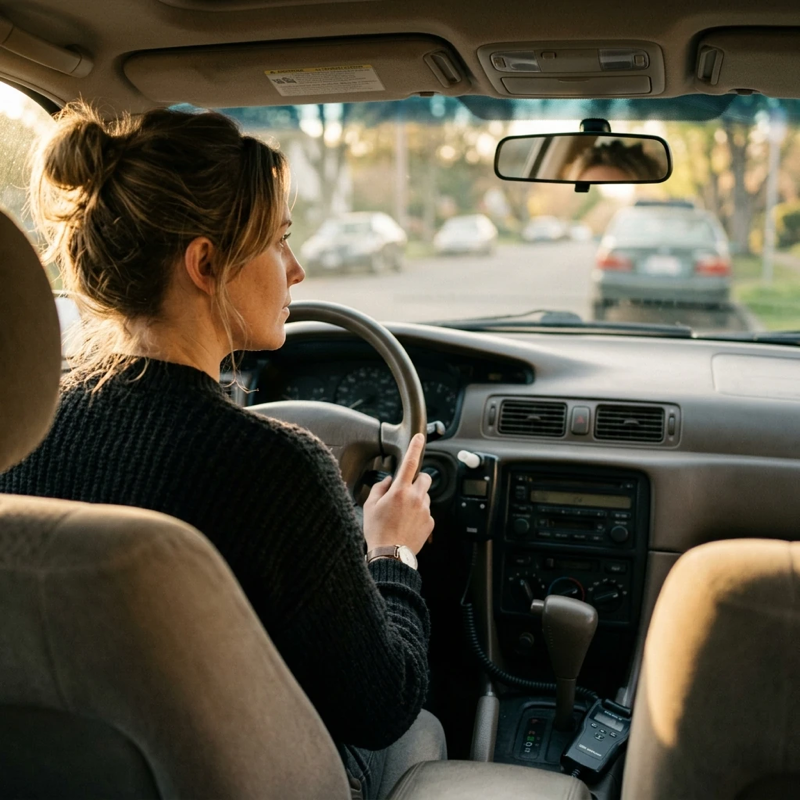
Here’s something worth knowing: not every photo gets eyeballed by a
person. In many cases, images sit in the system unless a triggering
event flags them for human review. Routine passing tests may never be
examined.
Images typically get pulled for review under specific
circumstances:
- A failed breath test is the most common
trigger. - Missed rolling retests raise flags, because they
can suggest the driver avoided providing a sample. - Suspected circumvention attempts — like someone
else blowing into the device — prompt a careful comparison of the photo
against the enrolled driver. - Tampering alerts, including device disconnections
or unusual sensor readings, can also lead to a review.
This is where camera images can actually work in your favor. If
you’re disputing a violation, the photos may prove you were the one
providing the sample and that no tampering occurred. Knowing how
to avoid an interlock device violation in the first place reduces
the chances your images ever need this kind of scrutiny.
Your Privacy
Checklist Before Choosing a Provider
Not all interlock providers handle data the same way. Before you sign
anything, ask direct questions. A provider that gets defensive about
privacy is probably not the right fit.
- What specific data does the device collect (photos, BrAC, GPS,
timestamps, engine events)? - Who within the company can access my images, and is access
logged? - How is data encrypted in transit and at rest?
- How long are records retained after I complete the program?
- What is the process for disputing a flagged violation?
- Can I request copies of my own photos and data logs under my state’s
rules? - What’s your breach notification process if something goes
wrong?
A provider committed to interlock camera privacy will answer these in
plain language. Low Cost Interlock, for example, designs its compact, discreet
Interlock Can with both compliance and driver dignity in mind. The
goal is meeting your legal requirements without making you feel like
you’re under constant watch.
For a broader look at the legal landscape, our deeper guide on IID
camera privacy laws and how states regulate access pairs well with
this article.
A Note on State and
Federal Privacy Laws
Federal medical-privacy law (HIPAA) doesn’t cover interlock data,
because it isn’t healthcare information. The legal protections that
do apply tend to live at the state level:
- State public-records statutes decide whether
compliance files can be released to outside parties. Most states treat
them as confidential. - State consumer-privacy laws (California’s CCPA,
similar statutes in Virginia, Colorado, and others) can apply to data
handled by providers operating in those states. - Constitutional search-and-seizure doctrine can come
into play if law enforcement requests data outside the normal compliance
reporting channel; talk to your attorney if that situation comes
up.
None of this is legal advice — every case is different. If a specific
dispute about your data lands in your lap, a DUI attorney in your state
is the right call.
Frequently Asked Questions
Q:
Can I request a copy of my interlock camera images or data logs?
A: In many states you can, but the process depends on state rules and
your provider’s policy. Some states have explicit “right to view”
provisions for compliance records; others require a subpoena or attorney
request. Ask your provider what records you can obtain, how to submit
the request, and whether identity verification or written authorization
is required.
Q:
What happens to my footage if I switch interlock providers
mid-program?
A: Data continuity is usually handled through compliance reports to
the monitoring authority, not by transferring full image archives
between companies. Confirm how your prior provider closes out the file,
what gets reported to the state, and whether any fees apply for final
reporting. Your state DMV or probation officer can also tell you what
they need from each provider during the switch.
Q:
How do interlock camera rules work if I drive across state lines?
A: Your monitoring requirements generally follow the state that
ordered the interlock, even when you travel. If you anticipate regular
out-of-state driving or a move, verify whether your provider supports
remote reporting, service availability in the destination state, and any
state-specific compliance nuances. Our guide on whether an interlock
device can be transferred to another state covers the move scenario
in detail.
Q:
What privacy protections apply if the device captures a passenger or a
child in the photo?
A: Photos may incidentally include passengers, especially with
wider-angle cameras. Access is generally limited to compliance personnel
rather than the public. If incidental capture is a concern, ask whether
the camera angle is fixed or adjustable within your state’s guidelines,
and how the provider handles third parties in the frame. Many providers’
policies prohibit using those incidental images for any purpose beyond
identity verification.
Q:
What should I do if I suspect my interlock records were accessed
improperly?
A: Contact your provider in writing and request an explanation,
including any access logs or an incident report they can share. You can
also notify your supervising authority or your attorney, especially if
the issue could affect your compliance status. In states with
consumer-privacy laws, the state attorney general’s office may also
accept complaints about provider data handling.
Q:
Does installing an interlock camera affect my vehicle warranty or
insurance policy?
A: A properly performed installation by a certified service center
usually doesn’t affect manufacturer warranties, though specifics vary by
vehicle and installer. Insurance carriers generally care about your
compliance status and your underlying driving record, not the camera
itself. Check with your insurer about what documentation they want —
many ask for proof of installation and ongoing compliance.
Q:
How long does a provider keep my photos after I complete the
program?
A: Retention varies. Some states require providers to keep records
for several years after program completion — in certain programs, up to
seven years post-completion — while others leave timelines to the
provider. Records connected to an active legal case typically stay on
file until the case closes. Ask your provider for the specific retention
schedule that applies to your state.
Q:
What technical safeguards should I look for in a privacy-friendly
interlock provider?
A: Look for encryption in transit and at rest, role-based access
controls, audit trails that log who viewed your records, and clear
breach-notification procedures. A strong provider documents these
safeguards in a privacy policy and will explain them in plain language.
If a provider can’t tell you the basics in a five-minute phone call,
that’s a signal.
Q:
Can the police pull my interlock photos without telling me?
A: Law enforcement generally needs a legal request (subpoena,
warrant, or court order) to access compliance records outside the
standard reporting channel between your provider and the monitoring
authority. The specifics depend on your state’s laws and the nature of
the investigation. If you’ve been notified of a request or suspect one,
talk to a DUI attorney in your state.
Protect Your
Privacy While Staying Compliant
Interlock camera privacy comes down to three questions: what’s
collected, who sees it, and how long it’s kept. The answers vary by
state and by provider, but the system is built around compliance
verification rather than surveillance. Your images follow strict access
controls, and routine passing tests usually don’t get a second look.
The best thing you can do is stay informed and ask your provider
direct questions before installation. Low Cost Interlock is
straightforward about what the device collects and why, with no hidden
fees and clear answers about data handling. Call (844)
387-0326 for a 60-second quote and to talk through your state’s
specific requirements before your install date.
This article is general information, not legal advice. Consult an
attorney about your specific case.