
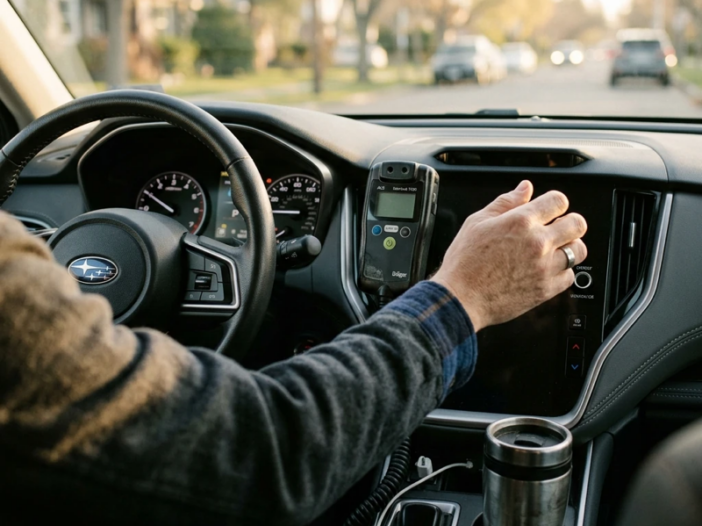
IID Eligibility: Do First-Time DUI Offenders Need an Interlock?
A first DUI catches most people off guard. You expected the fines.
Maybe the license suspension. Perhaps some community service. Nobody
mentioned a device wired into your car that makes you blow into a tube
every time you start the engine. But across most of the country, that’s
now the reality, even for a first offense.
Whether you actually need an interlock depends on a handful of moving
parts: your state, your blood alcohol concentration (BAC) at arrest,
whether you refused the breath test, and which agency is making the
call. This guide walks you through first DUI interlock eligibility
requirements so you know where you stand and what to do next.
Do You Need an
Interlock After a First DUI?
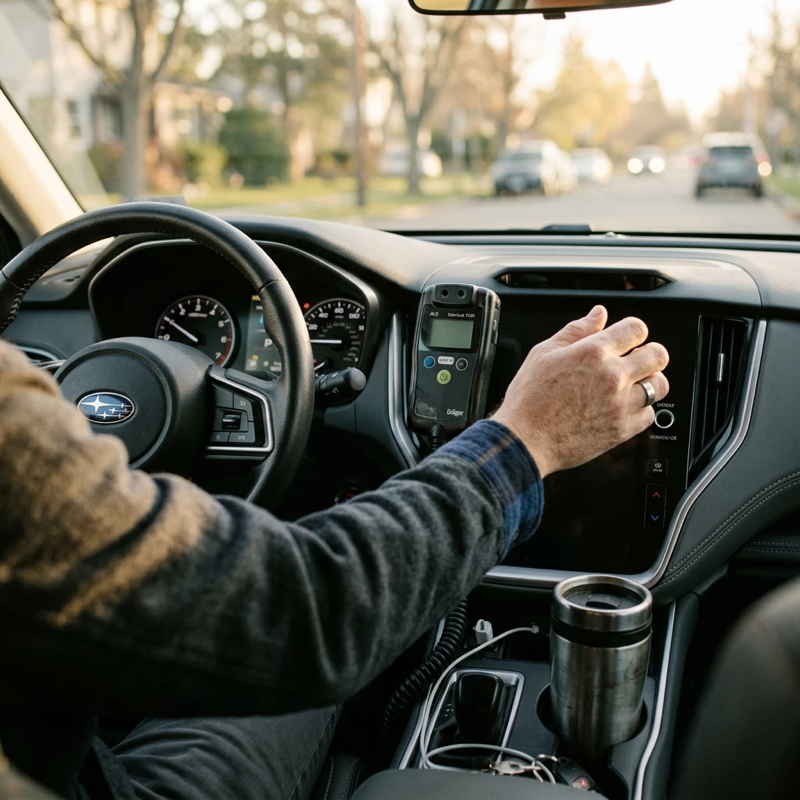
Short answer: probably, but not always. The Insurance Institute for
Highway Safety tracks alcohol
interlock laws by state, and the trend across recent years is clear:
most states now require an ignition interlock device (IID) for every
convicted impaired-driving offender, and many more require one during
the post-conviction license period. In other words, in most of the
country, a first offense triggers some kind of IID requirement.
“Required” and “eligible” aren’t the same thing, though. Some states
make installation automatic when you’re convicted. Others only mandate
an IID if your BAC crossed a higher threshold, often 0.15 or above. A
few states offer interlock installation as a voluntary path that lets
you drive on a restricted license instead of waiting out a full
suspension.
Common Triggers That
Make an IID Mandatory
Certain circumstances tip the scales toward mandatory even in states
that don’t auto-require IIDs for every first offense. The usual
triggers:
- A BAC well above the 0.08 legal limit (often 0.15 or higher)
- Refusing the breathalyzer at the traffic stop
- Causing a crash that involved injuries
- Having a child or minor passenger in the vehicle
- Driving on a previously suspended license
When any of those land in your file, judges and DMVs rarely leave the
interlock optional.
Court-Ordered
vs. DMV-Ordered: Who Actually Decides?
This is one of the biggest sources of confusion after a first DUI. In
most states, two separate tracks run after the arrest: the criminal case
in court, and the administrative case at the DMV. Either one can require
an interlock, and they don’t always agree on timing or duration.
The DMV usually moves first. Many states trigger an automatic
administrative license suspension within days of the arrest, especially
if you refused the breath test. During that administrative window, the
DMV may offer a restricted interlock license so you can keep driving to
work, school, or treatment appointments. You don’t need a conviction for
that to happen.
When Both the Court
and DMV Require an IID
Once the criminal case moves forward, a judge may order interlock
installation on top of whatever the DMV already required. If both apply,
the orders typically overlap, though the duration and start dates may
not match exactly. Don’t assume that satisfying the DMV requirement
clears the court order. Read both carefully. If you’re still untangling
the labels, our breakdown of the differences
between DWI and DUI in 2025 can help clarify which penalties apply
in your jurisdiction.
First
DUI Interlock Eligibility Requirements Vary Widely by State
There’s no single national rule. Eligibility flips dramatically based
on where you live. A few examples of how states approach it:
| State (example) | Typical first-offense IID rule |
|---|---|
| Arizona |
Among the strictest. An IID is generally required for first-offense DUI convictions. |
| Pennsylvania |
First-offense IID requirements often kick in at higher BAC levels or with refusal. |
| California | Has moved toward broader IID requirements after a multi-county pilot. |
| Florida |
IID is commonly required for elevated-BAC first offenses or when a minor was in the vehicle. |
| New Mexico | Has been an early adopter of broad first-offense IID requirements. |
State rules change. Always confirm against your state DMV before
assuming what applies to you. To dig into the specifics for your case,
review the state DUI laws
page for the state where you were arrested.
The patchwork means your neighbor one state over could face entirely
different requirements for the exact same offense. If you were arrested
in a state where you don’t hold a license, it gets messier still (more
on that below).
Typical IID
Duration for First-Time Offenders
Most states require somewhere between 6 and 12 months of interlock
use after a first DUI. High-BAC offenses or aggravating factors can
stretch that to 18 months or longer. One important detail: the clock
usually starts on the date the device is installed, not the date of
conviction. Drag your feet on installation and you drag out your total
restriction window.
Documents,
Fees, and Steps to Get Your Interlock Installed

Being eligible on paper doesn’t mean you can walk into an install
shop and be driving home an hour later. Most states require a sequence
of steps before you’re cleared to drive with an IID.
Here’s the typical order:
- File an application for a restricted, hardship, or
interlock-restricted license. - Provide proof of SR-22 insurance.
- Pay reinstatement and administrative fees to the DMV.
- Complete any court-ordered DUI education or assessment program.
- Schedule installation with a state-approved interlock provider.
- Submit proof of installation back to the DMV (or court).
Miss a step and you can lose weeks of driving time. The hardship
license application often runs parallel to the interlock paperwork,
so start both early.
Ongoing Costs and Compliance
Installation, monthly monitoring, and calibration appointments all
add up. Costs vary by provider and state, but industry-typical
installation usually falls in the $70–$150 range, with monthly
monitoring fees in the $60–$90 range. You’ll also need calibration
visits on a state-set schedule (commonly every 30 to 60 days). Skip one
or tamper with the device and you risk extending the restriction or
facing additional penalties.
Low Cost Interlock keeps the math simple: a Price Match Guarantee,
transparent pricing with no hidden fees, flexible billing options, and
reporting included at no extra cost. The Co-Pilot device is compact and
includes programmable restricted driving times for state-required
schedules. For drivers who want a lower-profile setup, the Interlock Can
is built to look like a soda can sitting in the cup holder.
Edge
Cases: No Car, Employer Vehicles, and Out-of-State Licenses
Not everyone slots neatly into the standard eligibility template. A
few situations worth knowing:
No vehicle. If you don’t own a car, most states
still keep your interlock order active. Your license carries the
restriction, which means any vehicle you drive must have an IID
installed. Some states allow an exemption affidavit, but you’ll need to
reapply the moment you get access to a vehicle.
Employer-owned vehicles. Many states let you drive a
company vehicle without an interlock during work hours, as long as your
employer signs a disclosure form acknowledging your restricted license.
This exception usually doesn’t apply if the employer is a family member
or if you have an ownership stake in the company.
Out-of-State Drivers
and Lookback Periods
If you hold a license from one state but got the DUI in another, both
states can impose requirements. The arresting state controls the case,
but your home state’s DMV typically mirrors the restriction through the
interstate compact. That means you can’t dodge an interlock by driving
home.
Lookback periods matter too. Many states use lookback windows in the
range of 5 to 10 years, though the exact length varies. A prior offense
inside that window — even from a different state — can bump your “first”
offense up to second-offense territory, with longer interlock terms
attached. If you got a DUI across state lines, read up on what happens
with an out-of-state
DUI before you make assumptions about what your home state will
do.
Public support for these expanding requirements is high. Most
national survey work, including reporting from organizations like the National Conference of State
Legislatures, points to broad voter support for all-offender IID
mandates. Expect more states to keep moving in that direction.
Frequently Asked Questions
Can I
switch ignition interlock providers after installation?
In many states, yes. You generally need DMV approval and a
coordinated transfer to avoid gaps in monitoring. Ask both providers
exactly how they handle paperwork, device removal, and same-day
reinstall so your compliance record stays unbroken. A gap in monitoring
can look identical to a violation on paper, and that’s a fight you don’t
want.
What
happens if someone else drives my car while an IID is installed?
Most states allow other licensed drivers to use the vehicle. But
every test and event still gets recorded under your account. Make sure
anyone who borrows the car understands rolling retests, lockouts, and
why nobody should ever try to bypass the device. A failed test by a
passenger can land on your compliance record.
Will
an IID drain my car battery or cause mechanical problems?
Modern interlocks are designed for low power draw. A weak battery,
infrequent driving, or cold weather can still raise the risk of a
no-start. If your vehicle sits unused for days at a time, ask your
installer about battery health checks and any safe maintenance options
for your model. Older batteries are the usual culprit when issues come
up.
How
do I handle an IID if I need repairs, a new car, or a lease return?
Call your provider before any service visit, trade-in, or lease
return. Removal and reinstallation usually need documented authorization
from your state or court. Keep copies of work orders. Some states
require the shop or installer to note the reason for any disconnect, so
confirm what your specific state demands before anything gets
unplugged.
Do I
need an IID on a motorcycle or commercial vehicle?
Requirements vary by state, and motorcycles are sometimes treated
differently because of equipment limits. If you drive for a living,
confirm whether your restricted license rules affect your CDL or your
job duties. Get written guidance from the DMV or your attorney before
you assume anything. A CDL question handled wrong can cost you the
job.
What
should I do if I get a failed reading because of mouthwash, food, or
medication?
Follow the device prompts, wait a few minutes, rinse your mouth with
water, and retest. Some everyday products can briefly trigger alcohol
sensors. Document what you ate or used, and contact your provider
promptly so the event is noted correctly if your state pulls the logs. A
documented explanation matters more than a one-time blip.
How do I
know when I’m eligible to remove the interlock?
Removal usually requires meeting your state’s compliance rules. That
typically means no violations for a set period, completing all
monitoring requirements, and getting formal authorization from the DMV
or court. Before booking a removal appointment, confirm your end date is
approved and ask your provider for a final compliance report if your
state requires one.
Does
refusing the breath test at the traffic stop make an IID more
likely?
Yes, in most states. Implied consent laws mean refusal triggers its
own administrative penalty, often including a longer license suspension
and an interlock requirement that mirrors or exceeds the standard
first-offense rule. Refusal almost never makes the situation easier.
Talk to a DUI attorney about how your state handles refusals before
deciding on a plea.
How
quickly do I need to install the IID after I’m cleared?
Most states give you a defined window, often 30 days from approval.
Miss it and your driving privileges can lapse again. Booking
installation as soon as your paperwork clears is the safest move, and
most providers offer same-day or next-day appointments if you call
early.
Take the
Next Step Toward Getting Back on the Road
A first DUI interlock requirement looks overwhelming on day one. Once
you understand your state’s rules, gather the right paperwork, and pick
a state-approved provider, the process settles into a series of
manageable steps. The sooner you act, the sooner the compliance clock
starts and the sooner you’re moving toward full reinstatement.
Low Cost Interlock installs state-approved IIDs across 40+ states
with a Price Match Guarantee — we’ll beat any competitor’s quote or your
money back. Call (844) 387-0326 for a 60-second quote,
or schedule
your installation online and get back on the road with one less
thing to worry about.
This article is general information, not legal advice. Consult an
attorney about your specific case.