
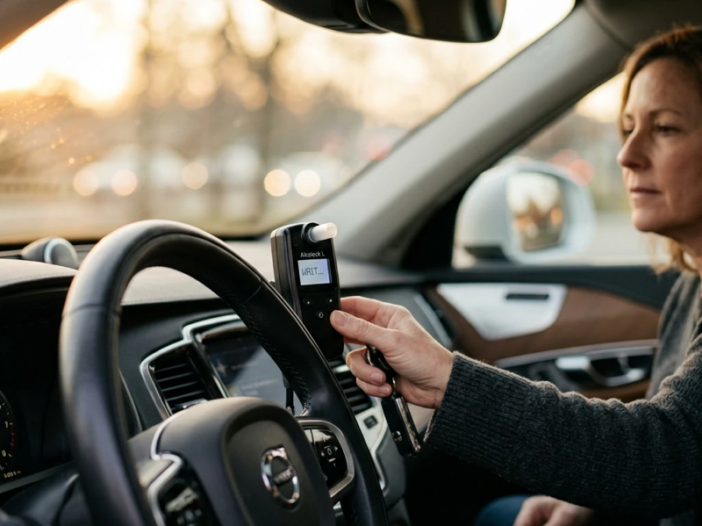
Complete State-by-State IID Requirements Guide (Update for 2026)
Every state handles DUI penalties on its own terms, and
interlock requirements by state are where that
patchwork hits drivers hardest. A first offense in Arizona puts a device
in your car for a year. The same arrest in South Dakota may not require
one at all. Add in BAC thresholds, refusal penalties, and aggravating
factors like a minor passenger, and the picture shifts again.
This guide lays out what you actually need to know about ignition
interlock device (IID) laws as they stand heading into 2026. You’ll get
a near-complete 50-state table, plain-English breakdowns of all-offender
versus selective laws, a step-by-step compliance roadmap, realistic cost
ranges, and answers to the questions people ask most. No statutory
jargon. No guessing.
What
an Ignition Interlock Device Does and Who Has to Install One
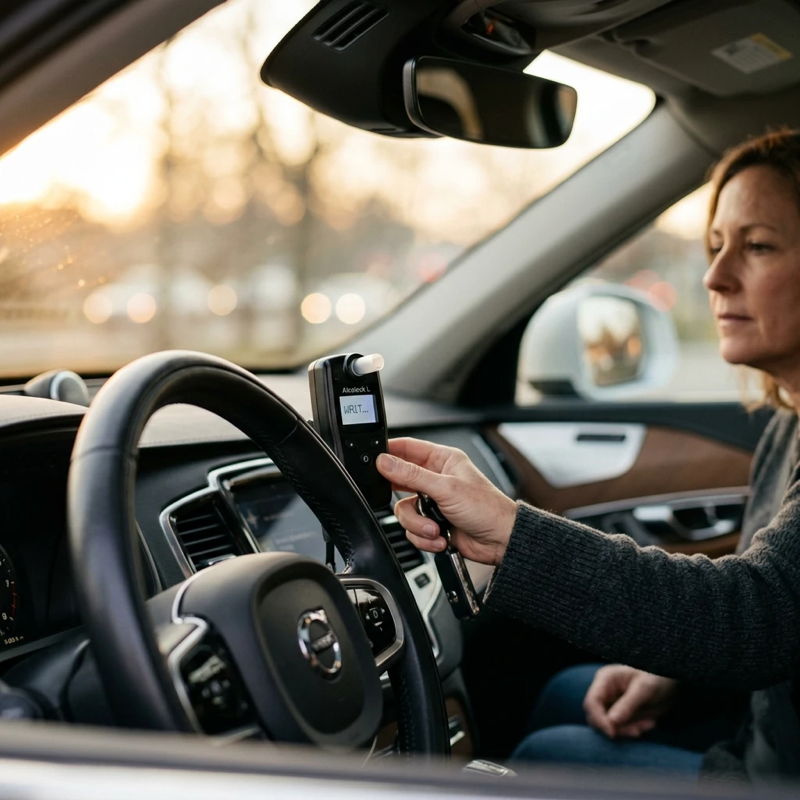
An ignition interlock device is a breathalyzer wired into your
vehicle’s starter circuit. Before the engine cranks, you blow into the
unit. If your breath alcohol concentration (BrAC) registers above the
preset lockout threshold (commonly around 0.02 to 0.025 BrAC), the car
won’t start. While you drive, the device prompts periodic rolling
retests to confirm you haven’t started drinking after the initial
test.
Courts and state motor vehicle agencies order IID installation as a
condition of keeping or restoring driving privileges after a DUI
conviction. The requirement isn’t optional once issued. Drive a vehicle
that’s supposed to have an IID without one, and most states treat it as
a separate criminal offense.
Who Has to Install an IID
The answer depends on three things: your state, your offense history,
and the specifics of the arrest. You’ll generally need an IID if any of
the following apply:
- First-time DUI offenders in any state with an
all-offender law on the books - Repeat DUI offenders in essentially every
state - High-BAC offenders (commonly 0.15 or above) in
states that don’t otherwise mandate IIDs for a standard first
offense - Drivers who refused a chemical test at the time of
arrest - DUI cases with aggravating factors such as a minor
passenger, an injury crash, or a prior suspension
Some states also let you install an IID voluntarily. If your license
is suspended, that voluntary install often unlocks a restricted or
hardship license so you can drive to work, treatment, and medical
appointments while you serve out the suspension.
All-Offender
vs. Selective Laws: The Single Most Important Distinction
This split is the first thing to figure out about your state’s IID
system. It decides whether a routine first-offense DUI automatically
triggers an interlock order or whether you slip past the requirement
until a second offense.
How All-Offender Laws Work
All-offender states require IID installation for
every DUI conviction, regardless of offense number. A first-time
offender at the legal limit faces the same install mandate as a
third-time offender. Duration and monitoring rules may differ between
offenses, but the device goes in either way.
The Insurance
Institute for Highway Safety (IIHS) tracks state alcohol-impaired
driving laws, including which states require interlocks for all
convicted offenders versus only repeat or high-BAC offenders. IIHS and
other safety researchers have found that all-offender mandates correlate
with meaningful reductions in alcohol-impaired crash deaths in adopting
states. That research is the main reason the trend has accelerated.
A solid majority of states now fall into the all-offender category.
The exact list shifts as legislatures pass new bills, so confirm against
IIHS or your state DMV before assuming your state’s status.
Selective and Discretionary
States
A smaller group of states still limit mandatory IID orders to repeat
offenders, high-BAC cases, or refusal cases. Some leave the decision
largely to judicial discretion on a first offense. In those states, a
first-time DUI at the legal limit may or may not produce an interlock
order depending on the court and the facts.
Don’t assume a selective state means “no interlock.” Most of these
states still mandate an IID once your BAC clears 0.15 or once you’ve
earned a second DUI. And judges in discretionary states often order
interlocks anyway as part of probation. For a closer look at how the
lines fall, our guide to which
states have mandatory interlock rules covers the all-offender list
and where the borderline states are headed.
Interlock
Requirements by State: 2026 Reference Table
The table below summarizes how each state generally handles ignition
interlocks for DUI offenders heading into 2026. It uses three broad
categories:
- All-offender: IID is required for every DUI
conviction, including a standard first offense - Threshold/conditional: IID is required for first
offenses only if a trigger applies (high BAC, refusal, minor passenger,
etc.); always required for repeat offenders - Discretionary/limited: First-offense IID is not
automatically mandated; judges have wide discretion, or the requirement
only applies to repeat or aggravated cases
Durations listed are typical minimums for a standard first offense in
states where one applies. State laws change. Always confirm
current rules with your state DMV or a local DUI attorney
before relying on any number below for a specific case.
| State | Category | First-Offense IID Trigger | Typical First-Offense Duration | Look-Back Period |
|---|---|---|---|---|
| Alabama | Threshold/conditional | High BAC (0.15+), refusal, minor passenger, or injury | 6 months (when triggered) | 10 years |
| Alaska | All-offender | Any DUI conviction | 6 months | 15 years (10–15 typical) |
| Arizona | All-offender | Any DUI conviction | 12 months (longer if BAC 0.15+) | 7 years |
| Arkansas | All-offender | Any DUI conviction | 6 months | 5 years |
| California | All-offender (statewide since 2019) | Any DUI conviction | 6 months | 10 years |
| Colorado | All-offender (via early reinstatement path) | Any DUI conviction | 8 months minimum | 5 years |
| Connecticut | All-offender | Any DUI conviction | 12 months | 10 years |
| Delaware | All-offender | Any DUI conviction | 4 months (varies) | Lifetime for IID purposes |
| Florida | Threshold/conditional | BAC 0.15+, minor passenger, or 2nd offense | 6 months (when required) | 5 years |
| Georgia | Threshold/conditional | 2nd offense within 5 years; some 1st-offense paths | 12 months on 2nd | 10 years |
| Hawaii | All-offender | Any DUI conviction | 12 months | 10 years |
| Idaho | Threshold/conditional | High BAC, refusal, or repeat offense | 1 year (when ordered) | 10 years |
| Illinois | All-offender (via MDDP) | Statutory summary suspension + permit option | Length of suspension (typically 6–12 months) | 5 years |
| Indiana | Discretionary/limited | Judicial discretion on first offense | Varies | 10 years |
| Iowa | Threshold/conditional | High BAC, refusal, or repeat | 180 days (varies) | 12 years |
| Kansas | All-offender | Any DUI conviction | 6 months | Lifetime tracking |
| Kentucky | All-offender (since HB 410, 2020) | Any DUI conviction (with reduced suspension option) | 6 months | 10 years |
| Louisiana | All-offender | Any DUI conviction | 6 months | 10 years |
| Maine | All-offender | Any OUI conviction | Restricted-license condition (varies) | 10 years |
| Maryland | All-offender (via Noah’s Law) | Any DUI conviction | 6 months (longer for 0.15+) | 5 years |
| Massachusetts | Threshold/conditional | Repeat offense (since “Melanie’s Law”) | 2 years on 2nd offense | 10 years |
| Michigan | Threshold/conditional | High BAC (0.17+) or repeat offense | 1 year | 7 years |
| Minnesota | Threshold/conditional | BAC 0.16+ or repeat offense | 1–2 years | 10 years |
| Mississippi | All-offender | Any DUI conviction | Varies (typically tied to suspension length) | 5 years |
| Missouri | All-offender | Any DUI conviction | 6 months | 5–10 years |
| Montana | Threshold/conditional | Repeat offense | 1 year on 2nd | 10 years |
| Nebraska | All-offender | Any DUI conviction | 6 months | 15 years |
| Nevada | Threshold/conditional | BAC 0.18+ or repeat (1st offense IID common via restricted license) | 6 months | 7 years |
| New Hampshire | Threshold/conditional | High BAC, refusal, or repeat | 1 year | 10 years |
| New Jersey | All-offender (since Dec 2019) | Any DUI conviction | 3 months at standard BAC; longer for higher BAC | 10 years |
| New Mexico | All-offender | Any DUI conviction | 1 year | Lifetime |
| New York | All-offender | Any DWI conviction | 12 months | 10 years |
| North Carolina | Threshold/conditional | BAC 0.15+ or repeat | 1 year (when triggered) | 7 years |
| North Dakota | Threshold/conditional | Repeat offense or high BAC | 1 year on 2nd | 7 years |
| Ohio | Threshold/conditional | High BAC, refusal, or repeat (1st-offense via Annie’s Law option) | 6 months minimum | 10 years |
| Oklahoma | All-offender | Any DUI with revoked license reinstatement | 18 months | 10 years |
| Oregon | All-offender | Any DUI conviction | 1 year | Lifetime |
| Pennsylvania | All-offender (via Act 33 of 2017) | Any second-or-greater offense; first offense with BAC 0.10+ via IIDLL | 12 months | 10 years |
| Rhode Island | Threshold/conditional | BAC 0.10+, refusal, or repeat | 6 months (when ordered) | 5 years |
| South Carolina | Threshold/conditional | BAC 0.15+ or repeat (1st offense at 0.15+ triggers IID) | 6 months | 10 years |
| South Dakota | Discretionary/limited | Judicial discretion; uses 24/7 sobriety program instead | Varies | 10 years |
| Tennessee | All-offender | Any DUI conviction | 12 months | 10 years |
| Texas | All-offender (via “Second Chance Law,” 2015) | Any DWI conviction (occupational license path) | 12 months typical | 10 years |
| Utah | All-offender | Any DUI conviction (BAC limit 0.05) | 18 months | 10 years |
| Vermont | All-offender | Any DUI conviction | 1 year | Lifetime |
| Virginia | All-offender | Any DUI conviction | 6 months | 10 years |
| Washington | All-offender | Any DUI conviction | 1 year minimum | 7 years (15 for some look-backs) |
| West Virginia | All-offender | Any DUI conviction | Varies (often via test-and-lock program) | 10 years |
| Wisconsin | Threshold/conditional | BAC 0.15+, refusal, or repeat | 1 year (when triggered) | Lifetime |
| Wyoming | Threshold/conditional | BAC 0.15+ or repeat | 6 months (when triggered) | 10 years |
| District of Columbia | All-offender | Any DUI conviction | 6 months | 15 years |
Note on accuracy: Categories and durations above are
summaries that reflect each state’s general approach. Specific cases
turn on the exact charge, the BAC reading, prior history, plea terms,
and county-level practice. Use this as a starting point, then verify the
current rule with your state DMV, an attorney, or IIHS’s alcohol and
drugs topic hub.
The big-picture takeaway: more than half of US states are now
all-offender, several more apply IID requirements through threshold
triggers that catch most real-world DUI arrests, and the trend continues
toward expanding interlock use. The National
Conference of State Legislatures’ state ignition interlock laws page
tracks legislative activity if you want to see where pending changes
stand.
IID
Requirements for First DUI, Repeat DUI, High BAC, and Test Refusal

Your specific charge determines both whether you need an IID and how
long you’ll keep it. Here’s how the major offense categories generally
play out.
First DUI Offense
In all-offender states, expect a mandatory IID period of 6 to 12
months for a standard first-offense conviction. Some states stretch that
longer if your BAC was high, if you refused the test, or if a minor was
in the car. In threshold and discretionary states, a first offense at or
near 0.08 BAC may not trigger an interlock unless a court orders one as
a condition of probation.
One nuance that catches people off guard: some states run a
court-ordered IID alongside an administrative (DMV-ordered) IID, and
those clocks don’t always sync. Your judge may order 12 months. Your DMV
may require an interlock as a condition of license reinstatement for a
different overlapping period. Always read both orders and confirm the
start and end dates with each agency.
Repeat Offenses,
High BAC, and Refusal Cases
Second offenses universally carry longer IID periods, usually 12 to
24 months. Third offenses commonly run 2 to 5 years, and several states
require lifetime IID for habitual offenders or post-felony
reinstatement.
High-BAC offenses (typically 0.15 or above) almost always trigger
longer mandatory periods, even in states that are otherwise lenient on
first-time, low-BAC convictions. Some states, including Pennsylvania,
treat anything at 0.10 or above as a “high rate” offense with elevated
penalties.
Refusing a chemical test is a wild card. Most state implied-consent
laws penalize refusal with the same or harsher consequences as a
high-BAC conviction, including IID time. The logic is simple: the
legislature doesn’t want refusal to be a workaround for the interlock
requirement. For a closer look at how the math works in practice, our
guide on how
long you’ll need an ignition interlock device breaks down the
timelines you’ll actually face.
BAC
Limits, Look-Back Periods, and the Numbers That Drive Penalties
Two numbers determine most of your IID exposure: the BAC reading at
the time of arrest and the state’s look-back period for prior
offenses.
Standard,
Elevated, and Special BAC Thresholds
For most drivers in most states, the per se DUI limit is 0.08
BAC. Utah lowered its limit to 0.05 in late
2018 and remains the only state at that level. Commercial drivers face a
0.04 limit nationwide. Drivers under 21 face
zero-tolerance limits ranging from 0.00 to 0.02 depending on the state.
The National
Highway Traffic Safety Administration’s drunk driving overview
explains how these limits map to enforcement.
Above 0.08, most states define an elevated or
high BAC category that triggers stiffer penalties. The
exact threshold varies:
- 0.15 is the most common high-BAC line and is used in states like
California, Florida, New York, and many others - 0.16 to 0.18 is used in some states (Minnesota at 0.16, Nevada at
0.18) - 0.20 triggers the most severe penalties in some jurisdictions
Cross the high-BAC line and your IID requirement usually doubles,
your suspension lengthens, and you may face mandatory jail time even for
a first offense.
Look-Back
Periods (Why an Old DUI Still Matters)
A look-back period is the window your state uses to count prior DUIs
against a new arrest. If your prior was inside the window, the new
arrest counts as a repeat offense with all the heavier penalties that
brings. If it was outside the window, the new arrest may be charged as a
first offense.
Look-back periods vary wildly:
- 5 years (the shortest, used by states like Colorado, Florida, and
Rhode Island) - 7 years (Arizona, Michigan, Nevada, North Carolina, Washington in
many cases) - 10 years (the most common, used by California, Texas, Pennsylvania,
and many others) - 15 years (Alaska, Nebraska, DC)
- Lifetime (New Mexico, Oregon, Vermont, Wisconsin, and a few others
for IID and felony-DUI purposes)
A 15-year-old DUI in a 10-year look-back state won’t trigger a
repeat-offense IID order. The same arrest in a lifetime state could put
you back into a multi-year IID period. Know your state’s window before
you decide on a plea.
How
to Get Your License Back After a DUI with an Interlock Order
The reinstatement process touches multiple agencies and runs on tight
deadlines. Miss a step and you restart the clock on your suspension.
Here’s the general sequence most states follow.
Step-by-Step Compliance
Roadmap
- Read your court order and DMV notice. Both
documents tell you whether IID installation is mandatory and for how
long. Note the dates; they don’t always match. - Apply for a restricted or hardship license. Most
states let you drive with an interlock during your suspension period
under a restricted license. The application goes to your state DMV or
Department of Public Safety. - Choose a state-approved IID provider and schedule
installation. The device must go on every vehicle you plan to
operate, not just your primary car. Confirm state approval before
booking; not every provider is certified in every state. - Submit proof of installation to the court and DMV.
Your provider sends a compliance certificate, but you should still
confirm both agencies received it. Lost paperwork is one of the most
common reasons a reinstatement stalls. - Keep the device through regular calibration visits.
States generally require calibration every 30 to 60 days. Miss a
calibration and the device logs it as a violation. - Finish your IID period without violations. Failed
startup tests, missed rolling retests, and tampering attempts can extend
your requirement or restart the clock. Some states require a clean final
period (often 90 to 180 days) before you can remove the device. - Schedule removal and apply for full reinstatement.
You’ll need a removal certificate from your provider, SR-22 insurance
confirmation, and payment of reinstatement fees.
While you work through the steps, understanding the relationship
between ignition
interlock devices and SR-22 insurance matters. The two requirements
run in parallel, and a brief lapse in SR-22 coverage can void months of
IID compliance.
What an Interlock
Period Actually Costs
Cost is usually the first question. Honest answer: it varies by state
and provider, but the ranges below cover most real-world cases.
Installation,
Monthly Lease, and Calibration
Industry-typical pricing across the major IID providers:
- Installation: $70 to $150 one-time
- Monthly lease: $60 to $100 for most providers
- Calibration visits: $20 to $50 per visit, typically
required every 30 to 60 days - Removal: $50 to $100 at the end of the IID
period
Over a 6-month IID period at average pricing, your total
out-of-pocket lands around $500 to $1,000. A 12-month period runs
roughly $900 to $1,800. These numbers don’t include court fines,
attorney fees, or the SR-22 insurance premiums that often run a couple
hundred dollars per month on top.
Low Cost Interlock offers transparent pricing with no hidden fees and
a price match guarantee. If you’ve been quoted a higher rate by another
provider, LCI’s
pricing page gives you a 60-second quote so you can compare apples
to apples.
Financial Hardship and
Indigent Programs
Several states run reduced-cost or subsidized IID programs for
drivers who can document financial hardship. Arizona, California, and
Colorado are commonly cited examples, though specific eligibility rules
and funding levels change. Eligibility usually ties to income
thresholds, public-assistance enrollment, or court-ordered indigency
status.
Before assuming you can’t afford compliance, ask your attorney, your
provider, or your state DMV whether a financial-hardship reduction
applies. The savings are real when the program is funded.
Violations That Extend
Your IID Period
The device logs every event: startup tests, rolling retests, missed
calibrations, power disconnects, tamper attempts. States treat these
logs as evidence. A single failed test, a missed calibration, or a
tamper alert can:
- Reset your mandatory IID period back to zero
- Add 30, 60, or 90 days to your existing period
- Trigger a separate criminal charge for tampering (most states)
- Suspend your restricted license outright
One avoidable mistake people repeat: mouthwash. Alcohol-based
mouthwash, breath sprays, and some over-the-counter cold medicines can
spike a BrAC reading. Wait at least 15 minutes after using any oral
product, then rinse with water, before blowing into the device. For more
on what trips a reading, our guide on foods
and other items that can trigger a BrAC reading walks through the
everyday hazards.
Recent Law Changes Heading
into 2026
Interlock laws move every year. A few patterns to watch as 2026 takes
shape:
- More all-offender adoption. Several historically
selective states have considered or passed all-offender legislation in
recent sessions. Advocacy groups like Mothers Against Drunk Driving
(MADD) continue to push for universal IID requirements, and the body of
safety research supports their case. - Tighter monitoring windows. Some states have
shortened the gap between calibration appointments and tightened
reporting requirements for providers. - Pennsylvania. Pennsylvania’s IID law (Act 33 of
2017) established an Ignition Interlock Limited License path for
first-time offenders with a BAC of 0.10 or higher and remains one of the
more developed all-offender frameworks in the country. - Hybrid and EV compatibility. As electric vehicles
take a bigger share of the road, IID compatibility questions matter more
than they used to. The compatibility
guide for hybrid and plug-in vehicles covers the install
considerations specific to those powertrains.
If your state currently uses a selective or discretionary approach,
that may change in the next legislative session. Sign up for DMV alerts
or check your state legislature’s transportation committee for pending
bills.
Frequently Asked Questions
How do I know if
I’m in an all-offender state?
Check your state DMV’s DUI penalty page and cross-reference with
IIHS. The fastest test: search “[your state] all-offender ignition
interlock law” and look for a .gov result. If a standard
first-offense DUI conviction triggers an automatic IID order regardless
of BAC, you’re in an all-offender state. Over half of US states
currently fall into this category, and the list keeps growing.
What
if I move to another state during my interlock period?
Interstate moves get complicated. Your conviction state still
controls the underlying suspension and reinstatement rules. Your new
state controls licensing and which IID providers are approved locally.
Start by contacting both DMVs and your IID provider to confirm your
device, reporting, and service schedule will be honored across state
lines. Our breakdown of whether an
interlock device can be transferred to another state covers the most
common scenarios.
What
if my home state has different rules than the state where I was
arrested?
If you live in one state and were arrested in another, the arresting
state usually controls the conviction and the IID order. Your home state
then decides whether to honor or modify that order under the Driver
License Compact, which most states have signed. In practice, your home
state DMV will often require you to satisfy the arresting state’s IID
requirement before reinstating your home license.
Can I install an IID
before my court date?
In some jurisdictions, voluntary early installation demonstrates
proactive compliance and can be viewed favorably during plea
negotiations or sentencing. Talk to your attorney first. Documentation
matters, and how a judge weighs voluntary installation varies by court.
Some states also let you “bank” early installation time against your
mandatory period if you install before the official order.
What
happens if I don’t own a car but still need an IID for a restricted
license?
Many states require any vehicle you operate to have an IID, which
means a family member’s car counts if you’ll drive it. If you genuinely
don’t drive at all, ask your DMV or attorney about a no-vehicle
affidavit, a deferred-installation option, or alternative compliance
paths. These vary by state and are sometimes available, sometimes
not.
Can
I drive a company car or work vehicle with an IID requirement?
Policies vary by state. Many states require the IID on any vehicle
you drive, including employer-owned vehicles, unless a specific
work-vehicle exemption applies. Some states allow an employer waiver if
your employer signs a notice acknowledging your IID status and the
vehicle isn’t used for personal driving. Talk to your employer and your
attorney early; the paperwork has to be in place before you drive.
Are
there medical conditions that can affect IID breath test results?
Some medical conditions and medications can complicate breath
testing. Acid reflux, GERD, and certain diabetic conditions can produce
mouth-alcohol readings that don’t reflect actual blood alcohol. If you
have a documented condition, tell your attorney and provider up front,
keep medical records, and ask whether your state offers approved
accommodations or alternative testing protocols.
What if
my IID gives a false positive or malfunctions?
Follow the provider’s instructions immediately: don’t drive, document
the time and any products you used recently, and call for service. Keep
receipts and service notes. They matter if you need to dispute a
violation later. Most states distinguish between user-caused violations
(mouthwash, food, etc.) and device malfunctions, but the burden is
usually on you to prove which one happened.
Does
an IID requirement affect international travel or driving abroad?
An IID is generally tied to your US driving privileges, not your
ability to fly or stay in another country. That said, a DUI conviction
itself can complicate entry to some countries (Canada is the most-cited
example) and can affect international driving permit applications. If
international travel is planned during your IID period, check your
destination’s entry rules and confirm with your provider that the device
doesn’t need to be physically present.
How
long do I actually need to keep the device installed?
Minimum periods range from a few months to several years depending on
your state and offense level. A standard first-offense IID is typically
6 to 12 months in all-offender states. Repeat offenses commonly run 1 to
5 years. A few states require lifetime IID for habitual offenders.
Violations can extend any of these. The clock usually doesn’t start
until you actually install the device and the state DMV confirms
compliance.
Can the
device be removed before my IID period ends?
Generally no. Removing the device before your authorized end date is
treated as a violation and can lead to new criminal charges in many
states. A few states allow early removal under specific compliance-based
programs (clean record for X consecutive days), but you need DMV
approval first. Don’t ask a shop to “just take it out.” Schedule
official removal once your state confirms eligibility.
What if I
can’t afford the IID and other DUI costs?
Check your state’s indigent-IID program first. Arizona, California,
Colorado, and several others fund reduced-cost programs for drivers who
qualify. Beyond that, ask providers about payment plans and any
price-match offers. LCI offers a price
match guarantee on competing quotes, which can knock down monthly
costs.
Getting Compliant Wherever
You Live
Interlock requirements by state are a moving target, but the path
forward stays the same anywhere: figure out your state’s rule, install a
certified device on time, and keep up with calibrations until the period
ends. The faster you start, the faster the clock runs.
Low Cost Interlock serves drivers in 40+ states with state-approved
devices, transparent pricing, and a price match guarantee. If you’d
rather talk to someone before booking, call (844)
387-0326 for a quote and to confirm the IID rules for your
specific state. This article is general information, not legal
advice. Consult an attorney about the specifics of your case.