
Failed Rolling Retest: Penalties, Consequences, and Next Steps
A failed rolling retest can turn an ordinary drive into a stressful
afternoon. The device beeps, the horn may honk, lights may flash, and
suddenly you’re trying to think straight while pulling over to figure
out what just happened.
What comes next depends on your state, your monitoring authority,
your provider, and how many prior events are on your record. There is no
single national rulebook. The good news: knowing what to expect and how
to respond protects your driving privileges far more than panicking
does. This guide breaks down the difference between a failed retest, a
missed retest, and a startup failure. It covers the rolling retest
interlock penalties drivers commonly face, the everyday triggers that
can cause a non-drinking failure, and the practical steps to take in the
hours and days after one happens.
What Is a
Rolling Retest and Why Does It Happen?
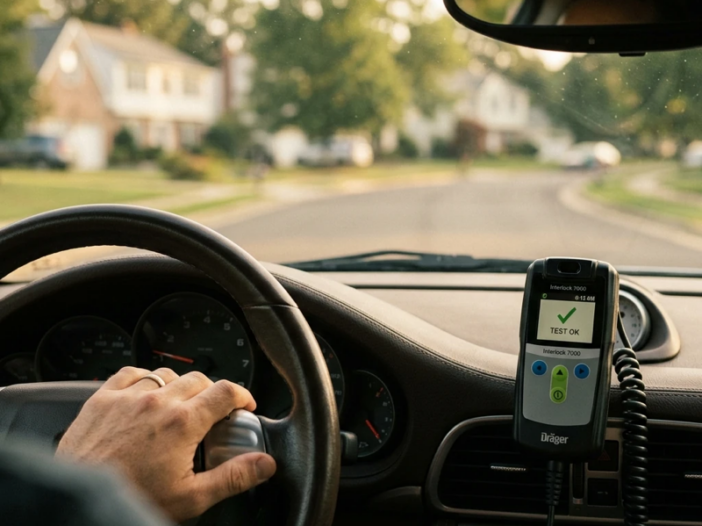
A rolling retest is a random breath sample your interlock device asks
for while you’re driving. The startup test confirms you’re sober before
the engine turns over. The rolling retest confirms you stayed that way
after you started moving.
Your device signals the retest with an audible tone, usually followed
by a visual prompt. You then have a short window — generally a few
minutes, though the exact time varies by state and device — to provide a
sample. The device will not shut your engine off mid-drive. That’s a
safety design. But if you fail or ignore the prompt, the event gets
logged, and depending on your jurisdiction, the horn or lights may
activate until you turn the vehicle off. For a deeper look at how the
prompts work, see this guide to what
a rolling retest involves.
Failed
Rolling Retest vs. Missed Retest vs. Startup Failure
These three events sound similar, but your monitoring authority
treats them differently. Knowing which one you triggered helps you
respond accurately.
What Counts as a Failed
Rolling Retest
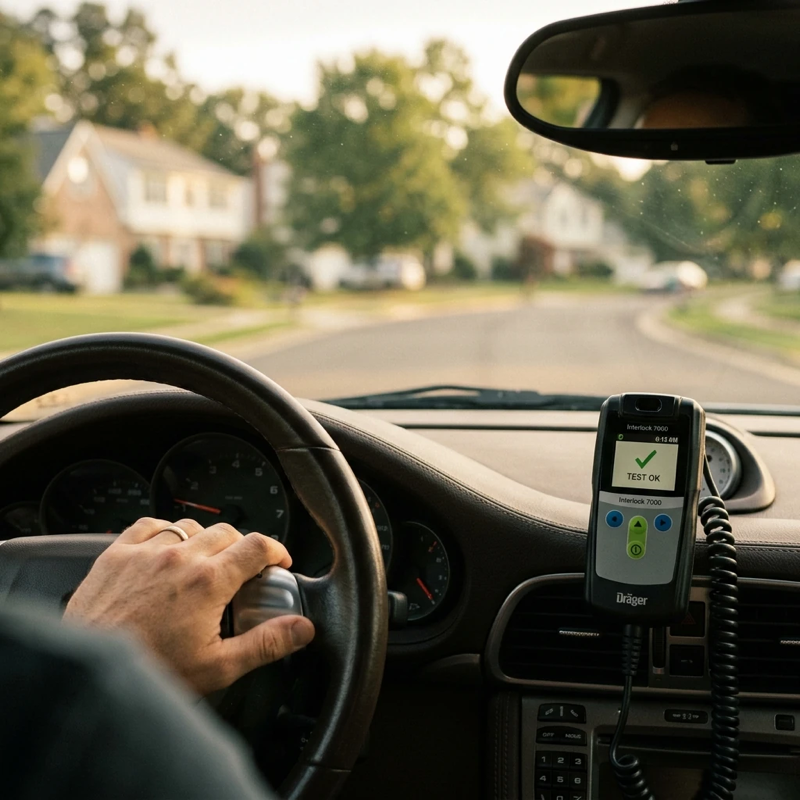
A failed rolling retest means you provided a breath sample that read
above your state’s preset breath alcohol threshold. The device logs the
reading, and in most programs the event gets transmitted to your
monitoring authority at your next download or service visit. Some states
log it in real time. Either way, it ends up on your record.
How Missed
Retests and Startup Failures Differ
A missed retest happens when you don’t provide a sample inside the
grace window. Maybe the tone got drowned out by music, maybe traffic
kept you from pulling over safely, maybe the prompt came at the worst
possible moment. Many states treat a missed retest similarly to a failed
one. Some states distinguish between the two and apply lighter penalties
for a miss. Check your state’s rules. The LCI state DUI
laws page is a useful starting point.
A startup failure happens before you ever roll. Your device locks the
engine until enough time passes or the reading clears. There’s no
driving involved, so the risk profile is lower, but it’s still a logged
event.
| Violation Type | What Triggers It | Engine Affected? | Typical Consequences |
|---|---|---|---|
| Failed Rolling Retest | Breath sample over the program threshold while driving | No engine shutoff; horn/lights may activate until you stop | Logged event reported to monitoring authority; possible review |
| Missed Rolling Retest | No sample provided within the device’s grace window | No engine shutoff; horn/lights may activate | Often treated similarly to a failure; depends on state |
| Startup Failure | Breath sample over the threshold before driving | Engine will not start | Logged event; temporary device lockout per program rules |
The exact penalty for each row above depends on your state’s DMV or
monitoring agency, your offense level, and how many prior events are on
your record. Treat the table as a general map, not a guarantee.
Rolling
Retest Interlock Penalties: What You Could Face
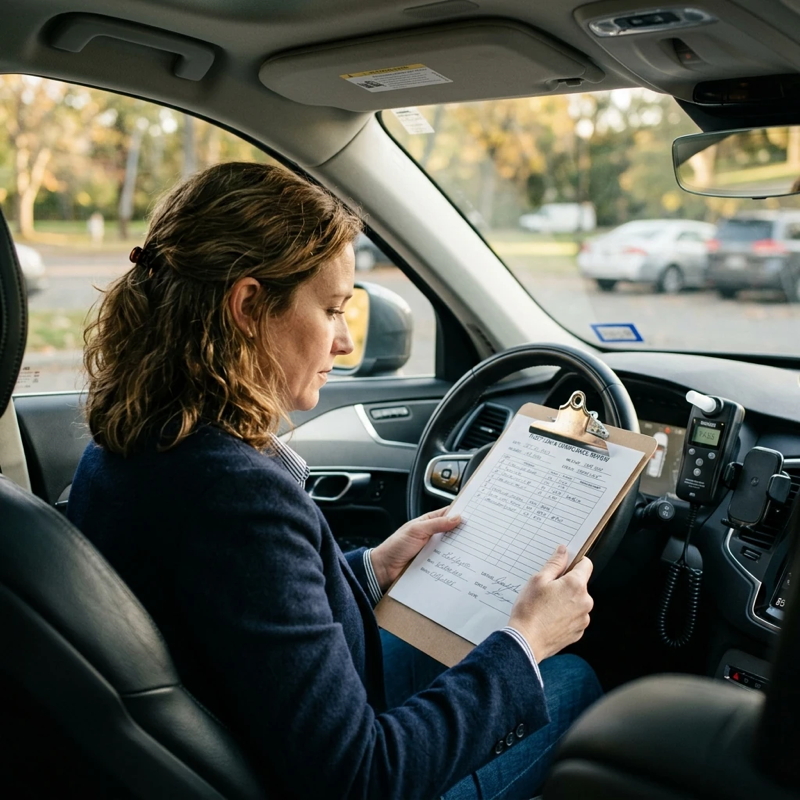
Rolling retest interlock penalties vary widely. Pennsylvania handles
them one way, Tennessee another, California another. There is no single
federal penalty for a failed retest. What follows is a general picture
of how the cascade tends to work in most states — confirm the specifics
with your monitoring authority before you act on it.
The Common Penalty Cascade
In most programs, a logged failed retest moves through stages like
this:
- The device logs the event and stores it for your
next data download. - Your provider reports the event to your monitoring
authority (DMV, court, or probation). - The monitoring authority reviews the event and
decides whether it counts as a formal violation in your state. - You may be required to attend a hearing or respond
in writing, depending on the state and the severity. - The program may extend your interlock period, often
by adding violation-free days you have to complete before removal. - Repeat events can escalate to license suspension,
revocation, or court action.
Pennsylvania’s Department of Transportation, for example, requires
interlock vendors to submit monthly reports and can extend the required
interlock period for drivers with violation events on file. Tennessee’s
program similarly extends the interlock requirement when failed retests
or tamper events are logged. The specific number of added days varies by
state and by the type of violation.
Possible outcomes for repeat events include:
- Extended interlock program duration
- Temporary device lockout
- Mandatory service visit or recalibration
- Court or DMV hearing
- License suspension or revocation
- Additional fines or program fees
MADD reports that ignition
interlock devices have stopped more than 3.78 million attempts to drive
drunk over 14 years. That volume is part of why states take
violation events seriously. Whether a single failed retest counts as a
formal violation in your state is worth confirming early. Read this
overview of what
happens if you fail an interlock test for more on how the process
tends to play out.
What to Do
Immediately After a Failed Rolling Retest
Your next steps shape how this event lands on your record. Move
calmly, document what happened, and contact the right people in the
right order.
In the Car
Pull over safely as soon as it’s legal to do so. Don’t try to argue
with the device, and don’t ask a passenger to blow for you. Having
someone else provide a sample is treated as tampering or circumvention
in most jurisdictions, and the penalties for circumvention are usually
much harsher than for the original failed retest.
Most devices allow a retry within a short window. If you can stop the
car, rinse your mouth with water, wait a minute or two, and try again.
If you pass the retest, both readings stay on the log. That paired
record can matter during a compliance review.
In the Days After
A short list of practical actions:
- Write down what you ate, drank, or used in the hour before
the test. Mouthwash, cough drops, certain medications, hot
sauce, ripe fruit, and recently fermented foods can all trigger
non-drinking readings. The exact list of common culprits is below. - Call your provider to confirm the event was logged
and to ask whether it will be reported as a formal violation. LCI
customers can reach 24-hour service at(844) 387-0326. - Contact your monitoring authority — court,
probation officer, DMV, or program coordinator — to understand the next
step in your specific case. The right contact depends on your state and
your offense level. - Save any receipts or notes from before the test. If
the cause was a recent meal, a dental procedure, or a medication change,
the documentation may matter later.
False
Readings: Common Non-Drinking Causes of a Failed Retest
A lot of failed rolling retests have nothing to do with alcohol
consumption. Interlock devices use fuel-cell sensors that detect alcohol
accurately, but some everyday products and conditions can introduce
small amounts of alcohol or alcohol-like compounds into your breath.
These are usually called false readings rather than false positives,
because the device is doing its job — it’s just reacting to something
other than a drink.
The most common non-drinking triggers:
| Common Trigger | Why It Can Cause a Reading | How to Avoid It |
|---|---|---|
| Mouthwash, breath spray, breath strips | Many contain alcohol that lingers in the mouth | Switch to alcohol-free products during your program |
| Cough syrup, cold medicine, some inhalers | Some formulations contain alcohol | Read labels; check with your pharmacist for alcohol-free options |
| Hot sauce and spicy foods | Fermented ingredients and yeast in some sauces | Rinse with water and wait 15 minutes before testing |
| Ripe or overripe fruit | Natural fermentation can produce trace alcohol | Wait at least 15 minutes after eating before a sample |
| Fermented foods (kombucha, kefir, sauerkraut) | Active fermentation produces ethanol | Same — wait, rinse, retest |
| Bread, especially fresh-baked | Yeast can leave residual alcohol on the breath briefly | Rinse and wait before driving |
| GERD or acid reflux | Stomach contents reach the mouth and skew readings | Talk to your physician; carry written documentation |
| Ketogenic diet (keto breath) | Acetone on the breath may register on some sensors | Ask your provider how your device handles ketones |
| Recent dental work | Alcohol-based rinses or anesthetics may linger | Wait the recommended time post-procedure before driving |
| Hand sanitizer used near the device | Vapor can be picked up at close range | Wash hands and air them out before testing |
A few general rules cut down on false readings dramatically. Wait at
least 15 minutes after eating, drinking anything, smoking, or using oral
products before you blow. Rinse your mouth with plain water before the
test. Keep alcohol-free versions of mouthwash, hand sanitizer, and
medications in your routine. And learn your device’s specific blow
pattern — most interlocks require a steady, sustained exhale. A short or
interrupted blow can read as a missed or failed test even when your
breath alcohol is zero. For more on what specifically sets off the
sensor, see this guide to foods
and other items that can trigger a BrAC reading.
Other
Interlock Violations That Can Trigger Penalties
A failed retest isn’t the only thing that ends up on your compliance
record. Other common events include:
- Missed calibration appointments — most programs
require service every 30 or 60 days, depending on the state - Tampering or circumvention — attempting to bypass
the device, having another person blow, or disconnecting components - Power disconnections — unplugging the device or
letting the battery die can flag a tamper event - Driving a non-equipped vehicle during your
program
Each of these adds to your record separately. If you’re close to the
end of your program, a single event near your removal date can reset the
clock in some states. The LCI
guide to handling an interlock lockout covers what to do if your
device locks you out, and the overview
of common interlock violation consequences walks through how
different events tend to be treated.
Frequently Asked Questions
Q:
How long is the grace period to respond to a rolling retest?
The grace period varies by state and device. Industry-typical windows
fall somewhere in the range of 3 to 15 minutes from the first prompt,
but the exact number depends on the device manufacturer and your program
rules. Check your device’s user guide or call your provider to confirm
yours.
Q:
Is it safe to pull over the moment my device asks for a retest?
Pull over only when it is legal and safe — most state DMV guidance is
consistent that providing a sample while driving safely is the goal, and
you should not stop in a hazardous spot just to test. Use a shoulder,
parking lot, or side street. Your device will not shut your engine off
mid-drive, so you have time to find a safe place. Confirm the specifics
with your monitoring authority.
Q:
Will one failed rolling retest extend my interlock period?
It depends on your state and the program. Some jurisdictions extend
the required interlock period after a single failed retest. Others only
extend after repeated events or a hearing finding. Ask your monitoring
authority how your state handles single events versus patterns.
Q: Can
mouthwash really cause a failed rolling retest?
Yes — mouthwash containing alcohol is one of the most common
non-drinking causes of a failed reading. The alcohol in the mouthwash
lingers in the mouth for several minutes after use. Switch to
alcohol-free mouthwash while your interlock program is active, or wait
at least 15 minutes and rinse with plain water before testing.
Q: Can
a failed rolling retest affect my insurance rates?
Possibly. If the event leads to a license action, court notice, or
formal violation finding, your insurance carrier may see it during a
policy review or at renewal. The exact impact depends on your insurer
and state. Ask your agent how interlock-related events are handled on
your specific policy.
Q:
What should I bring when I contact my monitoring authority?
Gather the device’s event log information from your provider, the
date and approximate time of the failure, and any notes about what you
ate, drank, or used before the test. Receipts and a short written
timeline help if your monitoring authority asks for documentation.
Q: I
have GERD — could my acid reflux be triggering failures?
It’s possible. Acid reflux can push stomach contents into the mouth,
and on rare occasions this can affect a breath reading. If you have a
diagnosed condition like GERD, diabetes, or another medical issue that
may influence sensor readings, talk to your physician, get written
guidance, and share it with your provider and monitoring authority.
Documentation early can make a meaningful difference if a review happens
later.
Q:
What if I share my car with family — who can blow into the device?
Only the enrolled driver should provide samples. Other drivers in the
household should know that if they’re behind the wheel and a prompt
comes up, the event still gets logged on the enrolled driver’s record.
Set clear rules about who drives the equipped vehicle and how anyone in
it should respond if the device prompts.
Q: Can a
passenger blow into the device for me?
No. Having anyone else provide a sample is treated as tampering or
circumvention in most states. The penalties for circumvention are
typically far more serious than the consequences of the original failed
retest. If a passenger blows into the device, you risk turning a
recoverable event into a significant violation.
Q:
How do I keep the device working properly between service visits?
Keep the handset dry, avoid extreme heat or cold when possible, and
don’t spray cleaners, air fresheners, or hand sanitizer near the
mouthpiece. If the device looks damaged or behaves unpredictably, call
your provider before trying to fix anything yourself.
Stay
Compliant and Protect Your Driving Privileges
A failed rolling retest isn’t the end of your program. Drivers who
recover fastest are the ones who pull over safely, document what
happened, retest after rinsing with water, and contact their provider
and monitoring authority promptly. Prevention does most of the heavy
lifting — alcohol-free mouthwash, a 15-minute wait after eating, on-time
calibration visits, and a clean blow technique stop most non-drinking
failures before they happen.
If you have questions about your device or you’re trying to figure
out the right next step after a logged event, Low Cost Interlock’s
24-hour customer service line is (844) 387-0326. The emergency
tech support page is also a useful resource if something’s happening
with your device right now. The faster you get accurate information, the
easier it is to keep your program on track.
This article is general information about interlock programs and
is not legal advice. Rolling retest rules, penalties, grace periods, and
reset procedures vary by state and provider. Consult your monitoring
authority or an attorney about the specifics of your case.