

Transferring Your Interlock to Another Vehicle: Cost, Paperwork, and Timing
A new car doesn’t reset an ignition interlock requirement. The order from your DUI case stays attached to you, so when you transfer the interlock to another car, the device comes out of the old vehicle at a certified shop and goes into the new one. Your program keeps counting as long as there’s no gap between the two appointments.
The gap is the risky part. A car sold before the device came out, a reinstall booked for next week, or a quick drive to the shop in the new car can each show up on your record as a problem, even when every other part of the program has gone well.
What Does It Take to Transfer an Interlock to Another Car?
It takes two appointments and a phone call. You tell your ignition interlock provider first, a technician removes the device from the old car and records the removal, and the device (or a replacement unit) is installed in the new car. Some states also want paperwork filed or approval given before the removal happens.
Key Points on Transferring an Interlock
- The interlock requirement follows the driver, so a vehicle change means a removal and a reinstall.
- Your provider should hear about the change before anything is booked or sold.
- Deadlines between removal and reinstall vary widely, and some states allow no gap at all.
- Driving any vehicle without an installed interlock while the order is active can count as a violation.
- Have the new car’s title or bill of sale and your program paperwork ready before the appointment.
- Transfer charges differ by provider and state, so ask for the full amount in writing.
How to Transfer Your Interlock Device, Step by Step
Doing the steps in order keeps a transfer clean. Each step below depends on the one before it, so book nothing until the first two are done.
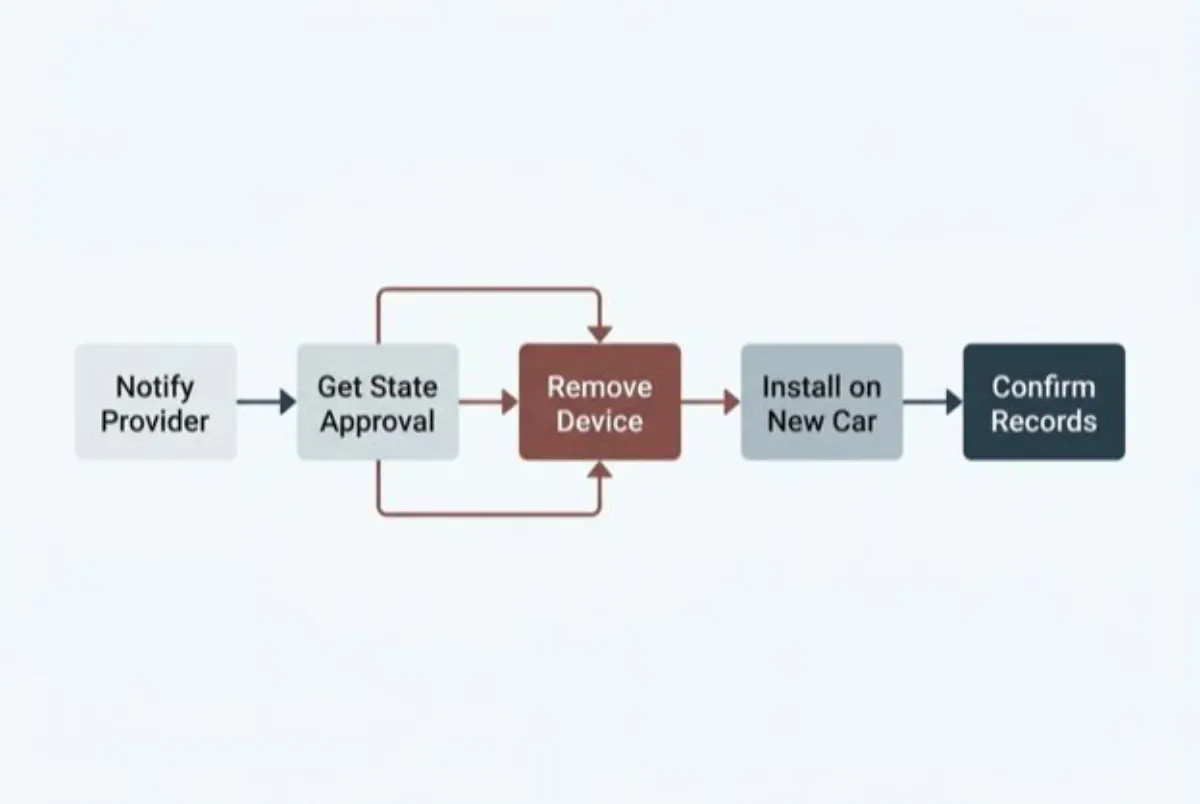
- Call your provider. Tell them which car the device is coming out of and which car it’s going into, including the year, make and model, so they can confirm the device can be installed in that vehicle.
- Ask what your state requires. Some programs only need the provider to report the change. Others want a form filed with the DMV or approval from a court or hearing officer before the device comes out.
- Settle anything owed on your account. Your provider may want any open balance paid before it schedules the transfer.
- Book the removal and the reinstall together. Put both appointments on the calendar at once, as close together as the shop allows.
- Get the new car to the shop without driving it yourself. A licensed friend or family member can drive it, or you can have it towed.
- Keep the paperwork from both appointments. The removal record and the new installation record are your proof that the device was never out longer than your program allows.
How Long Do You Have to Reinstall After Removal?
It depends on the state, and the range is wide. Two examples show how far apart programs can be:
- Arizona gives drivers who change vehicles 72 hours to reinstall the device. Missing that window suspends the license until a device is installed and starts the whole interlock requirement over, and driving any vehicle without an interlock during those 72 hours can lead to a criminal citation.
- California allows no grace period between removal and reinstall, so the replacement installation should happen on the same date as the removal, or before it. The installer records the new vehicle on the state’s verification form, and if the DMV isn’t notified of the new installation, the driving privilege can be suspended or revoked.
Your state may sit anywhere between those two. Plan the removal and the reinstall as one visit, and ask your DMV or monitoring authority for the exact deadline before you book.
While the device is out, plan on not driving at all. Driving the new car, the old car or anyone else’s car without a certified interlock installed can count as a violation of your program.
How Much Does It Cost to Transfer an Interlock?
The cost is usually a transfer charge from your provider, and it varies by provider and by state. Some providers bill one transfer fee, some bill the removal and the new installation as separate line items, and some states add their own charge on top.

At Low Cost Interlock, a transfer is billed as the administrative transfer charge plus whatever the removal and installation visits cost, and the current figures are on the interlock pricing page and confirmed when you book. Existing clients request a transfer from their account through the interlock transfer request page, and the terms there ask that the transfer fee and any unpaid balance be paid before the appointment is scheduled.
Before you book with any provider, ask these cost questions so the total doesn’t surprise you:
- Is the transfer one charge, or are removal and installation billed separately?
- Does my state collect its own fee for a transfer or a new installation?
- Does my monthly fee change, pause or keep running during the transfer?
- Is there a charge if I miss or reschedule the appointment?
- Does anything about the new car, such as its wiring, change the price?
Get the answers in writing, or note the date and the name of the person who answered.
Can You Sell a Car That Has an Interlock Device Installed?
Yes, but the device has to come out first, at a certified shop, before the buyer takes the car. The interlock is tied to your account and logs your tests, so it stays with you and your program. The buyer should never drive away with it.

Schedule the removal before the sale closes, and line up the reinstall on your next vehicle at the same time. The technician records the removal, which gives your provider a record that the device came out properly. A removal done without a technician can look like tampering. The step-by-step removal guide covers what happens at that appointment.
If the car is already sold, wrecked or stolen with the device still in it, call your provider right away. They can tell you what your state expects next and how to get a device back into a vehicle you drive.
Buying a Different Car in the Middle of Your Program
The purchase is usually the easy part. The risk comes if you drive the car before the interlock is installed. Registration, insurance and license rules differ by state, so check with your DMV about registering a vehicle while you’re on a restricted license before you sign anything.
Time the purchase around the transfer. Agree on the purchase, book the removal and reinstall for the same day, and have someone else bring the new car to the shop.
What If the Used Car Already Has an Interlock From the Last Owner?
The old device belongs to the previous owner’s account and program, so it can’t be used for yours. Ask the seller to have their provider remove it before the sale, and have your own device installed in its place. A device that’s still in a car you buy isn’t yours to unplug or take over.
Keeping Both Cars Usually Means a Second Device
A transfer only fits when the old car is leaving your hands. If you’re keeping both vehicles and you’ll have access to both, your program may require a device in each one. The rules on interlocks for multiple vehicles vary, so confirm with your monitoring authority which vehicles need one before you add a car.
What Happens to Your Interlock Requirement If You Don’t Own a Car?
The requirement doesn’t go away because there’s no car to put the device in. States handle this differently. Some programs don’t count time toward your requirement until a device is installed, and some have a separate process, sometimes a sworn statement, for drivers who don’t own or have access to a vehicle.
Ask your DMV or the court how your program treats a period with no vehicle before you sell your only car. The answer affects how long your requirement lasts, and it’s easier to get before the car is gone.
Using Someone Else’s Car for Your Interlock
Some states let you install an interlock in a vehicle you don’t own, with the owner’s written permission. The owner should know what they’re agreeing to: anyone who drives a car with an interlock has to take the breath test to start it, including the owner. Check with your monitoring authority before you ask a friend or relative, since not every program allows it and some want forms signed by the owner.
Paperwork to Bring to an Interlock Transfer Appointment
Bring the right paperwork and the shop can finish the transfer in one visit. Gather these before you book:

Document | Why you need it | Where to get it |
Title, registration or bill of sale for the new car | Shows the shop and the state which vehicle the device is going into | The seller, the dealer or your DMV |
Your court order, DMV letter or program agreement | Confirms which program you’re in and who monitors it | The court, your DMV or your attorney |
Written permission from the vehicle’s owner | Needed when the car isn’t registered to you | The owner, on your state’s form if one exists |
Leasing company or employer approval | Needed for a leased or company vehicle | The leasing company or your employer |
Your provider account details | Lets the shop pull up your device and your records | Your provider account or a past invoice |
Any state transfer form or approval | Some states require it before the removal | Your DMV, the court or your monitoring authority |
Leased and company cars can take extra lead time. A leasing company may want the installation documented, and an employer may refuse a device in a company vehicle, in which case you’ll need a personal vehicle for the device instead.
Questions to Ask Your Provider Before a Transfer
A short call before you book saves a second trip. Ask these before you schedule anything:
- Can the removal and the reinstall be done in one visit at the same shop?
- Is a same-day appointment available, and how far ahead do I need to book it?
- Can the device be installed in my new car’s year, make and model?
- Will you report the transfer to my monitoring authority, or do I need to file something myself?
- What records will I get from each appointment?
- If my next vehicle falls through, what happens to my requirement and my monthly fee?
Same-day appointments depend on the shop and are sometimes limited, so ask early rather than assuming one will be open.
Frequently Asked Questions
Can you transfer your interlock device from one vehicle to another?
Yes. Providers routinely move an interlock from one vehicle to another, as long as the old car and the new car both go through a certified shop and your state’s rules are followed. Tell your provider first, then book the removal and the new installation as close together as possible so there’s no gap on your record.
How much does it cost to transfer interlock to another car?
It depends on your provider and your state. Some providers charge one transfer fee, others bill removal and installation separately, and some states add their own charge. Ask for the full amount in writing, including any state charge and whether your monthly fee keeps running, before you book the removal.
How to transfer interlock to another car?
Call your provider, confirm what your state requires, clear any balance on your account, and book the removal and reinstall together. Have someone else bring the new car to the shop, and keep the records from both appointments. Those records show your monitoring authority the device was never out longer than your program allows.
What if you have an interlock device and change cars?
Your interlock requirement moves to the new car with you. The device has to be removed from the old car and installed in the new one within whatever window your state sets, which can be as short as the same day. Until that’s done, plan on not driving either car, since driving any vehicle without a certified interlock can count as a violation.
Can you sell a car with an interlock device?
You can, once the device is removed at a certified shop. Selling a car with the device still installed hands your equipment and your test data to a stranger and can register as an unauthorized removal. Book the removal before the sale closes, and plan the reinstall on your next vehicle for the same day.
Can you buy a car with an interlock license?
You can usually buy one. Plan on not driving it home until a certified interlock is installed, and arrange for a licensed driver or a tow to get the car to the shop. Registration and insurance rules differ by state, so confirm with your DMV before you buy.
Do I have to get an interlock device if I don’t own a car?
The requirement usually stays in place even without a car. Depending on your state, time without an installed device may not count toward finishing your program, or you may need to file a statement that you don’t own or have access to a vehicle. Ask the DMV or court handling your case which applies.
How hard is it to transfer interlock between states?
It takes more coordination than a same-state vehicle change, because your home state’s requirement and the new state’s rules both apply, and your provider has to serve the new state. Start early with both states’ DMVs. The guide on transferring an interlock to another state walks through the steps.
Can someone else drive my car with an interlock?
Yes, as long as they take the breath test every time they start the car and whenever a retest comes up. Every result is logged to your account, whoever took the test. Some programs also limit who may drive the vehicle, so check your program rules before you hand over the keys.
Plan Your Transfer Before the Car Changes Hands
A transfer goes smoothly when the removal and the reinstall are booked together, the paperwork is ready and nobody drives the new car before the device is in. Low Cost Interlock offers flexible billing options and a Price Match Guarantee, and you can check certified service locations near you or call (844) 387-0326 to plan your transfer with a certified shop.
Disclaimer: This article is provided by Low Cost Interlock for general informational purposes only and is not legal, financial, or medical advice. DUI and ignition interlock laws, penalties, fees, and program requirements vary by state, county, and individual circumstances, and they change over time. Any costs, timelines, or figures mentioned are general estimates, not quotes or guarantees. Nothing here should be relied on as a statement of the law in your jurisdiction. Always confirm current requirements with your state DMV, the court handling your case, a licensed attorney, or Low Cost Interlock directly before making decisions. Product features, pricing, availability, and promotions referenced are subject to change and may not be available in every state Low Cost Interlock serves.