

Ignition Interlock Financial Assistance: The State Programs and How to Qualify
Some states run their own ignition interlock financial assistance programs, and each one has its own name, its own agency and its own form. One state calls it an indigent fund. Another calls it an affordability program. A third checks your eligibility at the installation appointment, with no form at all.
That makes the programs hard to find when you search for them. This directory lists the official programs we could confirm on each state’s own website, with who the state says qualifies, what it asks you to send and what happens once you’ve applied.
Every entry was checked against the state’s page on September 24, 2026. Programs change, and funds can run out, so read the state’s current page before you apply.
Which States Run Ignition Interlock Financial Assistance Programs?
Each state below publishes an official interlock assistance program on a state website. The list covers only programs we confirmed on the state’s own site, and other states may run programs that aren’t listed here, so a missing state doesn’t mean there’s no help where you live.
State | Program name | Run by | How you apply |
Colorado | Financial Assistance for Ignition Interlock | Department of Revenue, Division of Motor Vehicles | Checked at your installation appointment |
Kansas | Ignition Interlock Affordability Program | Kansas Department of Revenue | Online account |
Minnesota | Reduced Fee for Ignition Interlock Servicing and Monitoring | Department of Public Safety, Driver and Vehicle Services | Form, sent by upload, fax, email or mail |
Nebraska | Ignition Interlock Indigent Fund | Department of Motor Vehicles | Notarized affidavit, sent by mail or fax |
New Mexico | Ignition Interlock Indigent Fund | Department of Transportation, Traffic Safety Division | Application linked from the program page |
Oklahoma | Affordability Accommodations | Board of Tests for Alcohol and Drug Influence | Email proof of benefits after you enroll |
South Carolina | Ignition Interlock Device Fund | Department of Probation, Parole and Pardon Services | Financial assessment form, sent by email |
Washington | Ignition Interlock Device Financial Assistance | Department of Licensing | Application, sent by mail, email or fax |
Ignition Interlock Financial Assistance Programs by State
Each entry below links the state’s own page and sums up what that page said on September 24, 2026. Quote the state’s current page, not this summary, if you’re asked about the rules.
Colorado
Colorado’s Department of Revenue runs an account that helps pay for part of the interlock for drivers who can’t pay the full cost, while funds are available.
Who qualifies: First-time offenders, or drivers designated as persistent drunk drivers who are completing their first installation. You also need to be a Colorado resident who’s lawfully present in the U.S., you had to be an adult driver at the time of the violation, and your federal adjusted gross income on your Colorado tax file has to fall within a set share of the federal poverty guidelines.
How to apply: There’s no separate first application. When you go to an approved interlock provider, the provider uses the state’s online system, and you’re asked to authorize a check against your Colorado tax file. The provider is told only whether you’re eligible, never your income.
After you apply: If you’re declined but believe the tax file doesn’t reflect your latest return, you can mail an appeal to the Division of Motor Vehicles with an IRS tax transcript. The state won’t accept a copy of the tax return itself. If your income was too low to file a Colorado return, the page lists two other documents you can send instead: a benefits determination letter from the state’s human services department or a court’s declaration of indigency from your case. The state doesn’t pay costs from before approval, and a later suspension or revocation ends the assistance.
Kansas
Kansas offers reduced interlock program costs through its affordability program to drivers whose annual household income is at or below 150% of the federal poverty level, or who meet one of two benefit tests.
Who qualifies: You need to meet one of three conditions. Your household income is within that limit, you’re enrolled in the state’s food assistance, childcare subsidy or cash assistance program, or you’re currently eligible for the low-income energy assistance program run by the Department for Children and Families.
How to apply: The page sends you to create an account and apply online. The Kansas Department of Revenue monitors the program.
After you apply: The page doesn’t say how you’re notified. Ask the Department of Revenue when you apply, and keep a copy of whatever it sends you.
Minnesota
Minnesota lets drivers in its Ignition Interlock Device Program apply for a reduced fee for interlock servicing and monitoring using a Driver and Vehicle Services form.
Who qualifies: People enrolled in or applying for the state’s interlock program who are having trouble paying for it. The reduced fee application asks you to check which public benefit you receive, such as SNAP, MFIP, TANF, SSI, Medical Assistance, MinnesotaCare, energy assistance, child care assistance or WIC.
How to apply: Send a recent qualification or acceptance letter from the agency that provides your benefit, with your name on it. An ID card doesn’t count as proof. Don’t send originals. You can upload the form online, or send it by fax, email or mail to Driver and Vehicle Services.
After you apply: If you’re approved, the form says you’ll need to reapply to keep the reduced fee.
Nebraska
Nebraska’s Ignition Interlock Indigent Fund lets low-income drivers apply for help with the cost of installing and maintaining an interlock.
Who qualifies: Low-income drivers, based on the household income and benefits you list. The DMV’s indigent interlock fee payment application asks about everyone living at your address, their income and any benefits they receive.
How to apply: Fill out the affidavit in full, have it notarized, and mail or fax it to the Department of Motor Vehicles in Lincoln. The form asks for proof of gross income, such as recent pay stubs, your latest W-2 and tax return, or a written statement from your employer, plus proof of any Medicaid, Social Security or SNAP benefits. Send copies, because attachments aren’t returned.
After you apply: The form says the funding depends on having your interlock permit issued within a set number of days, so get the permit promptly once you’re approved. You also have to tell the DMV if your income changes.
New Mexico
New Mexico’s Department of Transportation administers an interlock indigent fund that gives a subsidy to offenders who are required to install an interlock and are found indigent.
Who qualifies: Drivers required to install an interlock who are granted indigency. The subsidy covers one vehicle per person, as long as money is available in the fund.
How to apply: The program page links the application and asks you to contact the Traffic Safety Division front desk with questions about the fund.
After you apply: The page says you’re responsible for any charges the fund doesn’t pay, so ask your provider which part of each bill will stay with you.
Oklahoma
Oklahoma’s Board of Tests offers affordability accommodations in the form of a credit toward interlock costs for enrolled program participants who receive certain benefits.
Who qualifies: Participants in the Board of Tests Ignition Interlock Device Program who show valid proof that they’re actively receiving TANF or SNAP benefits. The accommodation is only open to people already enrolled in the program.
How to apply: After you’ve enrolled, email proof of your TANF or SNAP benefits to the program staff at the address listed on the page.
After you apply: Approved participants get a credit that the device manufacturer applies to their account, and the size of the credit depends on how many license revocations the participant has. You lose eligibility if you fall out of compliance with the program or your lease fees. If you’re denied, the page says you can appeal.
South Carolina
South Carolina’s Department of Probation, Parole and Pardon Services runs an Ignition Interlock Device Fund for people who are indigent and can’t afford the device, and it reviews applications on a monthly cycle.
Who qualifies: A person who’s found indigent after submitting an affidavit of indigency to the department.
How to apply: Complete the department’s driver financial assessment application, Form 1307. Its instructions ask for proof of all your income for the last 90 days, including your spouse’s if you’re married, plus proof of your monthly expenses and any benefits. Send copies only. The page lists an email address for device funding.
After you apply: Applications that arrive after the 5th of the month are reviewed the following month. The department decides at its own discretion whether to grant, deny or continue assistance.
Washington
Washington’s Department of Licensing has a financial assistance application for help with the cost of installing, removing and leasing an interlock.
Who qualifies: Drivers who show proof of a qualifying benefit, such as DSHS benefits, Medicaid or Medicare, a court-appointed attorney, poverty-related veteran’s benefits or refugee resettlement benefits. If none of those apply, you can verify your income instead.
How to apply: Attach proof of the benefit, or proof of income such as your two most recent months of pay stubs, your latest federal tax return or your most recent W-2s. If you have no income, attach a signed statement explaining that. Mail, email or fax the form and documents to Driver Records at the Department of Licensing. The form says applications without the required proof will be denied.
After you apply: The department notifies you in writing whether you’ve been approved or denied.
What the Applications Ask For
The programs above want proof of one of two things: that you receive a public benefit, or that your household income is low. Having both kinds of document ready before you start saves a second trip to the mailbox.

Depending on the state, the forms above ask for:
- A current benefits or award letter with your name on it
- Recent pay stubs, a W-2 or your latest tax return
- A signed statement if you have no income
- The names and income of the people in your household
- Proof of monthly expenses
- A notarized signature
- Your driver’s license number and your interlock program enrollment
Send copies. The Minnesota, Nebraska, South Carolina and Washington forms say attachments won’t be returned.
How to Put Your Application Together
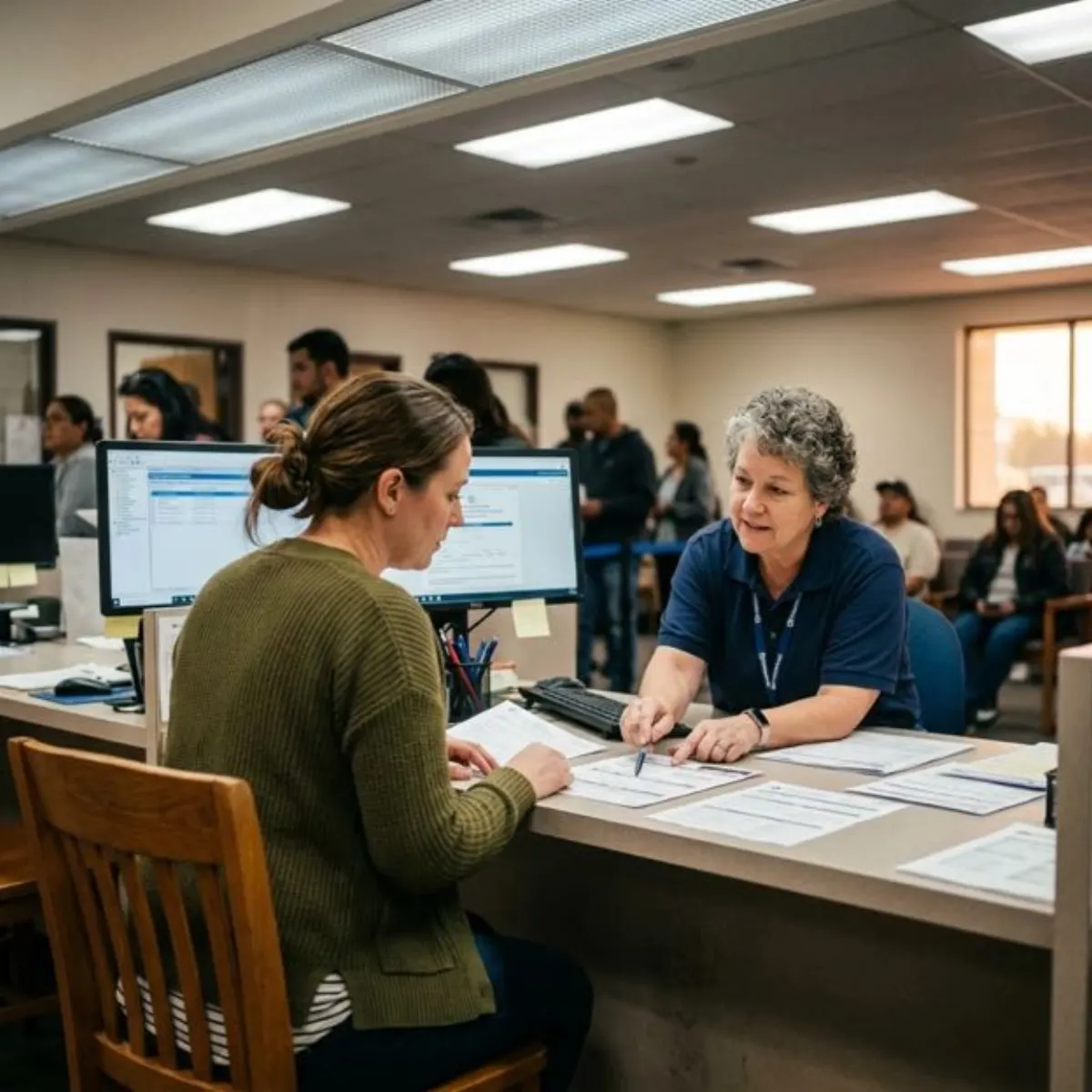
The steps are similar in each state, even though the forms and agencies differ. Start as early as you can. Colorado, for one, doesn’t pay costs from before approval.
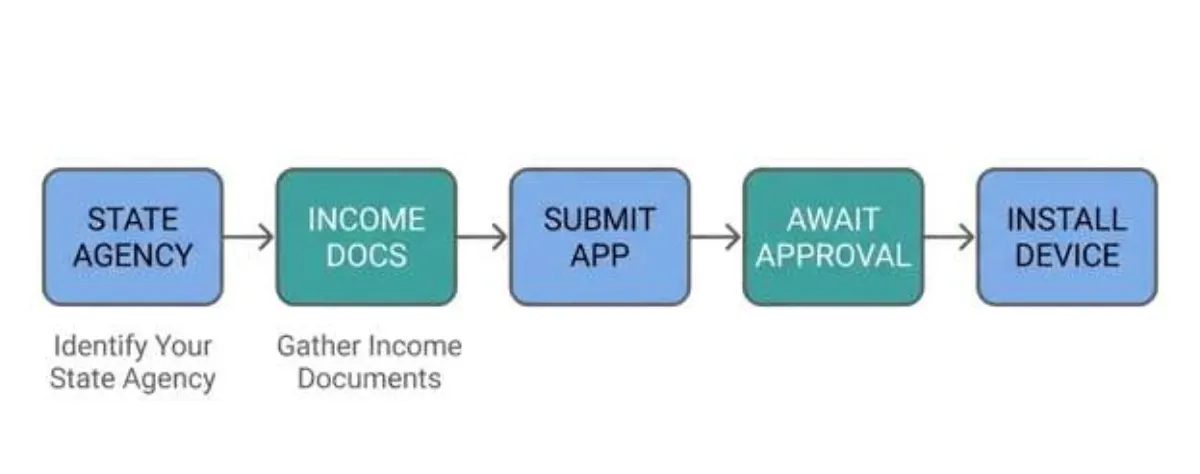
- Find your state’s page. Use the entry above, or ask the agency named on your interlock order.
- Read the eligibility rules first. Some programs are open only to people already enrolled in the state’s interlock program, and some only to certain offense histories.
- Gather the proof the form names. Use the list above as a checklist, and include every page the form requires.
- Send it by the method the state names. That might be an online account, an upload, email, fax or mail.
- Keep a copy of everything. Save the application, the attachments and any approval you receive.
If your state checks eligibility at the installation appointment, as Colorado does, choosing your installer is part of the application. Our guide to finding an approved interlock installer can help you pick one before the appointment.
What Happens After Your Assistance Is Approved
Depending on the state, approval means a credit, a reduced fee or a payment toward specific charges, and the rest of the bill stays with you. Give your provider a copy of the approval so it reaches your account.
Ask the agency which charges the program pays and which it doesn’t, and get that answer in writing. Knowing what an interlock costs overall helps you see what part of the bill a program would leave with you.
Staying compliant protects the assistance. Oklahoma ends eligibility when a participant falls out of compliance, and Colorado ends it after a later suspension or revocation. Keep every service appointment, and tell the agency about any change it asks you to report, such as a change in income.
If Your State Isn’t Listed
Start with the agency named on your interlock order. That’s usually the DMV or licensing office, the court that handled your case, or your probation officer. Ask whether the state runs an interlock financial assistance program and where the form is. You can also check interlock requirements by state to see which agency oversees the program where you live.
If your state has no program, or you don’t qualify, other kinds of help still exist, such as court fee relief and provider billing. Our guide on how to pay for an ignition interlock when you can’t afford one covers those options.
Frequently Asked Questions
Is there financial assistance for interlock costs?
In some states, yes. Colorado, Kansas, Minnesota, Nebraska, New Mexico, Oklahoma, South Carolina and Washington each publish an official program on a state website, and others may run programs that aren’t listed here. Programs differ in who they serve, what they pay toward and whether money is left in the fund, so read your own state’s page before you count on it.
Can I get financial assistance for an ignition interlock device (IID) in Washington State?
Washington’s Department of Licensing has an application for help with the cost of installing, removing and leasing an interlock. You qualify by showing proof of certain benefits, or by verifying your income with documents such as recent pay stubs, a tax return or W-2s. The department notifies you in writing whether you’re approved, so check the current form before you send it.
What is an interlock waiver?
The term usually means an exemption from the interlock requirement itself, which is a different thing from financial assistance. Exemptions are uncommon and narrow, such as driving an employer’s vehicle for work, and some states don’t offer one at all. Read more about ignition interlock exemptions, and ask your court or DMV what applies to your case.
Get a Quote for the Rest of the Bill
Once you know what a state program will cover, the next step is a clear number for the rest. You can compare ignition interlock pricing and get a 60-second quote from Low Cost Interlock.
Disclaimer: This article is provided by Low Cost Interlock for general informational purposes only and is not legal, financial, or medical advice. DUI and ignition interlock laws, penalties, fees, and program requirements vary by state, county, and individual circumstances, and they change over time. Any costs, timelines, or figures mentioned are general estimates, not quotes or guarantees. Nothing here should be relied on as a statement of the law in your jurisdiction. Always confirm current requirements with your state DMV, the court handling your case, a licensed attorney, or Low Cost Interlock directly before making decisions. Product features, pricing, availability, and promotions referenced are subject to change and may not be available in every state Low Cost Interlock serves.