
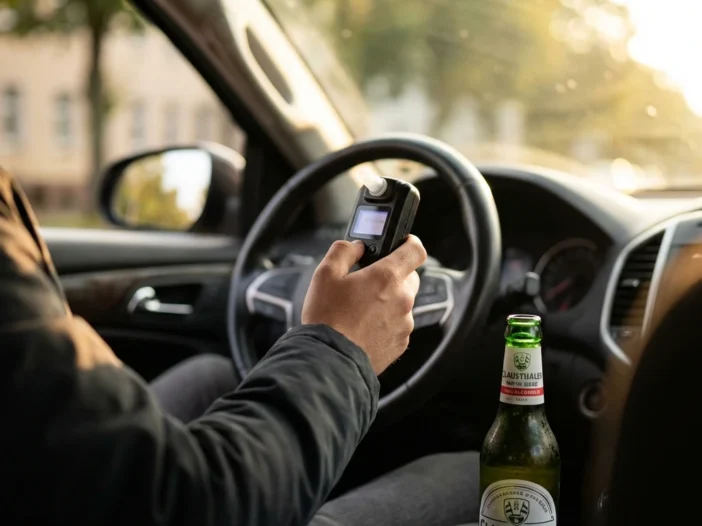
Non alcoholic beer is marketed as a sober-friendly option, but if you rely on an ignition interlock, it can suddenly feel risky. Many drivers worry that even trace alcohol in non alcoholic beer could trigger a failed breath test and lead to serious consequences.
That anxiety is understandable, especially when your license, job, and probation status depend on every breath sample. To sort fact from rumor, you need a clear explanation of how ignition interlock devices read alcohol, what’s actually in non alcoholic beer, when mouth alcohol becomes a problem, and what practical steps keep you safely within program rules.
How non alcoholic beer interacts with ignition interlocks
Before you can judge the risk, it helps to understand two things: what “non alcoholic” really means, and how your ignition interlock measures alcohol on your breath. Once those pieces are clear, the connection between the drink in your hand and the number on the screen makes much more sense.
In most countries, non alcoholic beer can contain up to 0.5% alcohol by volume (ABV), even though some brands are labeled 0.0%. By comparison, a typical regular beer is around 4–6% ABV. That means a standard non alcoholic beer has only a fraction of the alcohol found in a regular beer, and many options truly have no measurable alcohol at all.
Your ignition interlock does not measure ABV in your glass; it measures breath alcohol concentration (BrAC) from deep lung air. The device’s fuel-cell sensor is designed to detect ethanol molecules in your breath and convert them into an electrical signal, which is then compared to the BrAC limit set by your state program.
The key distinction is between mouth alcohol and absorbed alcohol. Mouth alcohol is the short‑lived residue left in your mouth and throat right after you sip or rinse with anything containing alcohol. Absorbed alcohol is what shows up in your bloodstream and, eventually, in your deep lung breath as your body processes the drink. Interlocks are built to measure absorbed alcohol, but they can temporarily pick up mouth alcohol if you blow too soon after drinking.

Lab evidence on non alcoholic beer and interlock readings
Controlled tests provide some reassurance about non alcoholic beer and interlock performance. According to Texas A&M CADES laboratory testing, drinking non alcoholic beer did not produce a BrAC reading high enough to fail an ignition-interlock breath test under standardized conditions.
Engineers at the Texas A&M Transportation Institute Blow2Go myths guide went further by benchmark-testing several popular 0.0% and 0.5% ABV beers on an evidential-grade interlock head unit. Across 24 controlled trials, every breath sample taken after normal mouth-air exchange returned 0.000% BrAC, demonstrating that modern fuel-cell sensors are not easily fooled by the minute ethanol content of non alcoholic beer when users wait an appropriate amount of time before blowing.
These lab conditions assume you are following program instructions: no rapid back-to-back drinking, and a brief waiting period before you provide a sample. Real-world behavior can look different, which is where most interlock problems begin.
Can non alcoholic beer cause a failed ignition interlock test?
The honest answer is that non alcoholic beer is very unlikely to cause a failed test because of absorbed alcohol in your system, but it can trigger a fail through mouth alcohol if you blow too soon. The difference comes down to timing, quantity, and how you use the device.
When you drink a regular alcoholic beverage, your body absorbs a significant amount of ethanol, and your BrAC rises as alcohol circulates in your bloodstream. With a 0.0–0.5% ABV non alcoholic beer, the total ethanol load is so tiny that, even after absorption, it typically never approaches your interlock’s fail threshold.
The real short-term risk is from foam, bubbles, and residue in your mouth and upper throat immediately after you drink. If you take several big swallows of non alcoholic beer and then blow right away, the device may sample mostly mouth alcohol instead of deep lung air. That can briefly create an artificially high reading, even though you are not impaired.
Realistic risk scenarios with non alcoholic beer and interlocks
To see where things go wrong, it helps to walk through common situations people on interlock programs run into with non alcoholic beer.
One scenario: you are at a barbecue and drink two non alcoholic beers quickly, then leave right away. You get in the car, the device prompts for a test, and you blow within a minute of your last sip. Foam and liquid are still in your mouth, and if you burp or exhale forcefully, that alcohol-rich air passes straight across the sensor. The device may record a positive BrAC even though your deep lung air is essentially alcohol-free.
A second scenario is a rolling retest. You passed your initial test after waiting, but then you casually sip a non alcoholic beer at a stop or while parked, not thinking about the next random retest. When the device beeps a few minutes later, you are suddenly under pressure, rush the sample, and risk a temporary mouth-alcohol spike.
As mentioned earlier, the ethanol content of non alcoholic beer alone is not the main danger. Instead, the risk comes from treating “non alcoholic” as if it were the same as water and forgetting that your interlock still interprets any recent alcohol exposure as a potential violation.
ABV comparison: non alcoholic beer vs regular drinks
This comparison helps put non alcoholic beer in context with other drinks your interlock definitely cannot ignore:
| Beverage type | Typical ABV range | Relative interlock risk when consumed normally |
|---|---|---|
| Regular beer | 4–6% ABV | High – will raise BrAC and almost certainly cause fails |
| Wine | 10–14% ABV | Very high – quickly reaches violation levels |
| Spirits (vodka, whiskey, etc.) | 35–40%+ ABV | Extremely high – any use is incompatible with an IID program |
| Non alcoholic beer (most brands) | 0.0–0.5% ABV | Very low absorbed-alcohol risk; mouth alcohol can be an issue if you blow too soon |
| Truly alcohol-free options (water, many sodas, labeled 0.0% drinks) | 0% ABV | None from alcohol – still watch for sugar residues and flavors before a test |
This table shows why probation and treatment providers advise staying away from regular alcoholic beverages entirely while using an ignition interlock, and why non alcoholic beer sits in a special “low but not zero” risk category.
Practical safety rules before you blow into your device
If you choose to drink non alcoholic beer while you have an interlock, you need a simple, repeatable routine that protects you from mouth-alcohol spikes and accidental violations. The most conservative option is to avoid anything with even trace alcohol for the duration of your program, but many people can stay compliant if they follow strict timing and hygiene habits.
A state-approved ignition interlock device (IID) with a fuel-cell sensor, such as the LCI-777 from Low Cost Interlock, is calibrated to your jurisdiction’s BrAC limit, but it cannot tell the difference between “real drinking” and a recent rinse with a low-alcohol product. Your daily routine is what keeps the readings accurate and your record clean.

Timing guidelines after drinking non alcoholic beer
Field experience from IID users aligns closely with the lab research about waiting periods. An NA Beer Club explainer on non-alcoholic beer and testing recommends a “rinse and wait five minutes” protocol before blowing, and a reader survey of ignition interlock users reported no confirmed lockouts when people followed that guidance over a 90‑day period.
To build in an extra safety margin and satisfy strict programs, many drivers adopt a longer routine like this:
- Stop drinking non alcoholic beer at least 15 minutes before you expect to drive.
- Rinse your mouth thoroughly with plain water, then spit or swallow.
- Avoid burping directly into the mouthpiece; take a few normal breaths first.
- If a rolling retest is possible, do not sip non alcoholic beer between tests.
These steps help ensure that, when you blow, the device samples deep lung air instead of the remnants of your last drink. The same routine also protects you from other hidden alcohol sources, not just beer.

Other everyday products that can trigger an interlock
Even if you never touch non alcoholic beer, your ignition interlock can still detect alcohol from everyday items. Many drivers are surprised to learn how many household and personal-care products contain ethanol or similar compounds.
Common examples include:
- Alcohol-based mouthwash and breath sprays.
- Fermented drinks like kombucha and kefir.
- Desserts and sauces made with wine, beer, or spirits.
- Cough syrups, cold medicines, and tinctures with alcohol carriers.
- Hand sanitizers and cleaning products whose vapors can be inhaled in closed spaces.
Your safest move is to check labels for alcohol content and avoid using these products right before driving. Treat anything that smells like alcohol as potentially risky, and apply the same rinse-and-wait routine you would use after non alcoholic beer.
If you use a smartphone breath tester as a backup check, remember that device accuracy varies. Penn Today reporting on smartphone breath-alcohol devices found significant differences in low-range readings until manufacturers updated their calibration, which means a cheap gadget might show a tiny BrAC number that your interlock would ignore.
Mid-program support from your interlock provider
A reliable ignition interlock provider should help you understand what can and cannot affect your readings so you are not guessing every time you take a test. With Low Cost Interlock, drivers get clear training on mouth alcohol, single-use hygienic mouthpieces, and state-specific BrAC limits so they can build safe habits from day one.
The compact LCI-777 device, often called “The Can,” pairs with a mobile app for remote warm-ups and sends reminders for calibration service, helping you avoid missed appointments and unexpected lockouts. If you are worried that non alcoholic beer or another product contributed to a failed test, a supportive customer team can walk you through what the logs show and what to expect next.
What happens after a failed interlock test
Even careful drivers sometimes see a failed or aborted test, whether from non alcoholic beer, mouthwash, or simply blowing incorrectly. Knowing what usually happens next can reduce panic and help you respond in a way that protects your license and your record.
Program rules vary by state, but most ignition interlock devices follow a similar pattern when a test fails: the device refuses to let the car start, records the BrAC result and time stamp, and then either imposes a short lockout period or asks for another sample after a brief wait. Multiple failed tests in a row, or fails during rolling retests while the vehicle is moving, are typically treated more seriously than a single isolated event.

Step-by-step: what to do if you fail a test
If you see a fail message on your device and you have recently consumed non alcoholic beer or another product that might cause mouth alcohol, a calm response matters more than quick reactions. Rushing often leads to multiple failed attempts, which can look worse in your interlock report.
A careful response usually looks like this:
- Stop and think about everything you used in the last 15–30 minutes (non alcoholic beer, mouthwash, breath mints, medicine).
- Rinse your mouth thoroughly with water and step outside the vehicle if you have been around strong fumes or vapors.
- Wait until the device allows another test; do not keep trying to blow repeatedly during the lockout period.
- When prompted, provide a calm, steady breath sample, focusing on normal exhalation from your lungs rather than forceful blowing.
- Write down your memory of the event: time, what you consumed, and how many attempts were required.
- If your program requires it, contact your monitoring authority, probation officer, or attorney to explain the situation and provide your notes.
As mentioned earlier, a single low-level fail followed by clean retests may be viewed differently than a pattern of high readings or missed rolling retests. Documenting what happened and keeping your provider in the loop shows you are taking compliance seriously.
Cost is another concern when problems arise. Choosing a provider that advertises the lowest cost ignition interlock device guaranteed, with no hidden fees or penalty charges for failed tests, can limit the financial stress if you do experience an issue tied to non alcoholic beer or another product.
Frequently Asked Questions
Should I tell my probation officer or monitoring authority that I drink non-alcoholic beer?
It’s wise to be upfront, especially if your conditions reference alcohol use broadly or you’re in a treatment program. Ask directly whether non-alcoholic beer is permitted under your specific terms so you can follow written guidance instead of making assumptions.
Can my ignition interlock report distinguish between non-alcoholic beer and regular alcohol use?
No, the data log only shows breath alcohol readings, timestamps, and test results—it does not identify what you consumed. Any elevated reading is interpreted as possible alcohol exposure, so you need to manage timing and documentation if you consume non-alcoholic products.
Are there specific non-alcoholic drinks that are safer choices while I have an interlock?
Drinks that are verified 0.0% alcohol and clearly labeled as such are generally the lowest-risk options. You can also choose alternatives like flavored seltzers, alcohol-free mocktails made from juice or soda, or specialty ‘zero-proof’ beverages that state no ethanol content.
How can I document my non-alcoholic beer use in case a test result is questioned later?
Keep simple notes on dates, times, brands, and quantities you consume, especially before driving. If a reading ever comes under review, those notes—along with receipts or photos of the products—can support your explanation that you used only non-alcoholic beverages.
What questions should I ask an interlock provider before choosing one if I plan to drink non-alcoholic beer?
Ask how their device handles low-level readings, whether customer support can review logs with you, and if there are extra fees associated with failed tests. You can also request written guidance on using products with trace alcohol so you know exactly what they recommend.
Could drinking non-alcoholic beer affect my DUI case, insurance, or employment even if my interlock tests are clean?
In most situations, non-alcoholic beer doesn’t impact legal or insurance status if you’re otherwise compliant, but perceptions do matter. If you’re in a safety-sensitive job or recovery program, clarify expectations with your employer or counselor to avoid misunderstandings.
How should I handle social events where others are drinking while I’m on an interlock program?
Plan your transportation and timing before the event, and bring or request alcohol-free options that are clearly labeled. Let close friends or family know you’re on an interlock so they can support your choice to prioritize compliance over spontaneous drinking decisions.
Staying compliant while enjoying non alcoholic options
Non alcoholic beer can fit into life with an ignition interlock, but only if you treat it with the same respect you now give any product that contains alcohol. The safest path is always to prioritize your license and your recovery over a particular drink, and that means building a routine that eliminates surprises at the mouthpiece.
If you do choose to drink non alcoholic beer, commit to conservative timing, water rinses, and avoiding any sips between initial and rolling tests. Be cautious with mouthwash, medicines, and other hidden alcohol sources, and remember that a short delay before you blow can save you months of added interlock time.
For drivers who want the lowest-cost, least-stress path through an IID program, partnering with Low Cost Interlock offers clear training, transparent pricing, and fuel-cell technology designed for 100% accurate, road-legal results. Call 844-218-5398 or visit the website to schedule installation, regain control of your driving privileges, and complete your program without letting non alcoholic beer or any other preventable factor stand in your way.