
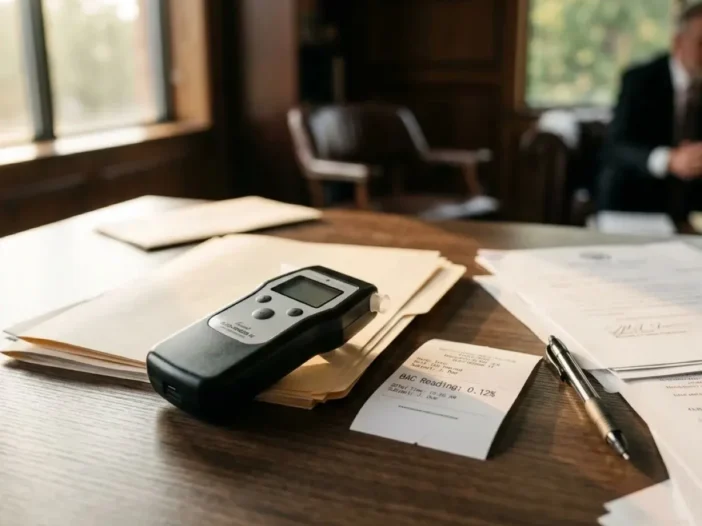
Blood Alcohol vs. Breath Alcohol: Is There a Difference?
Yes, there is a difference. Blood alcohol concentration (BAC) is the amount of alcohol actually in your blood, measured from a blood sample in a lab. Breath alcohol concentration (BrAC) is the amount of alcohol in your exhaled breath, measured on the spot by a breathalyzer or an ignition interlock device. Breath testing estimates what is in your blood; a blood test measures it directly.
For most drivers the two numbers land very close together, because the alcohol in your deep-lung air comes straight from your bloodstream. But they are not identical, and the gap between them matters if you take breath tests every day on an interlock device.
This article walks through how alcohol gets into your blood and breath, how BAC and BrAC are calculated, which test is considered more accurate, and what can throw off a breath reading. No chemistry degree required.
BAC vs. BrAC: The Short Answer
BAC and BrAC measure the same thing, alcohol in your body, from two different samples. Here is the quick comparison:
- What’s sampled: BAC uses blood drawn from a vein. BrAC uses a sample of deep-lung breath.
- Where it happens: Blood tests go to a lab and take time. Breath tests happen roadside or in your car, with results in seconds.
- Units: BAC is expressed as grams of alcohol per 100 milliliters of blood, written as a percentage like 0.08. BrAC is expressed as grams of alcohol per 210 liters of breath.
- How it’s treated: A blood test is a direct measurement. A breath test is an estimate built on a standard conversion, which is why courts generally treat blood results as the more precise evidence.
- Everyday use: Breath is what police, employers, and ignition interlock devices actually test, because it is fast, non-invasive, and repeatable.
How Alcohol Gets Into Your Bloodstream
Alcohol reaches your blood through digestion, mostly absorbed through the stomach lining and small intestine, according to the National Institute on Alcohol Abuse and Alcoholism. Understanding that path makes the BAC vs. BrAC difference much easier to follow.

There are five steps in the process:
- Consumption: Once consumed through your mouth, alcohol travels down the throat through the esophagus and into the stomach.
- Entering the stomach: During the digestion process, some alcohol will be absorbed through the cell membrane in your stomach. From here it enters straight into your bloodstream.
- Gastrointestinal tract: When drinking on an empty stomach, the alcohol drops directly into your small intestine, which is part of your gastrointestinal tract and is lined with thousands of capillaries.
- Epithelial cells: These capillaries are covered in epithelial cells. Their large surface area allows them to efficiently absorb any remaining alcohol into your bloodstream.
- Diffusion: The remaining alcohol is absorbed by a process known as diffusion. It transfers ethanol through the cell membranes of your small intestine and into your blood. This is known as a passive process, in that it happens automatically and does not involve an exchange of energy.
This explains why drinking on an empty stomach accelerates the effects of alcohol. Food in your stomach slows absorption, so the same drinks hit your blood more gradually. One correction to a common myth, though: eating after you are already drunk does not pull alcohol back out of your blood. Only time lowers a BAC that is already there.
Going from the Bloodstream to the Lungs
Once in your blood, alcohol travels through your circulatory system and into your respiratory system like so:
- Circulation: Ethanol enters your heart and is pumped all over your body via the circulatory system, which carries the alcohol to your brain (cue behavior changes due to a decrease in neuron activity), your lungs, and your liver.
- Lungs: When ethanol reaches your lungs, it undergoes a secondary diffusion process, this time through the cell membrane of your alveolar air sacs.
- Alveolar air sacs: Once positioned in the alveolar air sacs, some of the alcohol evaporates into the air you exhale. This is the alcohol a breath test reads.
- Liver: Your liver is where your body metabolizes alcohol, filtering it out of your blood over time.
- Oxidation: The process by which alcohol is detoxified and removed from your blood. A small fraction escapes this process and leaves the body unchanged through breath, urine, and sweat, which is exactly why exhaled air can be tested at all.
The key takeaway: the alcohol in your breath comes directly from the alcohol in your blood. That is what makes breath a usable stand-in for a blood sample.
How BAC and BrAC Are Calculated
BAC and BrAC use different units, and a breath device applies a standard conversion to report a blood-equivalent number.
The primary difference between BrAC and BAC is the concentration percentage. Simply put, the amount of alcohol measured in your breath will not be the same as the amount of alcohol measured in your blood. Breath carries far less alcohol by volume, so the two are measured on different scales:
- Calculating BAC: In the United States, BAC is measured in grams of alcohol per deciliter of blood (g/dL). A BAC of 0.08 means 0.08 grams of alcohol per 100 milliliters of blood.
- Calculating BrAC: Breath alcohol concentration is measured in grams of alcohol per 210 liters of breath. That is the unit written into federal breath-testing regulations.
Why 210 liters? US breath testing is built on a long-standing scientific convention that a large, fixed volume of deep-lung breath (about 2,100 milliliters) carries roughly the same alcohol as 1 milliliter of blood. Using grams per 210 liters makes the breath number line up with the blood number, so a properly functioning device can display a BAC-equivalent reading like 0.08 from a breath sample.
One honest caveat: that conversion is a population average. Individual ratios vary a bit from person to person and even hour to hour, which is one reason breath results are treated as estimates rather than direct measurements.
Which Is More Accurate: a Blood Test or a Breathalyzer?
A blood test is the more precise measurement, because it counts the alcohol in your blood directly rather than estimating it from breath. That is why hospitals and courts rely on laboratory blood alcohol tests when an exact number matters, and why DUI charges are typically framed in terms of BAC.
That said, modern breath instruments are reliable when they are used correctly: a clean mouth, a steady deep-lung sample, and a properly calibrated device produce readings that track blood results closely. Breath testing would not be the backbone of roadside enforcement and interlock programs if it were guesswork.
The practical difference comes down to role. Blood is the evidentiary gold standard; breath is the fast, repeatable screening tool. When the two genuinely disagree, the usual culprit is not the science but the sample, and that is where the variables below come in.
What Can Throw Off a Breath Alcohol Reading
There is a subtle but crucial difference in the way that BrAC and BAC react to outside variables. A blood sample is hard to disturb. A breath sample passes through your mouth and airway on the way out, and several things along that route can nudge the number:
- Mouth alcohol: A breath test is supposed to read deep-lung air, not your mouth. Right after a drink, a swig of mouthwash, or even some foods and household products that can trigger a BrAC reading, leftover alcohol in your mouth can spike the result far above your true level. This is temporary; a short wait, often 15 to 20 minutes, plus a rinse with water, lets mouth alcohol dissipate.
- Breathing pattern: How you breathe before the sample changes what the device sees. Rapid shallow breathing dilutes deep-lung air, and holding your breath concentrates it. This is why breath devices ask for one steady, sustained exhale, so every sample is measuring the same kind of air.
- Time elapsed since consumption: As the amount of time since consumption increases, naturally, both the BrAC and BAC duly decrease. But right after drinking, the two can briefly disagree: a blood draw would show alcohol that has already been absorbed, while a breath test taken with alcohol still in your mouth can read artificially high until that clears.
- Medical conditions: Some conditions can affect breath readings in some circumstances, acid reflux being the commonly cited example, because it can bring stomach contents (and alcohol vapors) back up into the mouth and airway. If you have a condition you think affects your testing, raise it with your program monitor or attorney rather than guessing.
None of these variables change what is actually in your blood. They change the sample, which is why testing protocols, wait periods, and steady-blow requirements exist: to make the breath number match the blood number as closely as possible.
Why Ignition Interlock Devices Measure Breath, Not Blood
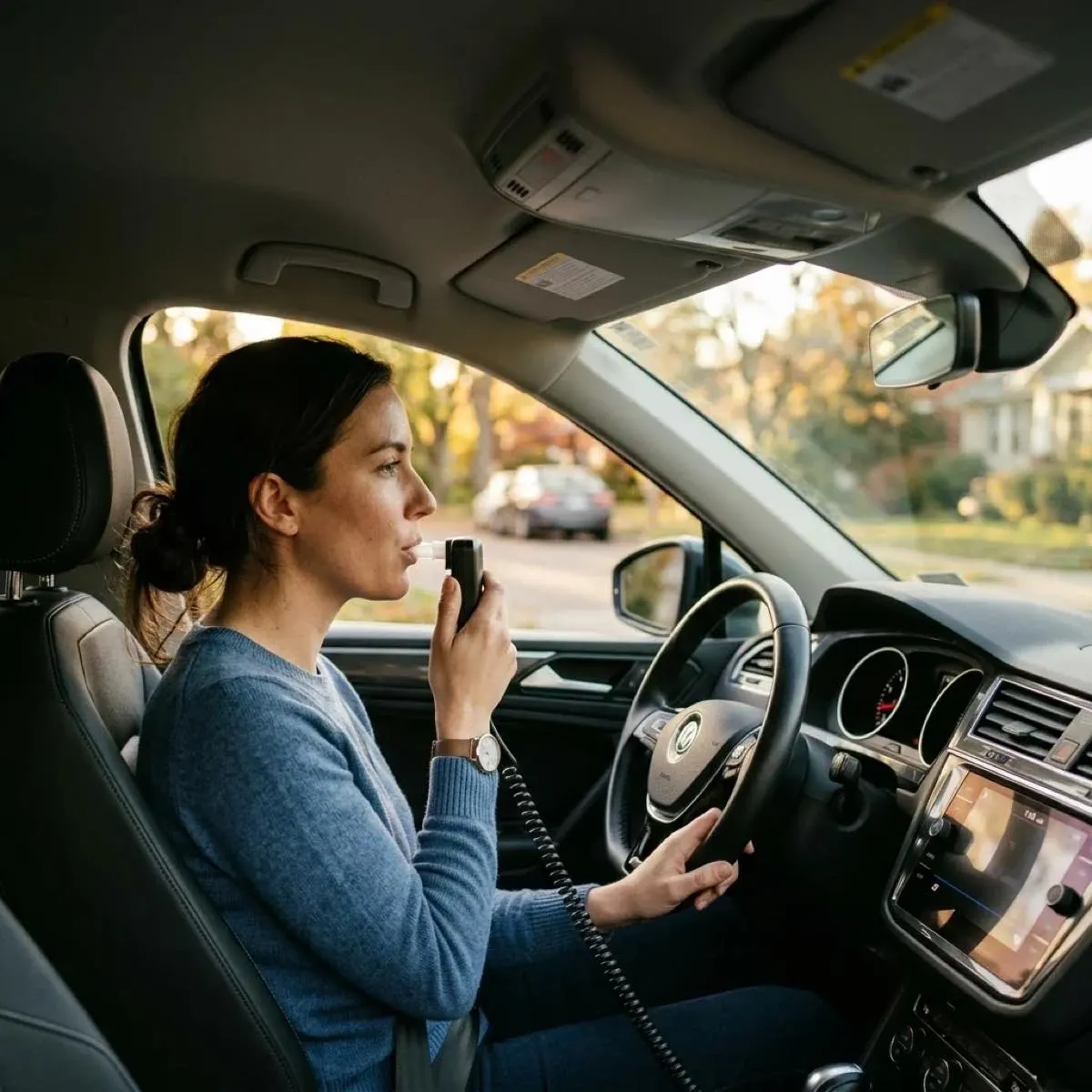
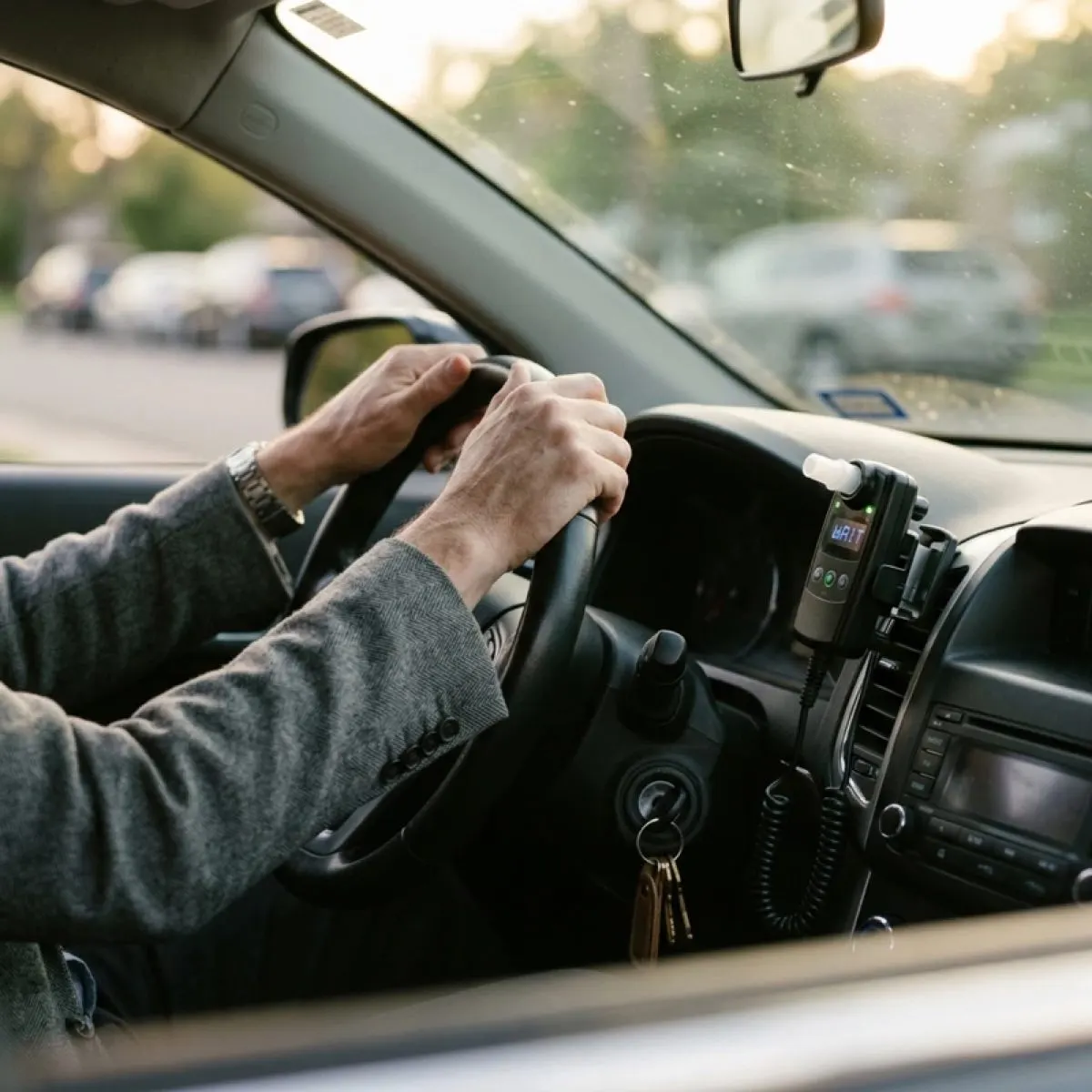
An ignition interlock device measures BrAC because breath is the only sample a car can collect in a few seconds, as many times a day as needed, with no needles involved. The device reads your breath sample, applies the standard conversion, and compares the result to the alcohol setpoint your state program requires before the engine will start.
A few practical points if you are driving with one:
- The device works like the equipment police use, just mounted in your car. Here is a plain-English breakdown of how a breathalyzer works in a car.
- Your interlock’s pass/fail threshold is set by your state or court program, and many programs set it well below the standard legal limit. Check your program paperwork so you know your number.
- Because mouth alcohol can spike a reading, the safest routine is simple: nothing but water in the 15 to 20 minutes before you blow, and rinse your mouth first. If you do get a surprise reading, here is what happens if you fail an interlock test and how retests usually work.
- Discretion is a real concern for a lot of drivers. Low Cost Interlock’s Interlock Can is a cover that fits over the 777 device and looks like an ordinary soda can sitting in your cup holder, which keeps the handset out of sight between tests.
BAC, BrAC, and the Legal Limit
DUI laws in the United States are written around BAC, which is why your interlock reports a blood-equivalent number even though it samples breath. The main difference between BrAC and BAC has less to do with their physical constitution, and more to do with how the legal system values and uses them. BAC is the number taught in driver’s ed, cited in court, and written into state statutes.
The standard per se limit for drivers 21 and over is 0.08 in most states, with Utah notably lower at 0.05, and drivers under 21 are held to near-zero limits almost everywhere. Limits, penalties, and interlock thresholds all vary by state and change over time, so check your state’s current rules through the Governors Highway Safety Association’s alcohol-impaired driving overview or your state DMV.
Frequently Asked Questions
Is blood alcohol the same as breath alcohol?
No. Blood alcohol concentration (BAC) is the alcohol actually in your bloodstream, measured from a blood sample. Breath alcohol concentration (BrAC) is the alcohol in your exhaled deep-lung air, measured by a breathalyzer or interlock device. The two are closely related because breath alcohol comes from blood alcohol, and breath devices convert their reading into a BAC-equivalent number.
What does BrAC stand for?
BrAC stands for breath alcohol concentration. It is measured in grams of alcohol per 210 liters of breath, the unit used in federal and state breath-testing rules. When a breathalyzer or ignition interlock shows a number like 0.08, it has already converted your BrAC into the blood-equivalent scale that DUI laws use.
How does a blood alcohol level compare to a breathalyzer reading?
For most people, closely. Alcohol in deep-lung air is proportional to alcohol in blood, and breath devices use a standard conversion so both report on the same scale. Small gaps between the two are normal because the conversion is a population average, and a breath sample can be affected by mouth alcohol, breathing pattern, and timing in ways a blood sample cannot.
Is a blood test or a breathalyzer more accurate?
A blood test is more accurate. It measures the alcohol in your blood directly in a laboratory, while a breathalyzer estimates it from a breath sample. That is why blood results carry more weight as evidence. A well-maintained breath device used correctly still tracks blood results closely, which is why breath testing is standard for roadside checks and interlock programs.
Why would a breathalyzer read higher than a blood test?
The most common reason is mouth alcohol: residue from a recent drink, mouthwash, or certain foods sitting in your mouth instead of coming from your lungs. Breathing pattern and testing immediately after drinking can also skew a breath number. These effects are temporary, which is why protocols call for a wait period before a valid breath sample.
Do ignition interlock devices measure BAC or BrAC?
Interlock devices physically measure BrAC, since breath is the sample you give. The device then converts that reading to the BAC-equivalent scale and compares it against the threshold your state program sets. If the reading is over your setpoint, the vehicle will not start, and the event is logged and reported to your monitoring authority.
Can food or mouthwash set off a breath test?
Yes, temporarily. Anything alcohol-based in your mouth, including mouthwash, breath spray, and some foods and medicines, can produce a brief false spike on a breath test even though your blood alcohol is unchanged. Rinsing with water and waiting 15 to 20 minutes before testing clears most mouth-alcohol effects.
How many drinks does it take to reach 0.08?
It varies with body weight, sex, timing, and food, so there is no single safe count. For many adults it takes roughly two to four standard drinks in an hour or two, but the same drinks affect two people very differently. This guide to how many drinks it takes to reach 0.08 BAC breaks down the factors.
How long after drinking will a breath test detect alcohol?
It depends on how much you drank; your body clears alcohol at a fairly steady rate, and nothing speeds that up. A heavy night can still register the next morning. If you drive with an interlock, plan real recovery time before you test. Here is more on how long after drinking you can use an ignition interlock.
What BAC level is considered legally drunk?
In most states, 0.08 is the per se limit for drivers 21 and over, meaning you can be charged at that level regardless of how you feel. Utah’s limit is 0.05, commercial drivers are held to stricter federal standards, and under-21 drivers face near-zero limits in most states. Impairment starts well below any legal line, so the limit is a ceiling, not a target.
The Bottom Line on BAC vs. BrAC
Blood alcohol and breath alcohol are two windows into the same fact: how much alcohol is in your system. Blood measures it directly and is the legal gold standard. Breath estimates it instantly, which makes it the practical tool for roadside tests and the ignition interlock in your car. Understand what can nudge a breath reading, give the device a clean steady sample, and the two numbers will tell the same story.
If you need an interlock installed, you don’t have to overpay for it. Low Cost Interlock offers transparent pricing with no hidden fees, a price match guarantee, and a 60-second quote on ignition interlock pricing. Questions? Call (844) 387-0326 any time.
Disclaimer: This article is provided by Low Cost Interlock for general informational purposes only and is not legal, financial, or medical advice. DUI and ignition interlock laws, penalties, fees, and program requirements vary by state, county, and individual circumstances, and they change over time. Any costs, timelines, or figures mentioned are general estimates, not quotes or guarantees. Nothing here should be relied on as a statement of the law in your jurisdiction. Always confirm current requirements with your state DMV, the court handling your case, a licensed attorney, or Low Cost Interlock directly before making decisions. Product features, pricing, availability, and promotions referenced are subject to change and may not be available in every state Low Cost Interlock serves.